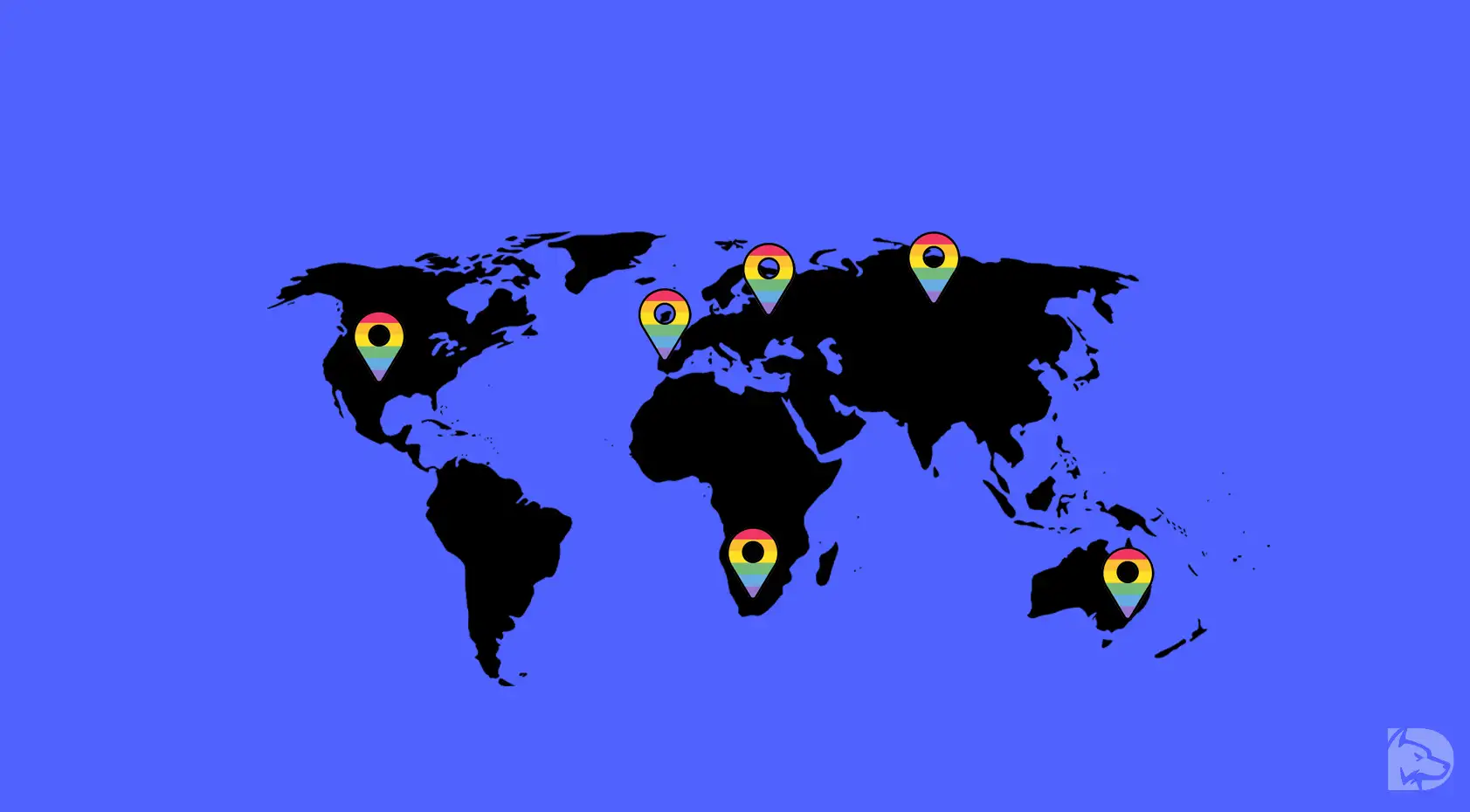

Blu Media Publishing and the Spartacus International project presented their annual Spartacus Gay Travel Index 2026 — a global safety ranking for LGBTQ+ travelers. The study covered 216 countries and territories, evaluating them based on 18 criteria: ranging from the availability of marriage equality to the level of hostility in the local environment and criminal prosecution.
The ranking is based on a point system: countries receive points for protective laws and lose points for repression. The maximum score—14—has been achieved for the second year in a row by Iceland, where same-sex marriage has been legal since 2010, and the rights of transgender and intersex people are firmly protected by law. Second place was shared by Malta and Spain (13 points each).
The Polish Phenomenon: Breakthrough of the Year
The biggest surprise in the index was Poland, which made one of the biggest jumps in the history of the rankings— from 118th to 59th place. Until recently, the country was associated with “LGBT-free zones,” but the political changes of 2024–2025 radically altered the situation. The key factors driving this growth were:
- The rise to power of Donald Tusk's coalition.
- Elimination of “LGBT-free zones.”
- A Supreme Court ruling (March 2025) that simplified the legal process for gender reassignment.
- The appointment of the first openly gay person to the government—Krzysztof Szmieszek.
Despite the absence of legal marriages, Spartacus noted a sharp decline in hostility on the part of the state and a shift in the overall tone of its policies.
Russia and Chechnya: Legal Extremism
Russia continues to fall, occupying 202nd place out of 216. The country found itself in the company of Nigeria, Qatar, and South Sudan. The main reasons for the low ranking were the designation of the “international LGBT movement” as extremist and the expansion of the ban on “propaganda.”
A separate line in the ranking highlights Chechnya (212th place), a country where conditions are rated significantly worse than the Russian Federation average—on par with Afghanistan and Saudi Arabia.
Belarus: Growth on Paper, Stagnation in Reality
Belarus rose from 174th to 132nd place, but experts describe this progress as merely superficial. The country is in the same group as Kazakhstan, North Korea, and the Vatican. No real improvement in the situation has been observed: LGBT+ activism has been crushed, and in 2025, there were reports of mass roundups and threats from security forces. Belarus moved up in the rankings mainly because other countries have become even more dangerous.
Global Trends
- United States (47th place): There is a deep divide within the country. An “invisible border” of security effectively runs between the liberal states (New York, California) and the conservative states (Tennessee, Oklahoma).
- Nepal (32nd place): The country moved up 21 spots thanks to its recognition of the rights of transgender people and its commitment to legalize same-sex marriage.
- Ukraine (74th place): The war has brought the issue of the rights of LGBT+ service members to the forefront, keeping the country in the middle of the list alongside Serbia.
- Underdogs: Bringing up the rear in the global rankings Iran (215th place) and Yemen (216th place), where homosexuality is punishable by death.
The 2026 Index confirms that the level of security in Eastern Europe is not a matter of geography, but a matter of political choice. The gap between Poland (59th place) and Russia (202nd place) clearly demonstrates how quickly people's lives can change when a country's policy shifts.






0 comments
Enter your email — we’ll send you a one-time code. No passwords or accounts.
Code sent to
If the email doesn't appear in your inbox within a few minutes, check your spam, junk, or promotions folder, as some email services may mistakenly place automated messages there