
The question of whether sexual orientation is an innate and unchanging characteristic or whether it can change over time remains one of the most debated topics in psychology and sociology. Modern science more often uses the term "sexual identity", which highlights how individuals understand and describe themselves. Since there are no objective biological tests to determine sexual orientation, self-reports remain the primary source of data for scientists.
Drawing on data from long-term longitudinal studies, Doberman Media examines how stable our preferences are.
Table of Contents
What do scientists mean by "sexual identity"?
This is the subjective aspect of a person's experience. Researchers typically identify three components of sexual orientation: Attraction, Behavior, and Identity (self-identification). Interestingly, these components do not always coincide: for example, the number of people who have had same-sex sexual experiences (behavior) is usually higher (4–6%) than the number of those who openly identify as homosexual or bisexual (1–3%).
In the studies we are drawing on, researchers asked people directly, “How would you describe your sexual orientation?”
How stable is heterosexual orientation?
According to all available data, Heterosexuality is the most stable and widespread category.
Among adults
In the MIDUS study (U.S.), which followed participants for 10 years (average age: 47), more than 97% initially identified as heterosexual. A decade later, the overwhelming majority had maintained that status.
Among young people
The Add Health study (12,287 participants aged 18 to 25) showed similar results: heterosexual identity proved to be the most stable over the 6-year follow-up period.
Scientists suggest that this stability may be linked to the “normative status” of heterosexuality in society.

Is it true that women's sexuality is more "fluid" than men's?
Yes, the data supports the concept "female sexual flexibility", but with one important caveat: this applies mainly to those who identify as members of sexual minorities.
For men Identity is more often of a categorical nature. Heterosexual and homosexual men demonstrate a high degree of stability in their preferences.
The study also showed that homosexual and bisexual women changed their identity significantly more often than men. For example, over the course of 10 years, nearly half of the women who initially identified as “bisexual” or “homosexual” changed their label.
It is believed that female sexuality may be more sensitive to the context of a relationship and to social norms.
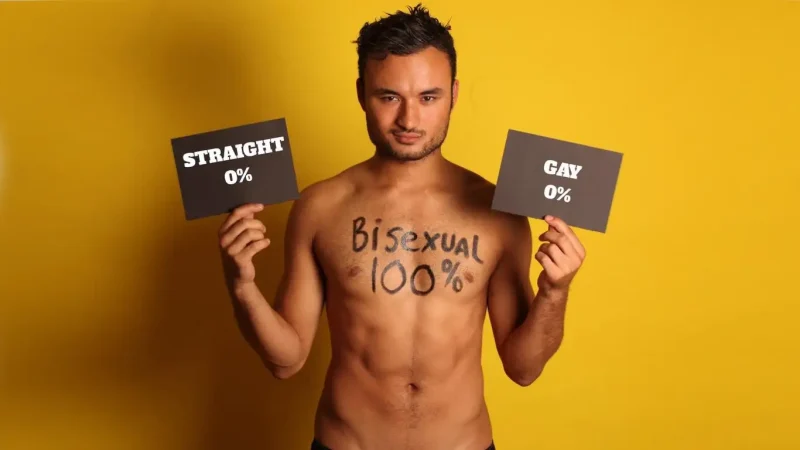
Bisexuality is the most "unstable" category
In both studies (among both young people and middle-aged adults) Bisexual identity changed most frequently.
In the Add Health youth cohort, only 1/4 of the participants retained their bisexual identity six years later.
Among adult men, bisexuality turned out to be the most changeable sexual orientation: many of them eventually began to identify as heterosexual.
Among women, bisexuality and homosexuality were roughly equally unstable compared to heterosexuality.
Figures at the start of the study:
Heterosexual Identity 11,609
Homosexual 254
Bisexual 283
There is a hypothesis that Bisexual people are more likely to face uncertainty due to a lack of sufficient support from both the heterosexual and homosexual communities. The clinical experience of some experts, such as Lev Shcheglov, also suggests that bisexuality often tends to gravitate toward one of the “poles” over time.

What about homosexual identity?
There is a noticeable difference between the sexes here:
Gay men show a level of stability nearly comparable to that of heterosexuals. If a man identifies as gay at a young age, the likelihood of him changing that status is low.
Lesbians reported changes in identity more frequently over a 10-year period (in the MIDUS study — 63.6% changed their sexual orientation, often moving into the bisexual category).
Does age affect these changes?
The researchers expected that identity would become “fixed” with age, but changes still occurred in the middle-aged group (47–57 years old). Nevertheless, the major “milestones” of self-identity usually occur during adolescence and young adulthood. In later life, significant life events or new relationship experiences can influence changes in identity.
What conclusions can be drawn?
1. Heterosexuality is dominant and remains the most enduring на протяжении всей жизни (изменения затрагивают менее 2–3% этой группы).
2. Stability and volatility scenarios coexist. For one person, orientation is a constant; for another, it is a dynamic process.
3. Gender matters. On average, male sexuality is more polarized and stable in its extreme manifestations, whereas female sexuality more often demonstrates flexibility.
Sources:
Savin-Williams, R. C., Joyner, K., Rieger, G. Prevalence and Stability of Self-Reported Sexual Orientation Identity During Young Adulthood. Arch Sex Behav.
Mock, S. E., Eibach, R. P. Stability and Change in Sexual Orientation Identity Over a 10-Year Period in Adulthood. Arch Sex Behav.







0 comments
Enter your email — we’ll send you a one-time code. No passwords or accounts.
Code sent to
If the email doesn't appear in your inbox within a few minutes, check your spam, junk, or promotions folder, as some email services may mistakenly place automated messages there