
I've always loved Greek mythology – these stories of gods, heroes, monsters, and fate seemed like an endless source of inspiration to me. But the older I got, the more I noticed how in the classic versions, queer voices are silenced, female characters are often reduced to the roles of victims or villains, and desire and identity are adjusted to a strict patriarchal framework. And then modern retelling came — and everything changed. They do not just retell myths, they return to them that chaotic, fluid energy that has probably always been in them, but has been erased for centuries. Through a queer prism, these stories come to life anew: full of feminist anger, undisguised desire and self-search.
Gorgon Medusa

Take Medusa the Gorgon, for example. In the traditional version, she is a terrible monster with snake hair, which Perseus decapitates as a trophy. But in modern interpretations, especially with a feminist and queer perspective, Medusa becomes a survivor of violence, her "monstrosity" is a defensive reaction to trauma, and the petrifying gaze is a metaphor for the power that frightens patriarchy. Her anger is not blind rage, but a just rebellion. And when the authors add queer elements — for example, exploring her relationships with other women or gender fluidity — Medusa ceases to be an outcast and becomes an icon of resistance.
Circe
The same with Circe. Madeline Miller, in her book Circe, shows her not as an evil sorceress, but as a woman who learns to wield her power in a world where the male gods decide everything for her. Circe turns men into pigs not out of malice, but out of rage against those who see her only as an object of desire. And in queer retellings, her story often takes on shades of Sapphic desire or non-binary identity — after all, in ancient myths, the gods were already fluid, changing genders and forms according to their mood.
Achilles and Patroclus
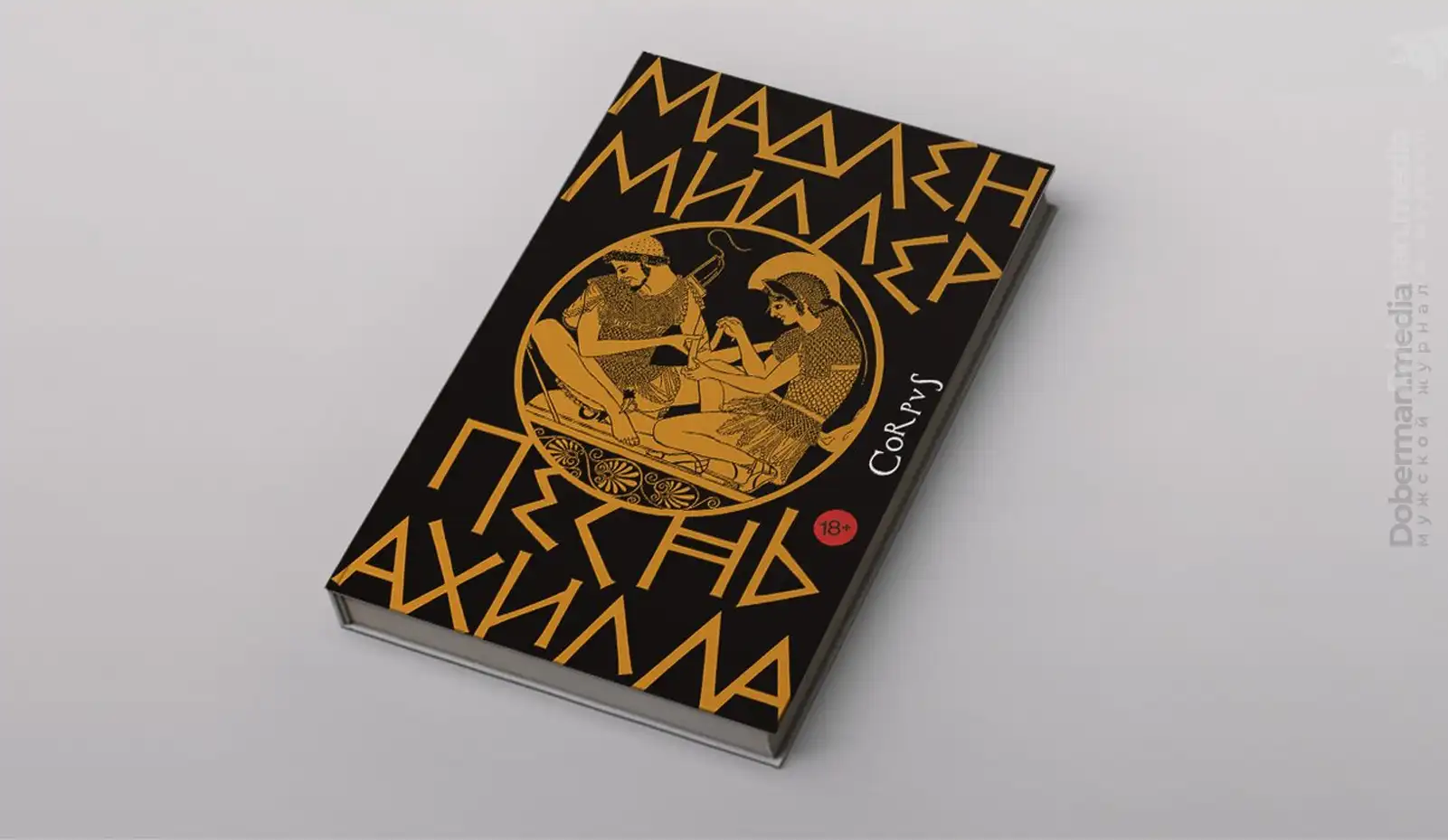
Of course, it is impossible not to mention "The Song of Achilles" by the same Madeline Miller. This is one of those books that turned everything upside down for me. Achilles and Patroclus are not just "friends" or "comrades-in-arms," as was sometimes softened in old translations. Here their love is shown in all its tenderness, passion and tragedy: queer-desire, which is stronger than war and fate. Miller doesn't impose modern labels, but lets their connection breathe freely. And it's so healing to see an ancient epic become a story about how love between men can be epic, eternal.
In 2025, this trend is only gaining momentum. Recently released “Eros: Queer Myths for Lovers” Zoe Terakes is a collection of five stories that reinterpret Greek myths through trans and queer experiences. Terakes, relying on his Cretan origins, brings back eroticism and queer-desire, which were in the originals, but erased by the censorship of centuries. And "Queer Mythology" by Guido A. Sánchez is a global view: legends from all over the world, where LGBT+ heroes and gods have always existed, with stunning illustrations.
For me, these retelling are not just books. They are like a mirror: they show that we, queer people, have always been part of a big human story. Our anger against injustice is the anger of Medusa. Our desire to be seen and loved is the desire of Achilles and Patroclus. Our struggle for identity is Circe's path to her power. In a world where it sometimes feels like someone is trying to erase us, these stories are a reminder that we are as eternal as the myths themselves.
And which mythical figure, in your opinion, deserves queer retelling the most right now? Maybe Apollo with his difficult relationship or Ariadne, left on the island?








0 comments
Enter your email — we’ll send you a one-time code. No passwords or accounts.
Code sent to
If the email doesn't appear in your inbox within a few minutes, check your spam, junk, or promotions folder, as some email services may mistakenly place automated messages there