

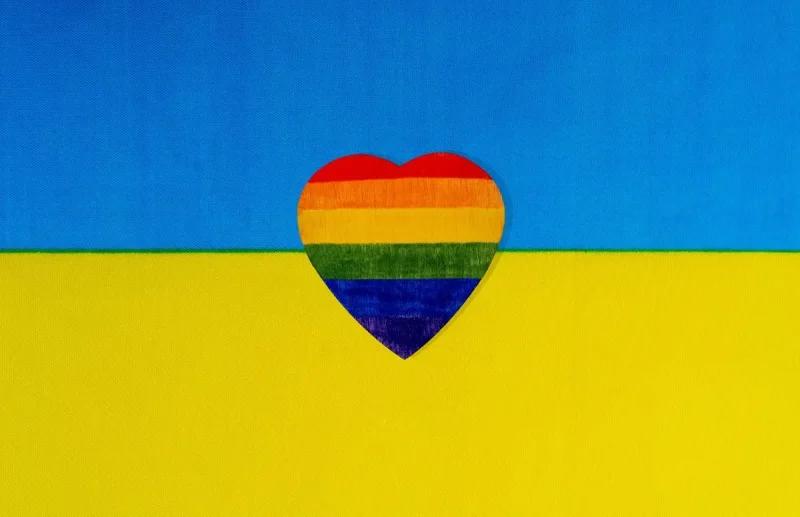
Immigrants from post-Soviet countries in Europe are increasingly asking themselves: Should they remain “just gay” or switch to “queer”? The freedom of a new life brings new labels, but they don't always fit—and that creates an inner conflict.
And while I more or less understand what a “gay” person is, I don’t fully understand who “queer” people are. Let’s ask ChatGPT.
The term “queer” is quite broad and flexible. In the modern context, it refers to people whose sexual orientation, gender identity, or modes of expression do not fit into traditional binary categories (“gay/lesbian,” “man/woman”).
Well, I guess it’s all pretty clear here. I figured out a long time ago that I’m a milker of male emotions with twenty years of experience. Or a milker of men? Oh my God, how can that be in a male form?! Wait, I’m a guy, I like guys, so that means I’m gay. In other words: yes, I’m a guy and I love guys, but I’m part of the larger queer community; I go to Christopher Street Day as a queer festival, not just a “gay parade,” and I’m cool with my drag, poly, and trans friends. If someone calls me queer, don’t take offense. I’ve let it out.
Why did I even start thinking about this?
When I lived in another country, I had no idea there was such a wide range of identity categories. The Russian language still lacks queer terminology. In German and English, there are dozens of terms, and they’re part of everyday language: gay, bi, pan, omni, asexual, aromantic, demisexual, and many others. In other words, these are helpful labels that we don’t particularly like, but they help those who want to explain to themselves and the world who they are. It’s like saying “cringe” instead of “Spanish shame”—and suddenly everything becomes simpler, clearer, and even a little funny.
In Russia, I was “gay.” That’s all. Period. The word was heavy, like a sentence, but at the same time, it was the only one available. It immediately put me in a box: okay, you’re gay—so you’re this kind of person, you go there, you listen to this, you wear that. The box was cramped, but familiar. You could survive in it. But here, in Europe, there are thousands of boxes, and they all have transparent walls. You stand there and think: “Damn, what if I’m not just gay, but also demisexual? What if I have gender-fluid days? What if I’m non-binary after all, and just haven’t noticed yet?”
At first, it’s exciting. You read the lists of sexual orientations and think, “Wow, so it turns out you can describe exactly how I feel!” You get the feeling that you’ve finally been seen. Then anxiety sets in: what if I label myself wrong and my own community rejects me? What if I’m “not queer enough” because I don’t do drag or attend every lecture on non-binary identity? What if I’m just an “old gay guy”? I catch myself staying silent around new friends when the conversation turns to identities. Because I’m afraid of saying something “wrong.” In Russia, I was afraid to say anything at all about being gay.
I remember one evening when a guy around twenty-five was explaining who he was: "Hi, I'm [he/they], pansexual, in a non-hierarchical polyamorous relationship, and I have a genderqueer partner and another cis gay boyfriend.". I smiled and said, “Hi.” But all I could think was, “How clever of Chechik to use a euphemism for ‘bitch’”—but that’s queer, too. That’s part of the spectrum, too.
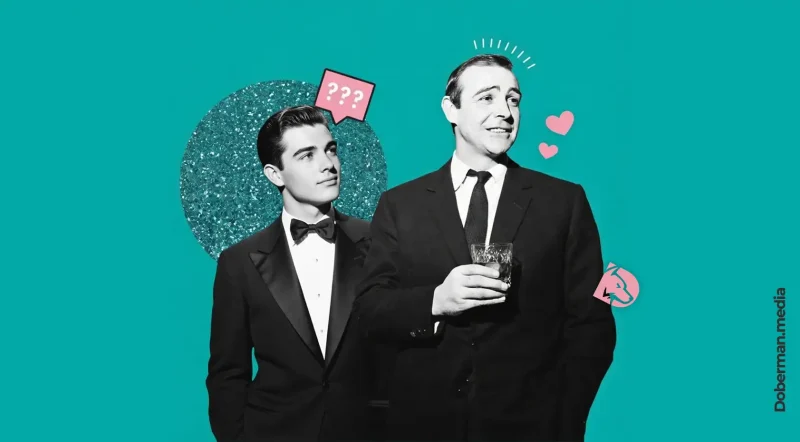
Now I say different things depending on who I'm with. With Russian-speaking immigrants, I say, “I’m gay,” because that’s easier for them to understand and more relatable. With Germans and the international crowd, I say, “I’m queer,” because that immediately places me within a broader context where I don’t have to explain myself.
So now, if someone asks, “Are you gay or queer?”—I’ll say, “Yes.”, and, sipping on an aperol, I'll go join the people who, at one time, didn't know what to call themselves either.






0 comments
Enter your email and we will send you a one-time code. No passwords, no accounts.
Code sent to
If the email does not arrive in your inbox within a few minutes, check your Spam, Junk or Promotions folder — some mail services may wrongly place automated messages there.