
The opinions expressed in this article reflect the author's views and do not necessarily reflect the position of the Doberman Media editorial board.
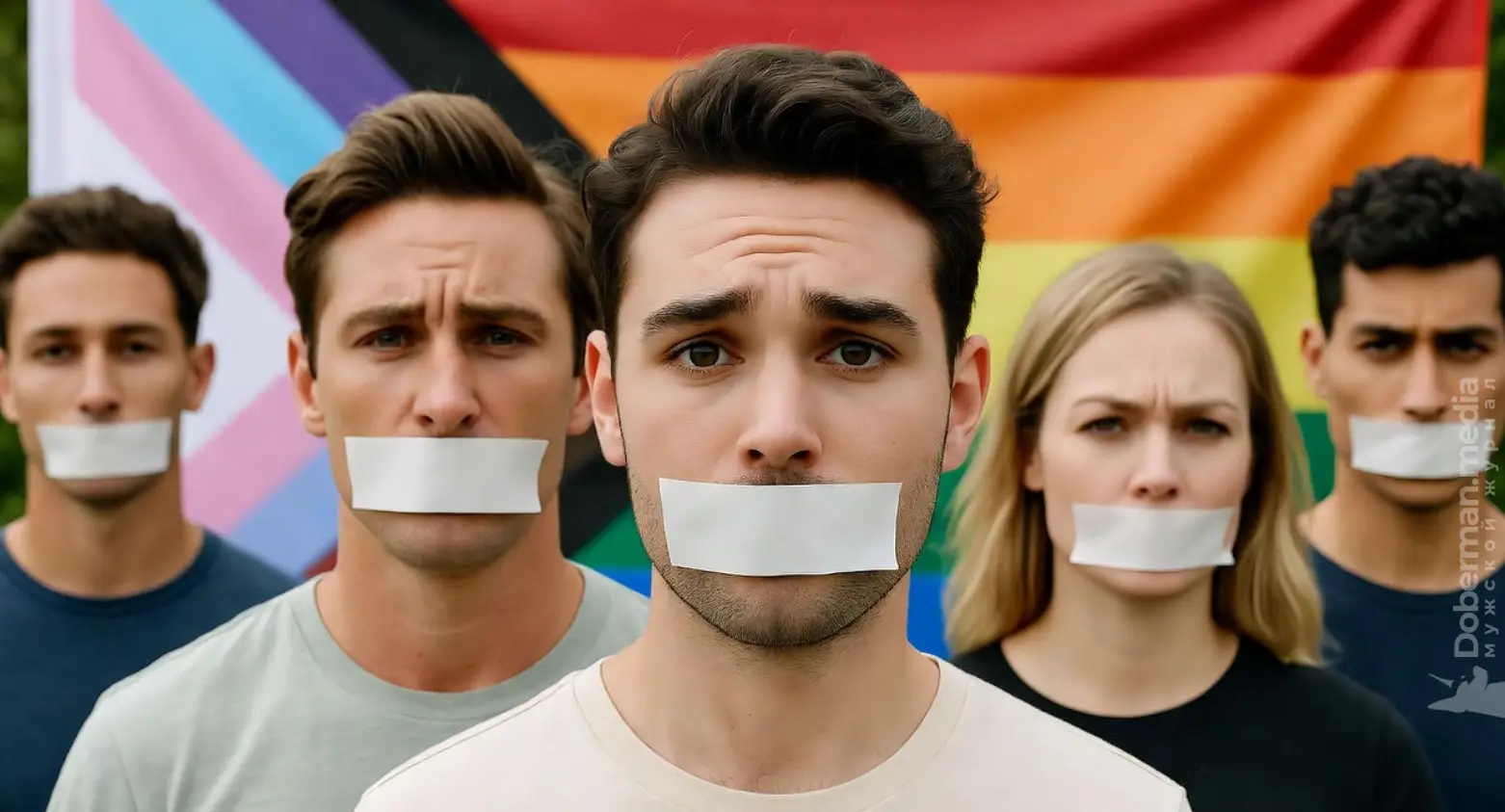
In recent years, the topic of freedom of speech has come up more and more often, and not always in the context of censorship by the government or corporations. Sometimes the threat comes from within—from those who once fought for the right to be heard.
The LGBT community, which grew out of the struggle for equality and acceptance, faces an internal paradox today: In its pursuit of absolute tolerance, it risks silencing the voices of its own members. This is not an accusation against the entire community—many within it need support and protection from actual discrimination. But a bias towards the "sanctity" of certain ideas can lead to the fact that inconvenient truth becomes taboo, and criticism becomes a form of betrayal. As a result, freedom of speech—which was once a weapon for minorities—is turning into a gag that they impose on themselves. Tolerance, originally intended to protect the vulnerable, is evolving into a tool that stifles debate. Criticism becomes dangerous not only for one’s career or reputation, but also for one’s very status in the community. Yet freedom of speech is not just the right to say what is pleasant, but also the opportunity to voice what is uncomfortable, so that society can develop through dialogue rather than through silent consent.
The Shift in Tolerance: From Protection to Prohibition
Tolerance is the foundation of modern society. It has enabled LGBT people to come out of the shadows and achieve their rights and recognition. No one disputes that homophobia, transphobia, and other forms of hatred still exist, and that they must be combated. Support for minorities is essential, especially in countries where they face violence or discrimination. But when tolerance becomes one-sided, it becomes a problem.
Let's take an example from real life. J.K. Rowling, the author of Harry Potter, has been repeatedly harassed for tweets where she defended biological gender as the basis of women's rights. She was not accused of homophobia — she supports LGBT people — but her words were considered a threat to trans identity. As a result, the discussion was sidelined, and many fell silent so as not to lose friends or their jobs.
This imbalance threatens not only external critics, but also internal ones. Voicing inconvenient truths — for example, that sexual orientation is based on biological sex, and not on gender identity — becomes impossible so as not to "inadvertently offend." But hurt feelings are an emotion, not an argument. If we’re afraid of hurting someone’s feelings, we lose the space for honest conversation. Let’s remember how, in the 1960s and 1970s, gay activists fought for the decriminalization of homosexuality, risking everything. Their strength lay in their openness.
Today, within LGBT people, openness is giving way to conformism: say the wrong thing and you are "not with us".
Victims within the community: lesbians, gay men, and bisexuals
The paradox is that not only "strangers" suffer from this imbalance, but also their own. The LGBT community risks losing those who were once its core, because the new norms put pressure on personal boundaries. Let's take a look at specific groups.
Lesbians, gays and bi feel that their orientation is being rewritten. Sexuality is not politics, it is the body and attraction. But if you say "I'm a lesbian – I'm only attracted to biological women", you will be branded a TERF or a phobe. Lesbians under the 'cotton ceiling'. The term "cotton ceiling" was coined by a trans actress in - this is about the "barrier" of lesbian panties, which supposedly needs to be overcome. Sounds cute? No: this is pressure on sex. And critics within the LGBT people say: "This is not a barrier, this is my orientation!" As a result, lesbians go to their "only cis" spaces, gays go to private chat rooms, where you can say "I'm gay, not pansexual under duress." Bisexuals? They are generally pressed from both sides: "Are you bi? Then sleep with all genders, otherwise it's a phobe."
Other Victims: A Balance of Rights
Do not forget about those who are not LGBT, but can suffer. Parents concerned about the transition of children; teachers following biology in the classroom; doctors who doubt affirmation therapy for minors. In Sweden and Finland, gender medicine policies are already being revised because of the risks, but in the English-speaking world, criticism often equals "hate." Women in sports are losing medals because of trans athletes; prisoners are losing safety in prisons. This doesn’t mean that trans people don’t deserve rights—they do. But rights shouldn’t be a zero-sum game, where one group’s gain is another’s loss.
The Other Side: Protecting the Vulnerable—Without It, There Is No Community
Now let's flip the coin, because without that balance, the text would be a manifesto rather than a conversation. Trans people are not a "problem", but a part of us, and protecting them is a priority. In 2025, with Trump at the helm, Project 2025 has already begun to materialize: they erase "gender identity" from federal rules, ban trans in the army, and hit health care. In the United States, 40% of trans youth live in states with bans on gender assistance, and globally — Trans homicides have exceeded 5,000 since 2008. Activists are right: when criticism slips into a "trance" — not real", this is an echo of external persecution.
In the community, this means: Inclusion isn't a whim—it's a matter of survival. To exclude them now is a betrayal. And yes, in dating-apps, "No trans" hurts, like any identity denial. But here's the ambush: in the fight against an external enemy (like anti-LGBT bills in Ghana or Liberia), we start eating our own insiders, declaring anyone who disagrees to be an "internal phobe". It's not a defense—it's paranoia.
Where is this leading?
If we continue like this, the LGBT community risks fragmenting. Lesbians create their own "female" spaces, gays create apps without trans pressure, bisexuals go into the shadows. Freedom of speech is being eroded, weakened, and losing its real power—and with it, trust. Society as a whole will lose out: without open dialogue, we’ll slide into echo chambers where the truth is replaced by slogans.
The solution lies in balance. Tolerance must include the right to disagree. We should support minorities—yes—but not at the expense of other minorities.
After all, freedom of speech is what has united the LGBT community in its struggle. Let’s preserve it so we don’t silence ourselves. Only through dialogue—not silence—can we build a world where all voices are heard.






0 comments
Enter your email — we’ll send you a one-time code. No passwords or accounts.
Code sent to
If the email doesn't appear in your inbox within a few minutes, check your spam, junk, or promotions folder, as some email services may mistakenly place automated messages there