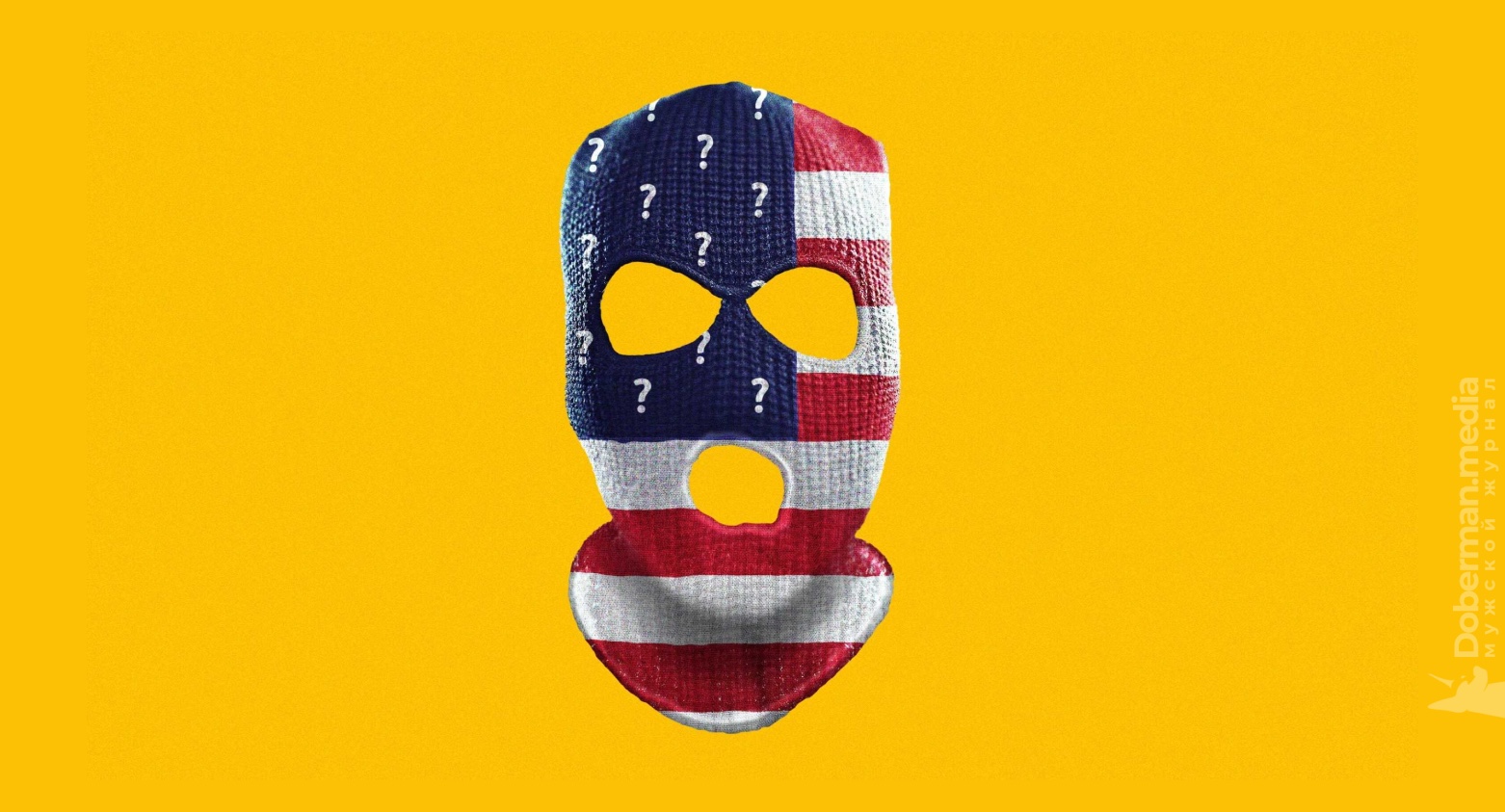

Gideon Rahman, foreign affairs columnist for the Financial Times believes...that U.S. Vice President Jay D. Vance’s speech at the Munich Security Conference last week—in which he claimed that freedom of speech and democracy are under threat from the European elite—backfired. She convinced many listeners that the United States itself is now becoming a threat to Europe.
According to Rahman, one of Germany’s leading politicians told him in the crowd outside the conference hall: “This was an open attack on European democracy.” A high-ranking diplomat noted, “It is now perfectly clear: Europe stands alone.” When a journalist asked if he now considered the U.S. an adversary, he replied, “Yes.”

The author of the article claims that the most positive assessment of the speech he heard was that it was “childish nonsense,” intended for an American audience and therefore not worth paying attention to. But if we analyze Vance’s words and place them in the context of Donald Trump’s decision to seek a rapprochement with Vladimir Putin, bypassing Ukraine and Europe, it becomes clear that American culture wars, international security, and European politics are now inextricably linked.
What did Vance do? He redefined the concepts of freedom, democracy, and shared values that have been the foundation of the Western alliance for 80 years. In his view, the struggle for freedom in Europe is no longer limited to containing an aggressive Russia, as it was for Harry Truman or Ronald Reagan. For Vance, the struggle for freedom is a battle to save “Western civilization”—as defined by Elon Musk and others—from the threat of mass immigration and the “woke mind virus.”
The Trump administration’s ideology means that, in certain respects, it has more in common with Putin than with Volodymyr Zelenskyy. Putin is seen as a warrior fighting for his country and conservative values, while the Ukrainian president is viewed as a freeloader with the wrong friends in Europe.
For the Trump administration, the far-right forces are its true allies in Europe. By calling for the Alternative for Germany (AfD) to gain access to power, Vance is effectively demanding that Europe become a large-scale version of Viktor Orbán’s Hungary—a soft autocracy friendly toward Putin. It is telling that during the Munich conference, Vance found time to meet with Alice Weidel, co-chair of the AfD, but not with Chancellor Olaf Scholz.
In Rahman's view, what Vance said was deeply hypocritical.
Vance’s arguments were a classic Russian “What about…” tactic (whataboutism)—an attempt to divert attention from Trump’s willingness to betray Ukraine.
It is clear that Trump intends to reach an agreement with Putin on Ukraine without consulting Zelenskyy or the Europeans. This could have tragic consequences for Kyiv, which may be forced to accept territorial losses without any security guarantees for the future. The alternative is to continue fighting without U.S. assistance.
The implications for all of Europe are also alarming. Putin wants to withdraw NATO troops from the entire territory of the former Soviet bloc.
European officials believe that Trump will most likely agree to withdraw U.S. troops from the Baltic states and, possibly, further west, leaving the EU defenseless against the Russian military, which, according to warnings from NATO governments, is preparing for a larger-scale conflict beyond Ukraine.
What Should Europe Do?
It is clear, writes Rahman, that the U.S. can no longer be considered a reliable ally for Europe. But the Trump administration’s political ambitions in Europe mean that America is now also an adversary that threatens democracy and even Europe’s territory (for example, in the case of Greenland).
So what should be done? Europeans need to urgently prepare for the day when U.S. security guarantees are finally withdrawn. This requires both the creation of an independent defense industry and the formation of a European mutual defense agreement outside of NATO, which would include not only EU countries but also the United Kingdom, Norway, and other partners.
The author is convinced that Trump will use every means at his disposal to force European allies to comply with his demands—ranging from trade and security to their domestic policies. This means that Europe needs to begin the complex process of “mitigating risks” in its relations with the U.S. by identifying areas of dangerous dependence and eliminating them.
The author warns that if Europe entrusts its critical infrastructure to Musk’s technologies, it will create a serious new vulnerability for the continent. The Trump administration will also demand that Europe purchase more American weapons. But given the current political situation, that would be a big mistake.
Rahman notes that many Europeans will not accept his idea of reducing dependence on the U.S. and strengthening their own security, as they will consider it unrealistic. But they need to realize that their freedom is now at risk. “Vance was right on this issue. But not in the sense that he thought,” writes the American columnist.








0 comments
Enter your email and we will send you a one-time code. No passwords, no accounts.
Code sent to
If the email does not arrive in your inbox within a few minutes, check your Spam, Junk or Promotions folder — some mail services may wrongly place automated messages there.