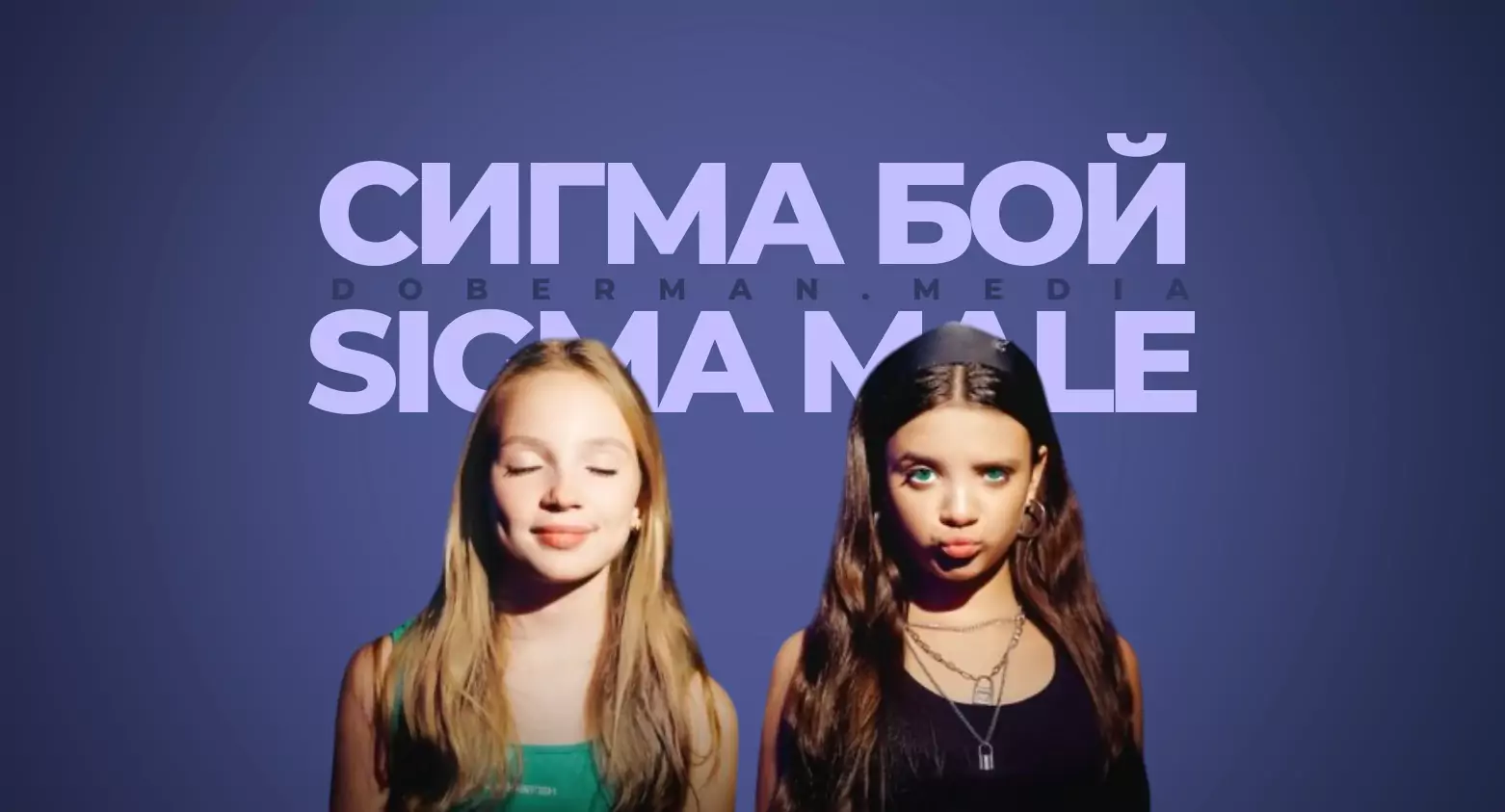

In late 2023, TikTok was abuzz with a new flash mob: teenagers were nodding their heads in unison, raising their elbows, and whispering: «Sigma, Sigma Boy“… I’m such a handful that it’ll take you a year to win me over.”. In a matter of weeks, the track became a cultural phenomenon, spreading beyond the borders of the Russian internet. But how did a song by two schoolgirls from Russia become the soundtrack for millions?
Context: There are calls to ban the song “Sigma Boy” in Europe. German politician Nela Rill is convinced that a track is not just music, but a tool for “introducing Russian ideas into society.” "Sigma Boy" is a viral Russian trope used on social media that conveys patriarchal and pro-Russian worldviews», Nela Riehl said.
After a proposal to ban the song in Europe, there were calls to ban it in Russia as well. Russian activists have appealed to the General Prosecutor's Office of the Russian Federation, demanding an investigation into the music video "Sigma Boy" for the sexualization of children, because in the music video Two girls, ages 11 and 12, are wearing miniskirts.
Who's behind the hype?
The song was written by 11-year-old Svetlana Chertishcheva (Betsy) and 12-year-old Maria Yankovskaya. Betsy is already known as the “queen of kids’ pop” thanks to viral tracks like “Capybara” and “Simple-Dimpel.” Yankovskaya, meanwhile, is a regular on “CTC Kids,” whose melancholic ballads contrast with Betsy’s energy. Betsy dominates the duo: her signature high-energy style sets the tone for the song.
Interestingly, the lyrics were written by Svetlana’s father—Mikhail Chertishchev—in collaboration with Serafim Sidorin (Mukka), the author of the hit track “The Girl with the Bob.” The recipe for success? Simplicity, irony, and the magic of repetition.
Who is a "sigma male," and why is everyone talking about him?
The terms "sigma male" or "sigma boy" have been heard everywhere over the past couple of years, from Reddit forums to TikTok videos. What is this mysterious type of men, and how does it differ from the "alpha" and "beta" we are used to? Let's figure this out!
Why “Sigma”? From Memes to Philosophy
Released on October 4, 2023, the track initially seemed like just another bit of childish fun. The song’s protagonist is a boy whose “gaze is like fire,” yet his popularity among his peers doesn’t guarantee that his feelings will be reciprocated. But the word “sigma” became the key. Previously, the term was associated with masculine “lone wolves” like Patrick Bateman. Now, however, any schoolkid who racks up likes on TikTok can become a “sigma.”
“This is the democratization of the image,” notes cultural studies scholar Anna Petrova. “Sigma no longer requires conformity to the ‘tough guy’ archetype. All it takes is self-confidence—even if it’s just for show.”
TikTok Alchemy: How a Track Went Global
The secret to its virality lies in the chorus, which sounds like a mantra. The “-oy” rhymes, the hypnotic repetition of “sigma-boy,” and the minimalist beat have turned the song into the perfect soundtrack for challenges. Bloggers, from Vika Andrienko to singer Poli, have jumped on the bandwagon, and the cartoon character Riley from “Inside Out 2” has unexpectedly become the face of dance edits.
But the real surprise is its international success. The track has racked up 3.8 million streams on Spotify, and on TikTok in Asia and Europe, people are slowing it down, speeding it up, and mixing it with memes like “skibidi toilet.” “Foreigners don’t need a translation,” explains music producer Dmitry Volkov. “‘Sigma’ and ‘boy’ are universal words in the era of global internet slang.”
The "Fluffy Hair" Phenomenon and Brain Rot: Why It Works
"Sigma Boy" It has joined the trend of absurdist content (“brainrot”), where nonsense is the main currency. Set to the track, they critique the “fluffy hairstyles” of Fortnite characters, do somersaults in the subway, and parody “tough guys” by running their fingers along their jawlines.
“Children’s hits are a pure dopamine rush,” says psychologist Ilya Smirnov. “They don’t require any deep thought, but they give you an instant burst of energy. Adults may be sarcastic about them, but they secretly sing along: it’s like cringe therapy.”
From “Baby Shark” to “The Blue Tractor”: The Formulas Behind Children’s Pop Hits
Betsy and Yankovskaya have repeated the success of “Baby Shark” (15 billion views) and “The Blue Tractor.” The formula is simple:
- Simple Rhymes ("simple-dimpel, pop-it, squish");
- Obsession with Trends (games, memes, toys);
- Nostalgia for Adults — Think back to the funk remixes of “Tractor.”
“Songs like these are the antithesis of a complex world,” says music critic Alexei Morozov. “They’re like candy: lots of sugar, no nutritional value, but an instant rush.”
What's next?
“Sigma Boy” has already spawned a slew of remixes—from electronic versions to covers in four languages. And in December 2023, the track unexpectedly made its way into gym playlists. “People work out faster to this song,” users joke.
One thing is clear: as long as social media craves absurdity and simplicity, children’s hits will rule the roost. And who knows—maybe in a year we’ll be dancing to “Omega Girl”?







0 comments
Enter your email — we’ll send you a one-time code. No passwords or accounts.
Code sent to
If the email doesn't appear in your inbox within a few minutes, check your spam, junk, or promotions folder, as some email services may mistakenly place automated messages there