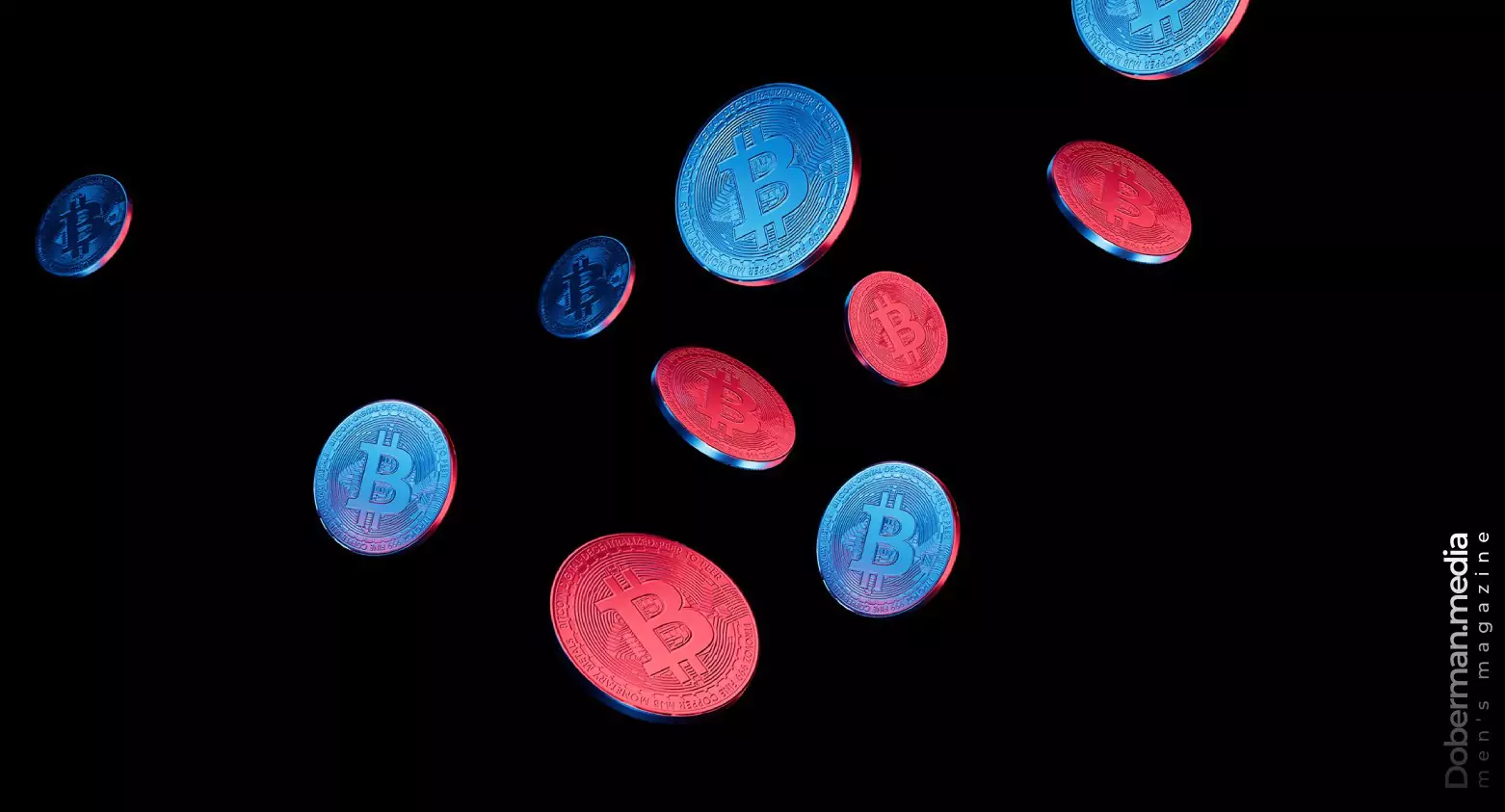

It's hard to believe, but Bitcoin is already 16 years old. This figure seems laughable compared to the centuries-long history of financial institutions, but you have to admit that over the years, Bitcoin has changed far more than its early supporters could have imagined. From humble beginnings to its status as “digital gold”—Bitcoin’s story is impressive. Let’s look back at the key moments of its journey, its highs and lows, and how it has turned the financial world upside down.
How It All Began: The Genesis Block and the Mission
It all began on January 3, 2009, when an anonymous developer (or group) using the pseudonym Satoshi Nakamoto obtained the so-called genesis block — the first block in the Bitcoin blockchain. It contained 50 BTC and a mysterious message:
“The Times, Jan. 3, 2009: Chancellor on the Brink of a Second Bailout for Banks”
This phrase was taken from the headline of a British newspaper The Times, clearly alluding to the 2008 financial crisis and government bank bailout programs. It was not just a coincidence, but a philosophical manifesto.
Nakamoto wanted to create a system independent of banks and governments to give people control over their finances.

From the First Transactions to the First Dollar Equivalents
Bitcoin was originally nothing more than an experiment. It had no exchange rate, no price, and no practical use. The first real-world Bitcoin transaction took place in 2010, when programmer Laszlo Hanyecz bought two pizzas for 10,000 BTC. Today, those coins would be worth hundreds of millions of dollars.
At first, no one was concerned about Bitcoin’s price. The first users were cryptography enthusiasts and tech geeks interested in decentralized systems. However, as early as 2011, Bitcoin reached $1 per BTC for the first time. This was the first hint of its future financial significance.
Current BTC Price
The First Wave of Popularity: Growth and the First “Crash”
In 2013, the world took notice of Bitcoin: its price skyrocketed from $13 at the start of the year to $260 in the spring. This surge was accompanied by a surge in interest, media headlines, and… the first scandals. One of the largest exchanges at the time, Mt. Gox, was hacked, resulting in the loss of millions of dollars for its users. This marked the first serious challenge to Bitcoin’s reputation.
Despite the turmoil, by the end of 2013, the price had reached $1,000. That was already more than most enthusiasts could have imagined at the project’s launch. However, along with success came turmoil: price volatility, regulatory disputes, and the first fears of government bans.
The Bear Market Era: Bitcoin Survives
2014–2015 was a difficult time for Bitcoin. After soaring to $1,000, its price plummeted to $200. Skeptics predicted its collapse, calling it a “bubble,” but developers and the community continued to work on improving the blockchain. During this time, alternative cryptocurrencies (altcoins) began to rise, and blockchain attracted the attention of major corporations as a promising technology.
Betting on the Crypto Revolution: The 2017 Boom
The real boom occurred in 2017, when Bitcoin hit an all-time high of $20,000 per 1 BTC. This period was marked by a massive influx of new users, a frenzy surrounding ICOs, and a huge number of new crypto projects. Bitcoin became something of a meme currency, even appearing in pop culture and memes.
However, the rise was once again followed by a fall: in 2018, the crypto market crashed, and Bitcoin dropped below $4,000. It seemed like the end. But for Bitcoin, the end is always the beginning of a new phase.
Digital Gold: A New Status in the 2020s
The COVID-19 pandemic proved to be a turning point. In 2020, Bitcoin began to be viewed as a tool for preserving value, comparable to gold. In this era of economic uncertainty, institutional investors began adding it to their portfolios, which served as a catalyst for a new rally.
By early 2021, the price had reached $64,000—a new record. Major companies, such as Tesla, announced their investments in Bitcoin, and countries, such as El Salvador, adopted it as legal tender.
Bitcoin began to rise sharply in value in late 2024 amid the U.S. presidential election and expectations of a victory for Donald Trump, who supports cryptocurrencies. On the night the votes were being counted in the U.S., the price of Bitcoin surpassed the $75,000 mark for the first time. Five days after Trump’s victory, the cryptocurrency’s price reached a new all-time high, having reached In the afternoon of November 10, the mark of 80 thousand dollars.
New Challenges and the Future of Bitcoin
Recent years have brought both successes and challenges. Price surges have been followed by corrections, and governments have tightened regulatory controls. Countries such as China have effectively banned mining, while discussions continue in the United States about the need to regulate cryptocurrencies.
On the other hand, Bitcoin continues to evolve. The introduction of the Lightning Network has made transactions cheaper and faster, and the concept of decentralization remains at the forefront. Bitcoin continues to be at the forefront of global change.
The bill was first introduced by Republican Senator Cynthia Lummis of Wyoming at the Bitcoin 2024 conference in Nashville on July 27. Trump also voiced the idea of using cryptocurrencies confiscated during criminal investigations to create a strategic reserve. Against the backdrop of these speeches by politicians, the bitcoin rate then updated its local maximum in 1.5 months.
In short, The "Bitcoin Act" in the United States is the legitimization of cryptocurrencies, as well as their inclusion (in particular, bitcoin) in the US state reserves.
At the moment, the draft "Bitcoin Act" in the United States is under discussion and involves consolidating the status of bitcoin as a state asset, similar to gold. This law, according to CoinShares analysts, is designed to legitimize cryptocurrency by including it in state reserves, which will strengthen its position in financial markets. Support for such a law under the Donald Trump administration could spur a significant increase in the value of bitcoin and strengthen the U.S. position as a leader in the cryptocurrency sphere.
Analysts at CoinShares believe that adoption in the U.S. "The Bitcoin Act" could elevate Bitcoin's status by making it part of the national reserve, just like gold. Such a move could confirm Bitcoin's legitimacy and trigger a significant increase in its value.
Following Trump’s victory in the U.S. presidential election on November 5, the bill’s sponsor, Republican Senator Cynthia Lammis of Wyoming, reiterated this initiative: "We plan to build a strategic reserve of Bitcoin", — the senator wrote on the social media platform X.
According to Lummies' plan, the state will buy up to 200 thousand bitcoins per year for five years in order to accumulate 1 million bitcoins. According to her calculations, this will benefit the American monetary system and help maintain a stable dollar exchange rate. In particular, the US national debt can be halved by 2045.
Republican Cynthia Lummis, who is promoting the "Bitcoin Act," is seeking to enlist the support of her colleagues on the banking committee to make bitcoin part of the U.S. government's reserves. This could provoke institutional interest and fuel demand for bitcoin, driving up its value even higher.
Against the backdrop of Trump's victory, the rate has already updated the maximum, and he promises to make the United States a global crypto center and support mining.
In the long term, experts predict a possible decrease in the attractiveness of gold due to the flow of funds into bitcoin.

The bitcoin rate is breaking records. All because Trump wants to make cryptocurrency part of the US state asset
How Bitcoin Changed the World
Sixteen years later, it is hard to overstate Bitcoin’s impact. It:
- It challenged the monopoly of banks and financial institutions. Now, millions of people use cryptocurrencies as an alternative to traditional finance.
- It paved the way for other cryptocurrencies. Ethereum, Solana, Dogecoin—they all owe their existence to Bitcoin.
- It has become a symbol of freedom. For some, Bitcoin is a way to escape government control; for others, it is a tool for financial independence.
- It created an entirely new industry. The cryptocurrency market, exchanges, mining, DeFi, NFTs—it all began with a single genesis block.
- He changed the way people view money. He demonstrated that currency can exist without a physical form or government control.
16 years behind us: what's next?
By 2025, Bitcoin is no longer just the “currency of the future.” It has become part of the present. Yes, it remains volatile and controversial, but with each passing year, it becomes more stable. Will it be worth a million dollars or 10? No one knows. But one thing is clear: the story of Bitcoin is about more than just money. It’s about an idea. And ideas don’t disappear.










0 comments
Enter your email — we’ll send you a one-time code. No passwords or accounts.
Code sent to
If the email doesn't appear in your inbox within a few minutes, check your spam, junk, or promotions folder, as some email services may mistakenly place automated messages there