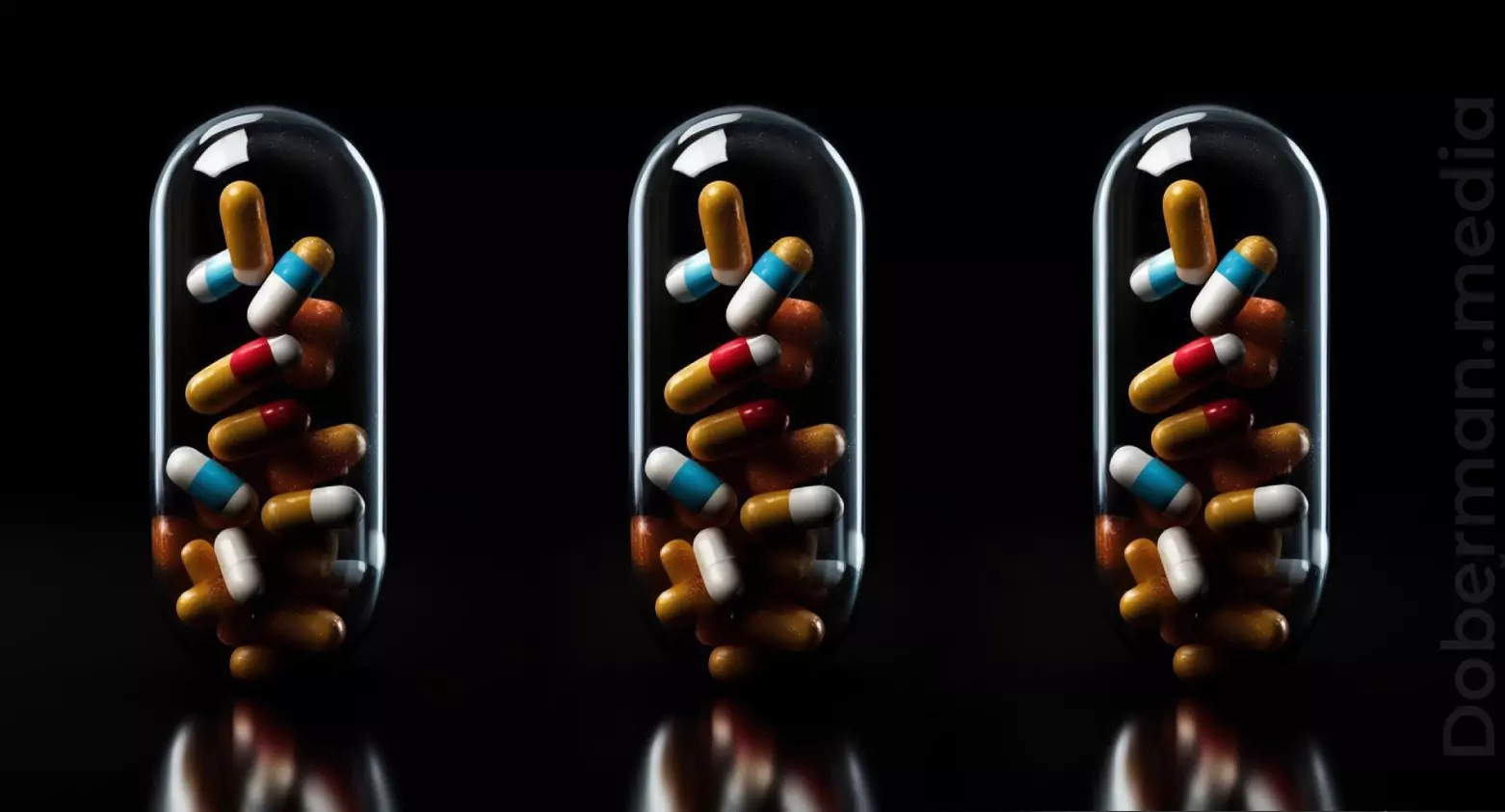

When humanity discovered penicillin in the last century, the world changed — and life expectancy soared. Humans began to live 30 years longer than in the pre-antibiotic era. But here's the paradox: a century later, we risk being in the same hole again. More and more bacteria are becoming invulnerable to antibiotics, and there are only a few innovative drugs on the horizon.
Epidemiologists are seriously alarmed. Matthias Pletz, president of the Paul Ehrlich Society for Infectious Therapy, bluntly stated: "We are on the verge of a medical catastrophe. What was the great achievement of the 20th century can be irretrievably lost."
Yvonne Mast, a microbiologist at the Leibniz Institute DSMZ, confirms: "Antibiotics were our salvation. But the situation with the emergence of resistant bacteria and the shortage of new drugs is a real threat to everyone."
Research leaves no room for illusions: Unless urgent action is taken, 39 million people could die from superbug infections by 2050. In Europe alone, these pathogens already kill 35,000 people every year.
Why does this happen?
Professor of intensive care Frank Brunkhorst in an interview for BILD named several reasons. Firstly, antibiotics are prescribed too often. This is especially true for outpatient treatment, where they are prescribed even when it is not needed. Secondly, international travel is active again after the pandemic, and resistant strains of bacteria are also moving along with tourists. Particularly high levels of resistance are recorded in Greece, Portugal, Turkey and India. Brunkhorst warns: "If you bring such a bacterium back from vacation and infect someone with weakened immunity, it can be fatal."
What's scary is that in most cases, antibiotics are not needed at all. Especially in respiratory tract infections, which are most often caused by viruses against which antibiotics are powerless. But they continue to be prescribed - especially to children.
And where are the new drugs?
That's the problem: Since 2017, only 12 new antibiotics have been approved in Germany. Scientists like Professor Mast's team are looking for new solutions, but the development process is long and incredibly expensive. According to her, out of 5000 discovered substances, only one reaches the pharmacy shelf, and this path takes from 8 to 15 years and costs hundreds of millions of euros.
For pharmaceutical companies, this is a game with a low coefficient: the development of antibiotics brings much less profit than other drugs. "We need urgent measures - more investment and grants, otherwise we risk remaining in the shadow of countries like China, which are investing much more in this area," Mast warns.
Frank Brunkhorst agrees: "It is a huge challenge for politicians to bring antibiotic production back to Europe. Today, almost all drugs are produced in India and China, and we are completely dependent on them."
The German Ministry of Health refrains from commenting at the moment, but one thing is clear: without radical steps, we risk returning to the pre-antibiotic era, which was once so happy that they said goodbye!.






0 comments
Enter your email — we’ll send you a one-time code. No passwords or accounts.
Code sent to
If the email doesn't appear in your inbox within a few minutes, check your spam, junk, or promotions folder, as some email services may mistakenly place automated messages there