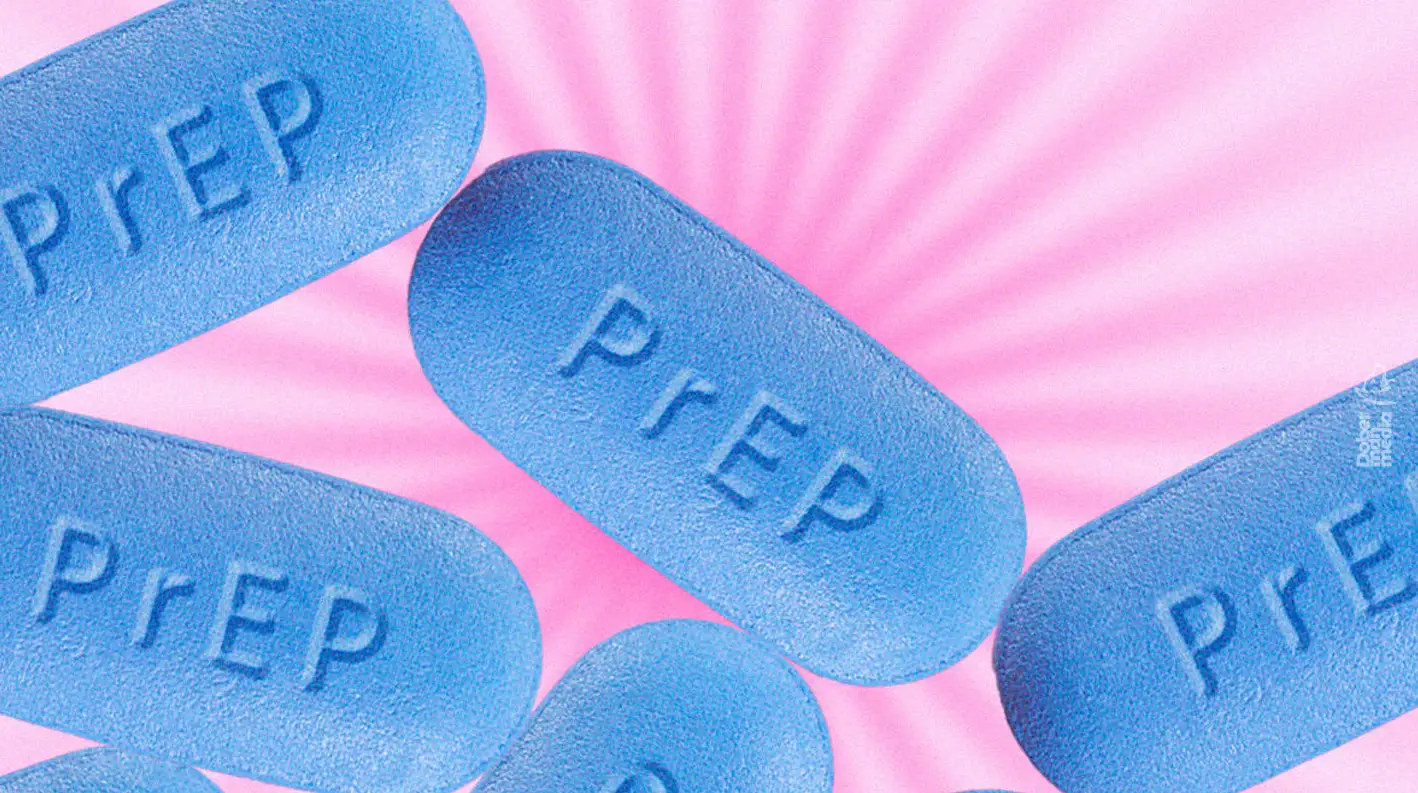

Modern sex has become much safer, but pre-exposure prophylaxis for HIV (PrEP) is still surrounded by a huge number of myths, misunderstandings, and plain old laziness. We decided to set the record straight and put together a frank medical guide with no unnecessary modesty.
What is PrEP?
PrEP (pre-exposure prophylaxis) — This is is the use of special medications by people without HIV to protect themselves from contracting the virus. The medication blocks HIV before it can take hold and multiply in the body. PrEP medications contain the same active ingredients as drugs used to treat HIV. When taken regularly, they provide a very high level of protection. However, it PrEP does not protect against other sexually transmitted infections (STIs). It can be taken in two main ways: one pill daily or on demand before sex. Before starting PrEP, you must take an HIV test to make sure you do not have the virus.
Table of Contents
1. Are you sure you know how to protect yourself? The biggest myths about the “magic pill”
Many people think that simply taking PrEP “whenever” is enough to make sex safe right away. In fact, there are two main regimens: daily dosing and dosing tied to a specific sexual encounter (event-based). The biggest misconception is that you have to take the pill at exactly the same time every day, down to the minute. That is not true: small shifts in your schedule will not affect the concentration of the medication in your body, so there is definitely no need to panic if your alarm goes off schedule.
2. The Tuesday-and-Saturday rule: why you don't need to take pills every day
If you have chosen the daily dosing regimen, we have good news for you: you do not necessarily have to force yourself to swallow pills every single day. For full protection, taking just four pills a week is enough.
Activists even came up with a simple mnemonic — the “T&S schedule” (Tuesday, Thursday, Saturday, Sunday — Tuesday, Thursday, Saturday, Sunday). If you take the pills on these days week after week, you are just as well protected as someone who takes them every day. Even if you accidentally miss one, two, or three days in a week (as long as they are not consecutive days), your protection will not collapse. But do not try to game the system by taking four pills in a row from Monday through Thursday and then taking a three-day break — your body needs a consistent concentration of the drug.
3. “Sure, I can make it in half an hour!”: the deadly math before a date
If you do not have sex regularly and do not want to take pills on a regular basis, event-based dosing is the option for you. But there is one hard-and-fast rule that must not be broken: a double dose (2 pills) must be taken at least 2 hours before sex.
Remember: taking the pills half an hour or an hour before your partner arrives is not just a bad idea—it is a regimen that does not work. The medication physically needs at least two hours to be absorbed and begin protecting your cells.
4. Sex started unexpectedly: what to do if you forgot about the two-hour window
Life is unpredictable, and sometimes a hot guy ends up in your bed before the safety timer has gone off. What should you do if sex has already happened and you did not manage to take two pills two hours beforehand?
It is too late to panic, but you need to act quickly. Here is your rescue plan:
- Take a double dose of PrEP as soon as possible—either immediately before sex or strictly within 12 hours afterward.
- Keep taking one tablet every day.
- Get to a doctor immediately.
If you don’t have any tablets at home at all, you have a maximum of 72 hours (ideally 24–48 hours) to get to a sexual health clinic or a hospital’s accident and emergency department (A&E) and ask for PEP (post-exposure prophylaxis).
5. Weekend sex tourism: how to pack protection in your suitcase
You’re flying off on holiday to, say, a gay Pride event in Gran Canaria, and you’re planning to go all out. How can you protect yourself during that time if you don’t normally take PrEP?
Experts at the Terrence Higgins Trust recommend a “festival dosing” regimen: take a double dose on the plane, then one tablet every day for the duration of your sex marathon, and continue taking one tablet a day for another two days after the sex ends. This will keep you fully protected throughout your entire “festival of misbehaviour.”
6. Is it true that PrEP works better than condoms?
From the standpoint of HIV prevention, PrEP taken correctly delivers incredible results — it is nearly 100% effective (about 99.9%). It is just as reliable as condoms and is currently the best HIV prevention method in the world. In the UK, around 120,000 people already receive it free of charge, while in France — the figure is around 65,000. But remember: PrEP protects only against HIV; tablets will not stop other infections (syphilis, gonorrhoea, chlamydia).
7. Why sexual health clinics are required to move you to the front of the line
If you go to a public sexual health clinic and say, “I just want to get tested,” you may be given an appointment a week later. But if you tell them honestly at reception, “I’ve just had sex, I didn’t take PrEP in time, and I need help,” they are required to see you as a priority (expedited). Doctors will immediately assess your risks, run blood tests, check your kidneys, and decide whether you need an emergency PEP regimen or whether adjusting your PrEP schedule will be enough. Don't be afraid to tell the doctors the truth—trust us, they've heard absolutely everything.
8. 1982: when sex could kill and the virus did not even have a name
To understand what an extraordinary time we live in, we need to look back at the past. The Terrence Higgins Trust was named after Terry Higgins, one of the first people in the UK to die from AIDS-related illnesses. When he died in 1982, HIV did not even have an official name yet, let alone tests or treatment.
His partner, Rupert Whitaker, and the charity's co-founder, Martyn Butler, could never have dreamed that within their lifetimes there would be pills allowing people with HIV to live full lives without passing the virus on to their partners, while HIV-negative people could reliably protect themselves from infection.
9. A pharmacists' conspiracy or a revolution? A future where an injection replaces pills
Taking pills every day is becoming a thing of the past. Right now, the scientific world is on the verge of a revolution. Pharmaceutical giant Gilead, together with the Bill Gates Foundation and the Clinton Foundation, is already testing an injectable form of PrEP that will only need to be administered once every six months. The cost of this annual regimen is expected to be reduced to $100 for developing countries. What's more, Merck is developing a drug that will only need to be taken once a week or once a month and will cost around $8 per year. This could put an end to the global HIV epidemic once and for all.
10. Keys in your pocket: why the most important sex gadget goes on your keychain
The most common reason for unprotected sex is simple lack of foresight: people simply forget to bring their pills with them on a date or to a party. The solution turned out to be brilliantly simple. Activists developed a tiny, airtight metal keychain container that holds exactly two PrEP pills.
This mini gadget is always with you on your key ring. It will come to your rescue in two situations: if you forgot to take your scheduled pill at home that morning, or if you unexpectedly meet the man of your dreams at a bar and realize that neither of you will be going home tonight. The keychain will serve as a starter protection kit that's always close at hand.
Important warning: this text is no substitute for seeing a doctor
All this information about dosing regimens provides an excellent foundation for understanding, but remember: journalists and activists are not your treating physicians. Before you start taking PrEP or PEP, you must consult a qualified healthcare professional or visit a sexual health clinic.
Only a qualified healthcare professional can properly assess your individual risks, carry out the necessary blood tests, and check your kidney function to make sure the medication will not harm you. Your views and your voice matter when making decisions about your sexual health, but clinical monitoring is essential for your safety. Do not self-prescribe medication, and always consult a doctor.
This article was prepared using educational materials from the Terrence Higgins Trust (tht.org.uk).









0 comments
Enter your email and we will send you a one-time code. No passwords, no accounts.
Code sent to
If the email does not arrive in your inbox within a few minutes, check your Spam, Junk or Promotions folder — some mail services may wrongly place automated messages there.