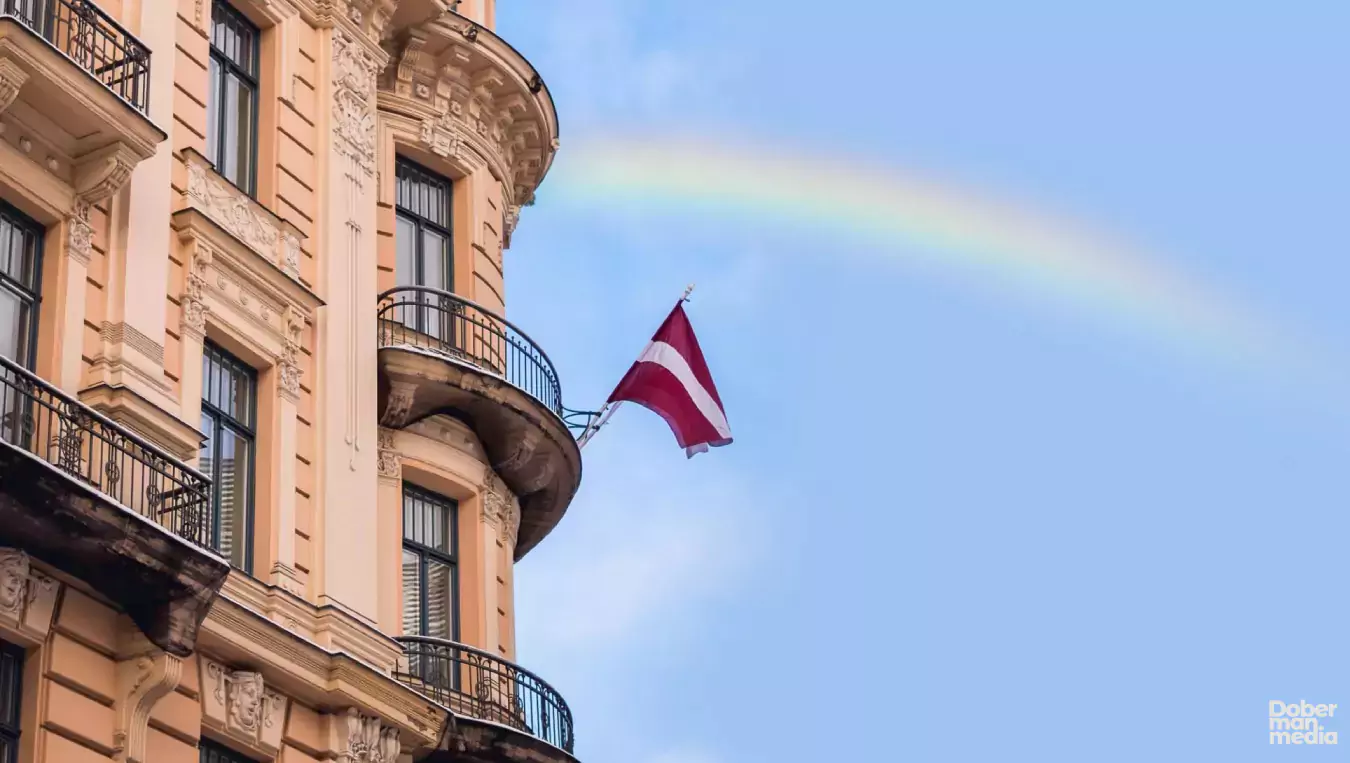

"This love cannot be illegal": Russian journalist Nadezhda Yurova and art historian Alexander Semenov, along with their partners, are launching a legal battle to secure recognition of same-sex marriage in Latvia. Although the country’s Constitution defines marriage exclusively as a union between a man and a woman, the subjects of this story intend to go through all levels of the court system to secure full rights and prove that the right to a family should know no boundaries.
This is the first time this interview has been published it turned out in the publication Port. The editorial staff has authorized Doberman Media to publish this interview in its entirety.
Table of Contents
Nadezhda and Victoria
Nadezhda Yurova, host of a YouTube channel and podcasts for *Novaya Gazeta Europe*, She explained how she and another Russian-speaking couple plan to go through the Latvian court system—where same-sex marriage is prohibited by the Constitution—to have their relationship recognized. Nadezhda moved to Latvia in 2022 at the invitation of *Novaya Gazeta Europe*. There, she met Victoria, her future wife.
“Vika is from Latvia. She’s Latvian, has Latvian citizenship, and we met here. It was completely by chance,” Nadezhda said.
She talked about how she played soccer on a small women's team made up mostly of immigrants. Vika joined the team through some friends, and that's where the girls first met.
“We saw each other from time to time for a year or a year and a half, but we never really managed to get together and have a proper conversation. But, according to Vika, she’d already had her eye on me back then,” the girl said.
Some time later, Nadezhda ran into Victoria by chance at a book fair, and Victoria invited her to her dacha. The Russian woman accepted immediately.
“Things had already started to heat up there, actually. I went to the cottage, and when we woke up together, she asked me out,” she shared.
Literally just two months later, the girls began discussing the possibility of marriage. According to Nadezhda, this desire wasn't driven by the need to obtain any documents—it was simply based on her feelings for Vika.
“We were so confident in each other that we didn’t even think it might help with any paperwork. It was purely a romantic impulse,” recalls Yurova.
The Latvian Constitution states that marriage is a union between a man and a woman. The only way to register a relationship in the country remains a civil partnership—a status that was introduced on July 1, 2024, and is available to same-sex couples as well.
Unlike spouses, partners do not have the right to adopt children; however, they can, for example, visit each other in the hospital and receive information about their partner’s health.
“It was a symbolic gesture to legitimize our relationship in some way. But it was very sweet; we treated it like a small wedding. We dressed up, and our loved ones came—Vika’s family, including her daughter,” the journalist said.
At the same time, moving from Latvia to another country where same-sex marriage is recognized would be a difficult decision for the young women. This is especially true for Victoria, who was born in Latvia, loves this country, and does not want to leave it. In addition to her citizenship, her family and children also keep her here.
“For her, moving isn’t just a matter of packing up and leaving. Her youngest child is 8 years old; he goes to school, and he has a father. And, of course, I don’t want to run away from problems—I want to try to solve them right here,” Nadezhda noted.
Nadezhda admits that, although the partnership was a sort of half-measure for her and Vika, overall they felt more at ease. For a while, the women considered going to court, but they were deterred by the lack of successful precedents in such cases. And then they met Alexander Semenov and his husband.
Alexander and Gleb
Alexander Semyonov, an art historian and the creator of the architectural Telegram channels “Latent Modernist” and “Enema of Romanticism,” left Russia in 2024. Earlier, in 2021, he was fired from the Stieglitz Academy in St. Petersburg for participating in protests in support of Alexei Navalny.
While still in Russia, Alexander was able to renounce his Russian citizenship and obtain Latvian citizenship. He then moved permanently to Latvia, sold his apartment in St. Petersburg, and bought a new one in Riga.
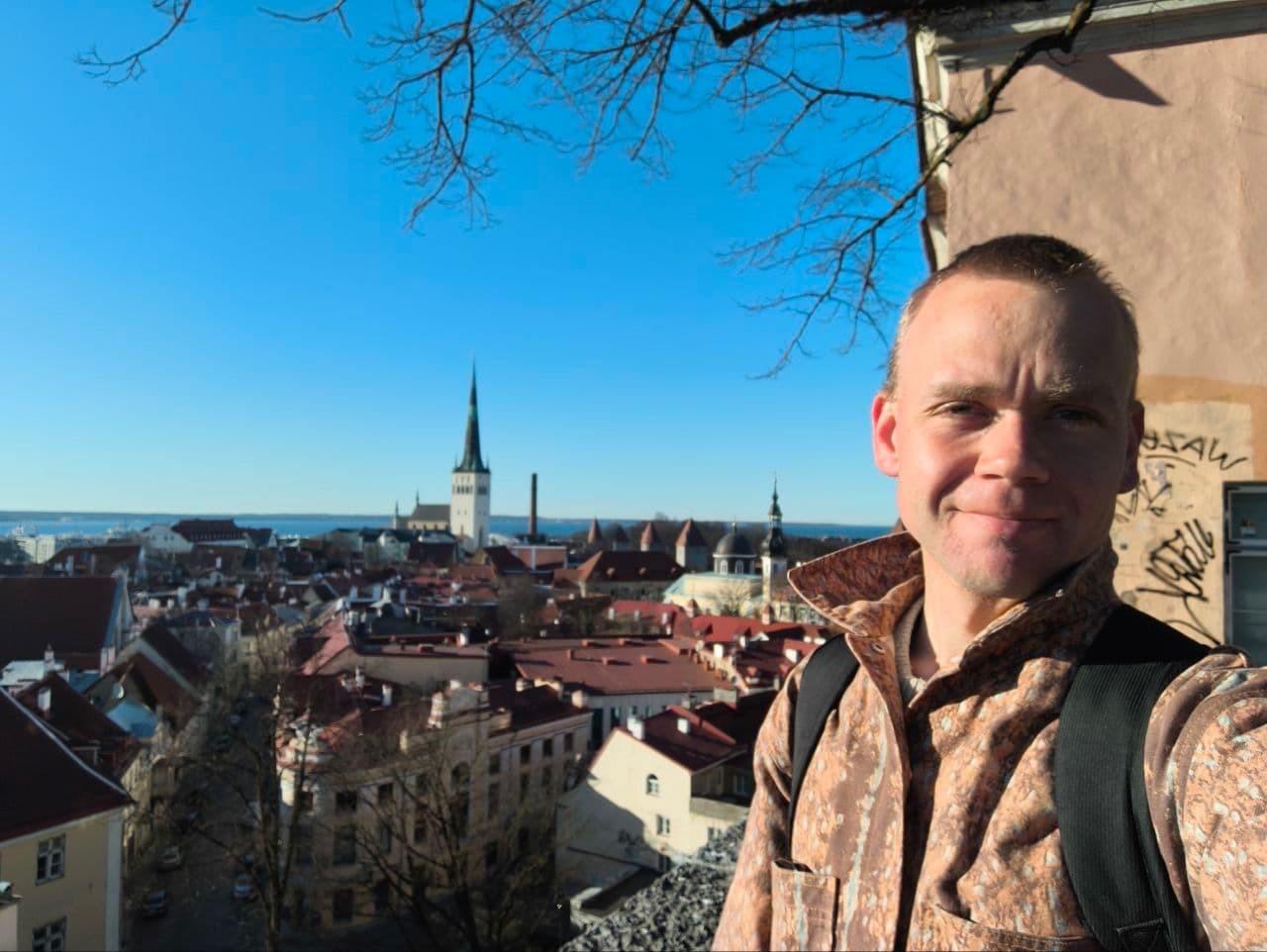
He was able to marry his boyfriend, Gleb, in Denmark on March 5 of this year. Alexander had hoped to bring his husband to Latvia, but due to the country’s Constitution, they were “simply denied recognition.”
“I thought that maybe we could just apply for a residence permit for him instead of getting married, but I received an official rejection for that as well,” Semyonov told us.
The activist admitted that he hadn't even considered the possibility that Latvia does not recognize same-sex marriages: he was aware of the institution of civil partnership, but didn't know that the Constitution includes a provision defining marriage as a union between a man and a woman.
“I didn’t know that. Because I had been told that, in general, European countries are sort of required to recognize European marriages—otherwise, a situation of bigamy could arise,” Semyonov explained.
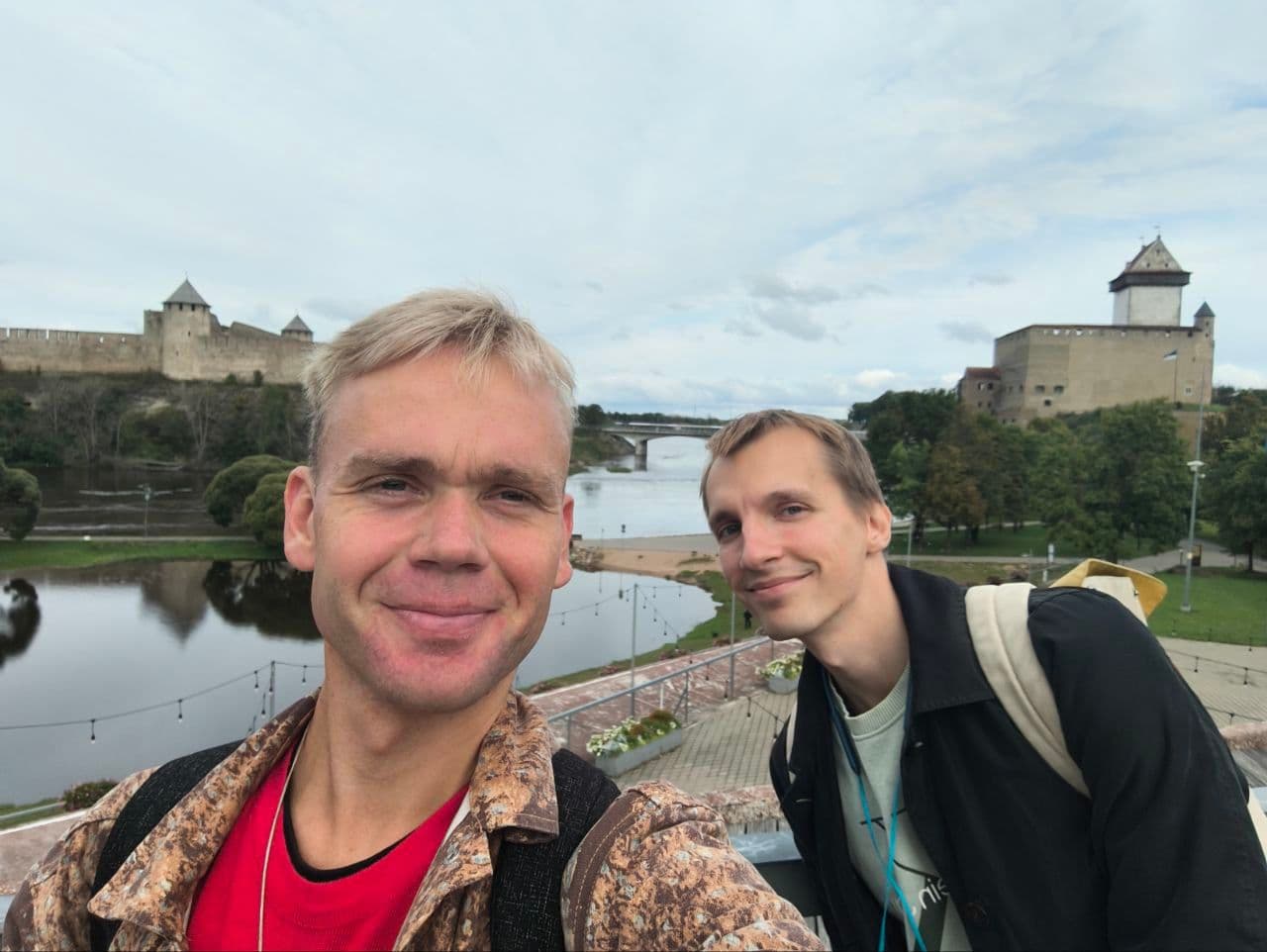
In the end, Alexander managed to have his marriage recognized in neighboring Estonia. He received a permanent resident card there, and as a result, Gleb was granted a residence permit. However, the couple still wants to return to Latvia.
“I moved, of course, because of the war in Russia, but also simply because I wanted to live in Latvia. Overall, I love Latvia—it’s the country where my mom was born and where my grandmother lives,” Alexander added.
"First to the immigration office, then to court"
Our protagonists learned that in March of last year, the Polish Supreme Court required the country’s civil registry offices to recognize same-sex marriages contracted in other European Union countries, citing a ruling by the Court of Justice of the European Union. At the same time, the Polish Constitution also defines marriage exclusively as a union between a man and a woman.
Polish authorities stated that the court’s ruling applied only to “one very specific” same-sex couple and refused to immediately recognize all same-sex marriages; however, the case still set an important precedent.
Alexander and Gleb decided to try the same approach to get Latvia to recognize their marriage. Around that time, they got in touch with journalists from *Novaya Gazeta Europe* and met Nadezhda Yurova.
“We suggested they strengthen their case. We already had a partnership in place, and, naturally, we wanted broader rights, so we thought this was a good approach. We wanted them to go to court not with just one case, but with several, one after another,” Nadezhda explained.
The girls decided to “make history” and immediately began planning their wedding. Like their new friends, they chose Denmark as the place to get married, since it requires the fewest documents. However, they had to pay extra for the rush—initially, the only available dates were in the fall.
On June 8, Nadezhda posted a request for help on social media to raise 700 euros for tickets and lodging in Denmark. She added that Vika had already raised 565 euros by June 10, at which point she closed the fundraiser.
"Vika is the love of my life, and that love cannot be illegal," Nadezhda wrote when she announced the fundraiser.
Nadezhda and Victoria’s wedding in Denmark is scheduled for today, June 20. Afterward, the women plan to immediately demand that Latvia recognize their marriage, and if their request is denied, they will take the matter to court.
“We’ll go back and submit our marriage certificate first to the immigration office and then to the court. At the same time, the couple’s case will be proceeding in court, and I hope we’ll be able to pull off the same thing after them,” Yurova said.
At the same time, Alexander and Gleb themselves are no longer sure they will return to Latvia, even if their marriage is eventually recognized: the young couple has settled into life in Estonia and travels to Latvia once a month to visit their grandmother.
“It’s not that we’ve decided to fight for the legalization of same-sex marriage in Latvia, but I would like to see this recognized in the country where I’m a citizen—and, in fact, my second home. And, of course, there’s a sense of injustice,” Alexander concluded.
Source: Port
With permission from the editorial staff.







0 comments
Enter your email — we’ll send you a one-time code. No passwords or accounts.
Code sent to
If the email doesn't appear in your inbox within a few minutes, check your spam, junk, or promotions folder, as some email services may mistakenly place automated messages there