

This piece was inspired by publication Rose Rankin-Gee in *The New York Times* (March 29, 2026), “Goodbye, ‘Queer Eye.’ Goodbye, Queer Acceptance.” The text below does not contain any spoilers.
Queer Eye — an American Netflix reality show that was relaunched in 2018 as a remake of the original 2003 show Queer Eye for the Straight Guy (Bravo). At the center of each episode is the so-called “Fab Five” (Fab Five): five queer experts, each responsible for their own area of expertise—food and wine (Anthony Porowski), fashion (Tan France), self-care and beauty (Jonathan Van Ness), culture and relationships (Karamo Brown), and interior design (Bobby Burke in seasons 1–8, then Jeremiah Brent). Over the course of a week, they help one contestant—the so-called “hero”—transform their life. Literally: they remodel their apartment, revamp their wardrobe, teach them how to cook, and talk about their deepest struggles. The show has traveled through nine states, Japan, Brazil, and Germany, garnering 37 Emmy nominations and winning 11 of them. Trailer for the first season:
There are some things you only notice when they come to an end. Not with a bang, not with fireworks—just like that, quietly, in passing. You open Netflix on a Wednesday night, see an inconspicuous banner in your feed with familiar faces, and think: Wait, isn’t this the final season? This one?
On January 21, 2026, all five episodes of the tenth and final season were released on Netflix Queer Eye. The announcement of the release date came just sixteen days before the premiere—an unusually short timeframe even by streaming standards. For a show that, in its heyday, was a cultural phenomenon, this is an almost unseemly lack of fanfare.
Critics noted that the tenth season is intentionally more subdued and intimate than the peak seasons from the second through the fifth. Five episodes aren’t enough for the large ensemble moments that defined previous years. The finale was described as pleasant but unremarkable for a show with such cultural significance.
Of course, there are internal reasons for the understated ending. The show ran for nearly ten years and spanned ten seasons, ultimately totaling about ninety episodes. Deadline The franchise has run its course—it happens. Plus, there’s been well-known friction within the cast: Bobby Burke’s departure after the eighth season, which took place without any grand explanations but with an obvious chill in the air. You could chalk it all up to the logic of the industry. But to do so is to turn a blind eye to something important that’s happening on the outside.
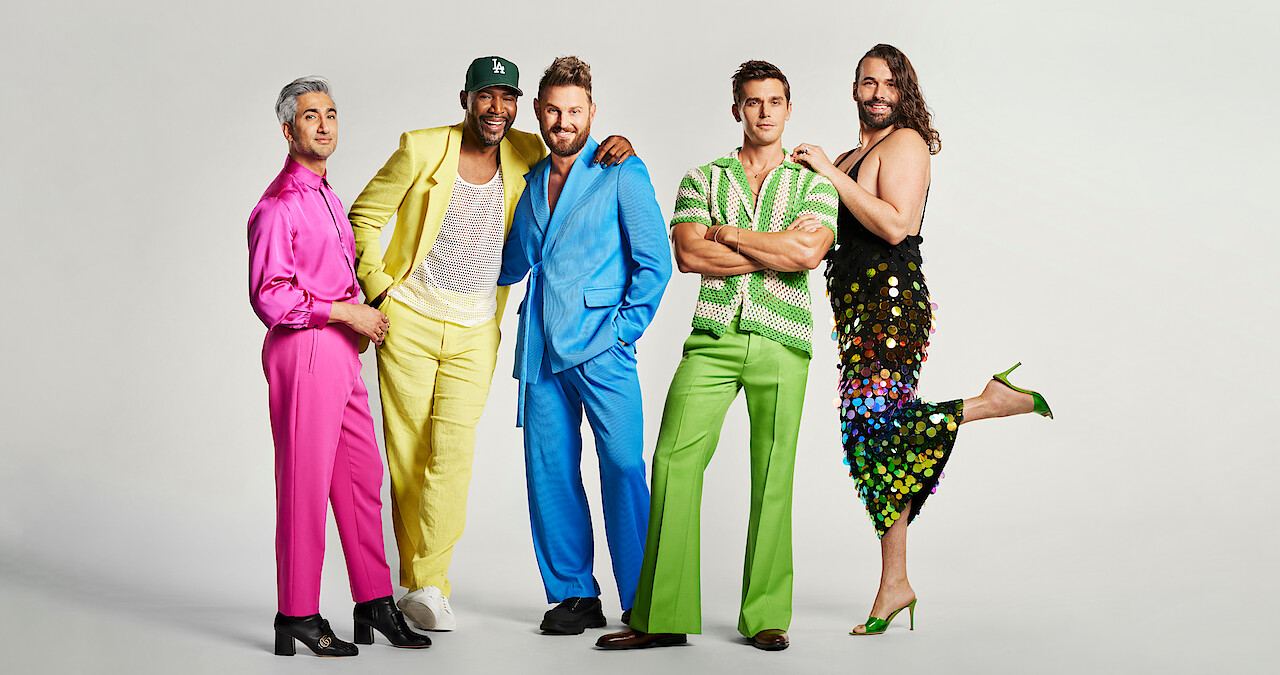
Table of Contents
How It All Began
To understand why the finale feels the way it does, you have to remember what this show was like in 2018—when it first appeared on Netflix and, in just a few weeks, became the talk of the entire country.
America was also going through a rough patch back then. The first few months of the Trump era, intense culture wars, the feeling that society was torn in two. And right then, a show appeared in which five queer men of different races and personalities travel through conservative states—Georgia, Missouri, Kansas—and help elderly Republicans, religious middle-aged men, people who had no idea what “queer” meant or why they needed it. And it worked. Not because the show was naive or avoided tension—it didn’t avoid it. It transformed it.
Первый сезон набрал 97% на Rotten Tomatoes. The critical consensus went something like this: “Queer Eye "It has adapted to a new era without losing its style, charm, or sense of humor, proving that the show's formula remains as captivating as ever." Wikipedia
It was a rarity: a reality show that critics actually loved. Because the show was about something real. Not about how to fold socks properly or choose a shade of paint for the walls—but about how to accept yourself. How to let someone take care of you. How to realize that a person who looks completely different from you has your best interests at heart.
That’s exactly why people cried. Not because of the set designs—but because of the moments when the protagonist looked at himself in the mirror for the first time and saw not a failure, but a person worth loving.

The pullback that's happening right now
While the “Magnificent Five” were filming their final season in Washington, something was happening in that very same country that makes this finale particularly bittersweet.
According to Gallup, support for same-sex marriage among Republicans has twice reached a majority—55% in 2021 and 2022. Since then, it has been steadily declining. Gallup
64% of Americans consider same-sex relationships morally acceptable — This is the third consecutive time the figure has remained unchanged, and it is 71% below the 2022 peak. Gallup It sounds like a small number. But behind it lies a real shift in public sentiment—one that no one would have expected just five years ago.
From 2020 to 2025, the percentage of Americans who believe the country needs to do more to ensure equal rights for gay and lesbian people fell from 50 to 39 percent. The Survey Center on American Life
Part of this decline stems from the fact that society has come to feel that progress has been made. But another part of it is something else—something less optimistic.
Support for LGBTQ+ rights has dropped significantly among young people, especially young men. Psychologists Tessa Charlesworth and Eli Finkel noted: “In just four years, anti-gay prejudice has increased by about ten percent”—and particularly sharply among the youngest adults. The Survey Center on American Life
A survey conducted in 2025 among more than a thousand LGBTQ+ adults showed that since November 2024—the day Orange was elected to the White House—anti-queer rhetoric has intensified, violence has become more frequent, and the lives of LGBTQ+ people have changed under pressure from legislative initiatives and executive orders. Mapresearch
These aren't just abstract statistics. These are people who change jobs, move, and stop being their true selves in public.
The Paradox of the Setting
For the final season, the “fab five” headed to Washington, D.C.—the nation’s capital. There, Karamo Brown took his heroine, Dorin, to the DC Rainbow History Project to document her love story—one of the most emotionally significant moments in the show’s history. AnimeNextSeason
It’s hard not to see the irony in this choice. Washington is a place where, right now, the question of how safe it is to be yourself is being decided. Filming the final season of a show about acceptance in a city where federal policy is moving in the opposite direction is either a very bold move or a coincidence that turned out to be more poignant than any intention could have been.
The show always chose its cities deliberately. Georgia, Kansas, Texas—these weren’t random choices for liberal-leaning content. It was a deliberate conversation with an America that wasn’t used to such conversations. And this conversation worked precisely because it was personal—not a lecture, but a meeting.
The final in Washington is a farewell in the very heart of the car.
What Does “Acceptance” Mean in 2026?
По данным GLAAD, 88% американцев, не идентифицирующих себя как ЛГБТК+, считают, что геи, лесбиянки и бисексуальные люди заслуживают жизни без насилия и дискриминации. Большинство из тех же людей убеждены, что риторика политиков даёт окружающим разрешение судить и дискриминировать других. GLAAD
This is the key contradiction of our time. Most people, in principle, are in favor of not hurting anyone. But there’s a huge gap between “being in favor in principle” and “being willing to defend it.” And it’s precisely this gap that *Queer Eye* has been trying to bridge for all eight years—not with politics, but with stories. One person at a time.
Over the past year, GLAAD has documented at least 932 anti-queer incidents nationwide—that’s 2.5 incidents every day. These include more than 85 assaults, 60 bomb threats, and 10 deaths resulting from hate-motivated violence. GLAAD
When you look at these numbers and then remember how, in season three, Jonathan taught a man from the Wild West how to take care of his beard—and how they both cried while doing it—you realize just how fragile the essence of that show was. And just how much it was needed.
The Ending as a Symptom
The quiet departure of “Queer Eye” is not the cause of the setback in LGBTQ+ acceptance. But it is a symptom of that same process. Culture senses the mood before sociologists have a chance to measure it. When a show about acceptance ends quietly, without a farewell wave, almost unnoticed—it says something about how uncomfortable this conversation is for the mainstream right now.
Antoni Porowski wrote in his farewell post: "It's not about how—or even what—it ended; the journey itself is the part I'll hold dear in my heart." Parade
Beautiful. Dignified. And a little sad—because that’s exactly the tone people choose when they don’t want to make the finale into something more than it is.
Queer Eye At its best, it proved that closeness is possible despite differences. That you can look at someone who isn’t like you and see something of yourself in them. That acceptance isn’t a political stance, but a human instinct that simply needs to be cultivated.
The show did everything it could. It’s just a shame that the U.S.—and, following its lead, the rest of the world—seems to have forgotten how to watch it.



0 comments
Enter your email and we will send you a one-time code. No passwords, no accounts.
Code sent to
If the email does not arrive in your inbox within a few minutes, check your Spam, Junk or Promotions folder — some mail services may wrongly place automated messages there.