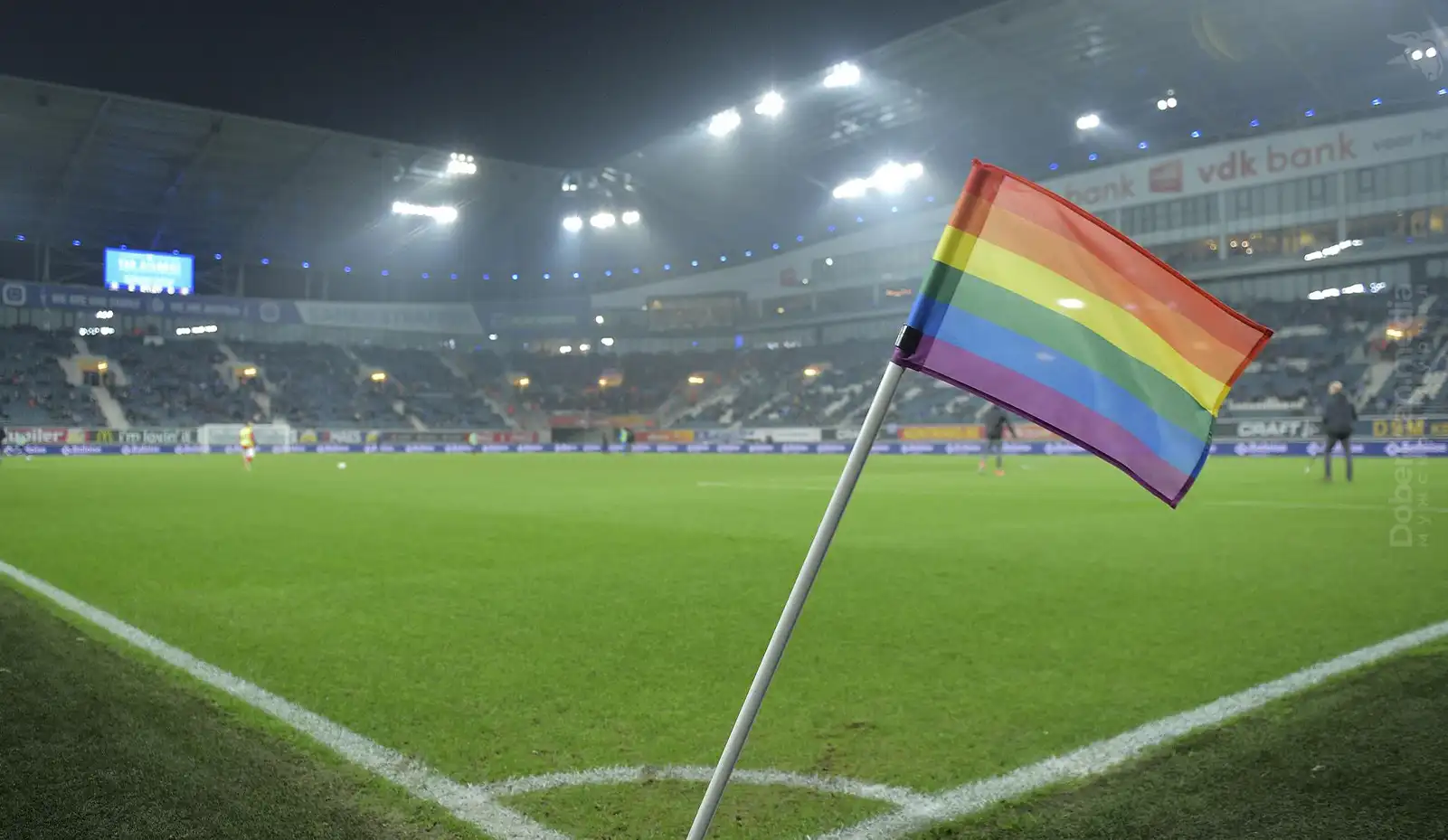

On March 19, 2026, the Chicago Fire’s home game against D.C. United at Soldier Field was suspended in the second half. The suspension was caused by discriminatory chants from fans. This is the second such incident in the club’s last three home games, counting from the end of last season.
Chicago Fire FC. A Chicago-based club that plays in MLS (the top league in the U.S. and Canada). It’s a team with a rich history: it has won the league championship, but in recent years has mostly hovered around the middle of the standings. Its home stadium is—
Soldier Field.
D.C. United. One of the most successful clubs in the early days of MLS. Based in Washington. They haven't been at the top in recent years, but they do have good streaks from time to time. In 2026, they'll have an interesting roster, including a forward Thai Baribo — He just happened to be at the center of this story.
What exactly were the fans shouting?
The match referee, Serhiy Demyanchuk, confirmed that the insults were directed at the D.C. United forward Taya Baribo. It later turned out that this was a four-letter Spanish-language homophobic slur commonly used in soccer circles.
For Baribo, this is a recurring story: in late 2025, he was already the target of these same chants at a game in Chicago, when he was still playing for the Philadelphia Union. That game was also halted, and head coach Gregg Berhalter had to personally approach the stands and ask the fans to calm down.
Where were the shouts coming from?
Unlike the incidents last year, this time the main offender was located outside the active support sector (Supporters Section). However, witnesses report that, prior to the official suspension of the game, small groups of people (3–4 people each) were chanting insults both in the supporters’ section and in the stadium’s second tier. Despite this, Not a single spectator was removed from the stadium, and the investigation into the incident is still ongoing.
How is the club trying to deal with this?
During the offseason, Chicago Fire management held a series of meetings with the leaders of fan groups to develop a plan of action. Here's what they came up with:
- Fact Sheets: At “important” matches, yellow and red cards explaining the rules of conduct are placed in the cup holders of the seats in the fan section. They weren’t used at the game against D.C. United—the club decided that constant use of the cards diminished their effectiveness and planned to use them only for top matches (they are currently reviewing this decision).
- "Self-Policing": The fans agreed to maintain order among themselves. This worked to some extent at the last game: when a few people started shouting insults, other fans and section leaders immediately demanded that they be quiet. The offenders apologized and stopped.
- Noise suppression: Fan groups try to drown out discriminatory chants with organized songs and cheers so that they can't be heard either on the field or on the broadcast.
Why can't the problem be solved once and for all?
The efforts of the club and its loyal fans have their limits. Although the chants have grown quieter and are barely audible on TV, they still could be heard clearly in the stadium during both home games this year. A “self-policing” system is in place in the fan section, but the club does not yet know how to effectively monitor regular spectators in the other stands.
The situation with fan behavior is unfolding against the backdrop of major changes for the club: in March 2026, the Chicago Fire officially began construction a new private stadium costing $750 million in the city center. Management hopes that by the time of the move, the problem of discriminatory chants will be a thing of the past.






0 comments
Enter your email and we will send you a one-time code. No passwords, no accounts.
Code sent to
If the email does not arrive in your inbox within a few minutes, check your Spam, Junk or Promotions folder — some mail services may wrongly place automated messages there.