
This article was prepared based on a report via feedback one of the readers of Doberman.media. A guy from Riga (Latvia) reached out to us with a rather unusual situation: he has a large penis—about 20 cm—and because of its size, the curvature is particularly noticeable. He’s worried about this and asked if he should be concerned. We decided his question deserved a detailed answer—so we wrote this article. We hope it will help not only him, but also anyone else who has wondered about similar issues.
Table of Contents
"Something's wrong with me" — why men don't talk about it
Every day, thousands of men search for the same terms in incognito mode—secretly, too embarrassed to ask a doctor or a friend. The topic is the shape of the penis. More specifically, its curvature.
One of our readers wrote: "I'm terribly self-conscious. I have a large penis, and because of that, the curvature is especially noticeable. Isn't that a medical condition? Can it be corrected?" This short message contains a whole tangle of anxieties: shame, insecurity, fear of intimacy, and a sense of being “wrong.” And all of this is completely unfounded.
Because in most cases, penile curvature is not a medical condition. It is normal.
Anatomical Facts: What Is a “Normal” Penis?
Since childhood, we’ve all been fed the image of a certain the "ideal" body. Magazines, movies, the internet—everywhere you look, you see standards that are almost never found in real life. Penises in pornography look as if they were cast from a single mold—smooth, symmetrical, and perfect. But this is an illusion created by selection, camera angles, and lighting.
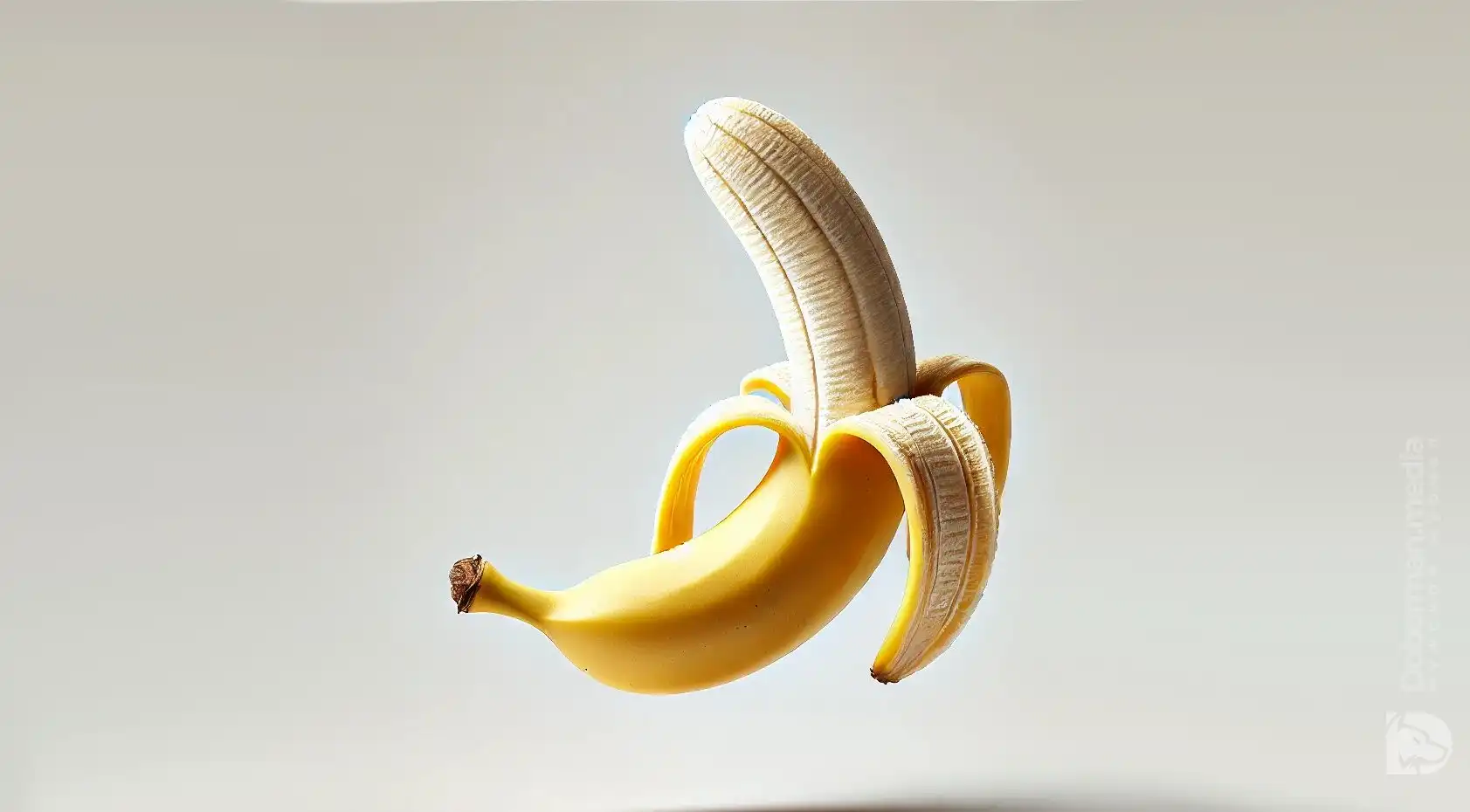
In fact, a completely straight penis is rare. Most men have some degree of deviation from an imaginary axis: slightly to the left, slightly to the right, a little up, or a little down. Most often, when erect, the penis points slightly upward—and this is perfectly normal from an anatomical standpoint.
Fevers and Diagnoses: When to Be Concerned
Medicine does not consider every curvature to be a medical condition. There is a clear classification:
Up to 15 degrees — A minor deviation. This is within the physiological norm, requires no treatment, and causes no discomfort.
15–45 degrees — moderate curvature. This, too, is generally not a medical condition, does not interfere with sexual activity, and usually does not require surgical correction.
More than 45 degrees — significant curvature. At this point, it’s a good idea to consult a urologist—not because it’s “scary,” but to rule out specific medical causes and, if necessary, discuss treatment options.
It’s important to understand that even a significant curvature isn’t the end of the world or a death sentence. Modern medicine knows how to treat it.
Where does the curvature come from?
There may be several reasons, and most of them are completely harmless.
Congenital characteristics
Some men are naturally born with a slight asymmetry—one of the corpora cavernosa (the cavernous bodies that fill with blood during an erection) is slightly longer than the other. This is what causes the curvature. It is not a disease; it is an individual anatomical feature—just like having fingers of different lengths or a slight difference in foot size.
Injuries
Most often, moderate to severe curvatures result from microtraumas: an awkward sexual encounter, a blow, or excessive bending during an erection. Scar tissue forms at the site of the injury, which is less elastic than the surrounding tissue. During an erection, the elastic areas stretch, but the scarred areas do not. This is what causes the curvature.
In most cases, these fibrous growths are completely harmless: they do not cause pain, do not interfere with normal function, and do not progress.
Peyronie's Disease
This is a separate, more serious condition. Peyronie’s disease is an inflammatory condition in which dense plaques of fibrous tissue form under the skin of the penis. These plaques cause significant curvature (often more than 45 degrees), painful erections, and, in some cases, erectile dysfunction.
Peyronie's disease is a diagnosis made by a doctor. And it is this condition that requires treatment—whether with medication, physical therapy, or surgery. The good news is that modern treatment methods are highly effective.
Ancient Rome knew what we have forgotten
The history of humanity’s sexual preferences is remarkable in that there is nothing new about it. The Romans, who were not shy about depicting phalluses everywhere—on the walls of houses, on amulets, and in bas-reliefs—had their own classification system.
They called a straight penis a “spear” (hasta). A curved one was called a “crescent” (falx). And the lyrics of the bawdy songs sung in the streets of Rome stated quite plainly: it is the “crescent” that is capable of delivering true pleasure. Not the spear—the crescent.
Why? Because the Romans observed, asked women, and drew conclusions. Through empirical observation—without MRIs or gynecological exam chairs—they understood what modern science has since confirmed anatomically.
The Anatomy of Pleasure: Why Flexibility Is an Advantage in Gay Sex
Now for the most important part—physiology. And this is the key section of the article for those who are concerned about the shape of their penis.
The rectum isn't a straight tube. It has natural curves, and there are areas within it that vary in sensitivity. The most sensitive spot for the receiving partner is— prostate, or, as it is often called in the LGBT community, the “male G-spot.”
The prostate is located on the anterior wall of the rectum — about 5–7 centimeters from the opening, on the abdominal side. It is about the size of a walnut, and when stimulated, it can produce extremely intense sensations—even leading to orgasm without direct stimulation of the penis.
So here's the thing: a curved penis up During anal sex in the missionary position or with the partner on top, the penis is naturally directed toward the prostate. It doesn't just move back and forth—it glides along the prostate with every thrust.
Now for a little physiology—and this is the most important part of the article for those who are concerned about the shape of their penis.
The vagina is not a straight tube. It is a dynamic organ with curves, folds, and areas of varying sensitivity. The most sensitive spots are located on the anterior wall of the vagina — the one facing the woman's stomach.
It is there that they adjoin the vaginal wall clitoral arms — the internal part of the clitoral system, which is significantly larger than the “glans” visible from the outside. The clitoris is not just a small bump; it is a branched structure that extends deep into the body. And its internal parts run precisely along the front wall of the vagina.
In addition, nearby is urethra, stimulation through the vaginal wall of which creates additional intense sensations.
So here's the thing: a curved penis up When inserted, it naturally exerts pressure specifically on the front wall of the vagina. It doesn't just move back and forth—it glides over the most sensitive areas with every thrust.
This is no coincidence. It is an anatomical coincidence that can and should be taken advantage of.

A Practical Guide: Poses and Techniques
Knowing your partner's anatomy is a superpower in bed. Here's how to put it into practice.
If the penis curves upward
This is probably the "most rewarding" option for anal sex.
- Missionary — a classic position in which the curve is directed straight toward the receiver's prostate. The partner's raised legs enhance the effect.
- The one at the top, facing you — It automatically controls the angle and depth and can tilt backward to increase pressure on the prostate.
- On their side, facing their friend — a gentle position with a good angle for stimulation.
If the penis curves downward
- Doggy Style — The bend in this position exerts pressure on the recipient's prostate.
- The receiver is standing with his back to you — the angle coincides with the direction of the bend.
- Lying on the stomach — the curve is directed toward the front wall.
If the penis is curved to one side
- Side positions ("spoons") — allow you to adjust the angle and find the most comfortable and pleasant position.
- Experiment with rotating your torso and hips.

Important for anal sex: comfort comes first
Bending may require a little more attention to the angle of penetration—especially if the bend is sharp. Here are a few practical tips:
- Chat — Ask your partner what makes them feel comfortable and what they enjoy. That’s not a sign of weakness; it’s a sign of care.
- Enough lubricant — always, in any position, regardless of the shape of the penis.
- A Slow Start — Let your partner get used to the corner; don't rush.
- Add manual stimulation — Massaging the receiving partner's penis during sex greatly enhances pleasure for both partners.
Talking with Your Partner: It's Easier Than It Seems
Many men are afraid of coming across as “weird” if they bring up anatomy before or during sex. In reality, most partners will appreciate such a conversation.
“I like it this way—how about you?”—that’s not awkward. It’s maturity. A man who cares about his partner’s pleasure and knows how to talk about it is incomparably more attractive than one who does everything in silence and never asks for feedback.
The shape of the penis is just one of many anatomical features. It does not determine your masculinity or your value as a lover. What matters is attention, communication, and the desire to give pleasure.
When should you see a doctor?
You should see a urologist if:
- A curvature of more than 45 degrees and interferes with one's sex life or causes discomfort.
- I started feeling pain during an erection—especially if there wasn't one before.
- The curvature appeared suddenly or is getting worse—a sign of Peyronie's disease.
- Firm lumps or plaques can be felt under the skin — a reason for an examination.
- I have erectile dysfunction, which accompanies the curvature.
In all other cases—no surgery, no “treatment,” and no worries. Your body is fine.
Myths It's Time to Debunk
Myth 1: “Big and straight means better in bed” Size and shape are the least important factors in a partner’s sexual pleasure. What matters far more is knowledge of anatomy, attention, communication, and the ability to use your hands—and yes, a curved penis that points directly at the prostate.
Myth 2: “A curved penis is a disease” No. Mild to moderate curvature is an anatomical variation of the norm. The only pathology is Peyronie's disease, with its specific symptoms.
Myth 3: “You need to fix it before it gets worse” Most curvatures are stable and do not progress. Surgery without medical indications is unnecessary and may lead to complications.
Myth 4: “Partners notice this and judge you” Based on most people’s experience—no. Body shape is noticed, but it isn’t considered a “flaw.” Far more attention is paid to how a man performs in bed.
Bottom line: Your body isn't a bug—it's a feature.
No two noses, ears, or hands are alike—and no two penises are alike either. A slight curvature is simply part of your individuality.
If you understand anatomy, know how to listen to your partner, and are willing to experiment—your “quirks” become advantages. A curved penis and your partner’s prostate are literally made for each other. You just need to know how to use them.
There’s no need to be embarrassed. There’s no need to worry. And if you still have doubts—one visit to a urologist is better than years of anxiety spent hiding it.
If you have questions about sexual health, ask your doctor, a sex therapist, or a psychotherapist* (not a psychologist, but specifically a doctor!). It’s normal, it’s important, and there’s absolutely no reason to be ashamed.









0 comments
Enter your email and we will send you a one-time code. No passwords, no accounts.
Code sent to
If the email does not arrive in your inbox within a few minutes, check your Spam, Junk or Promotions folder — some mail services may wrongly place automated messages there.