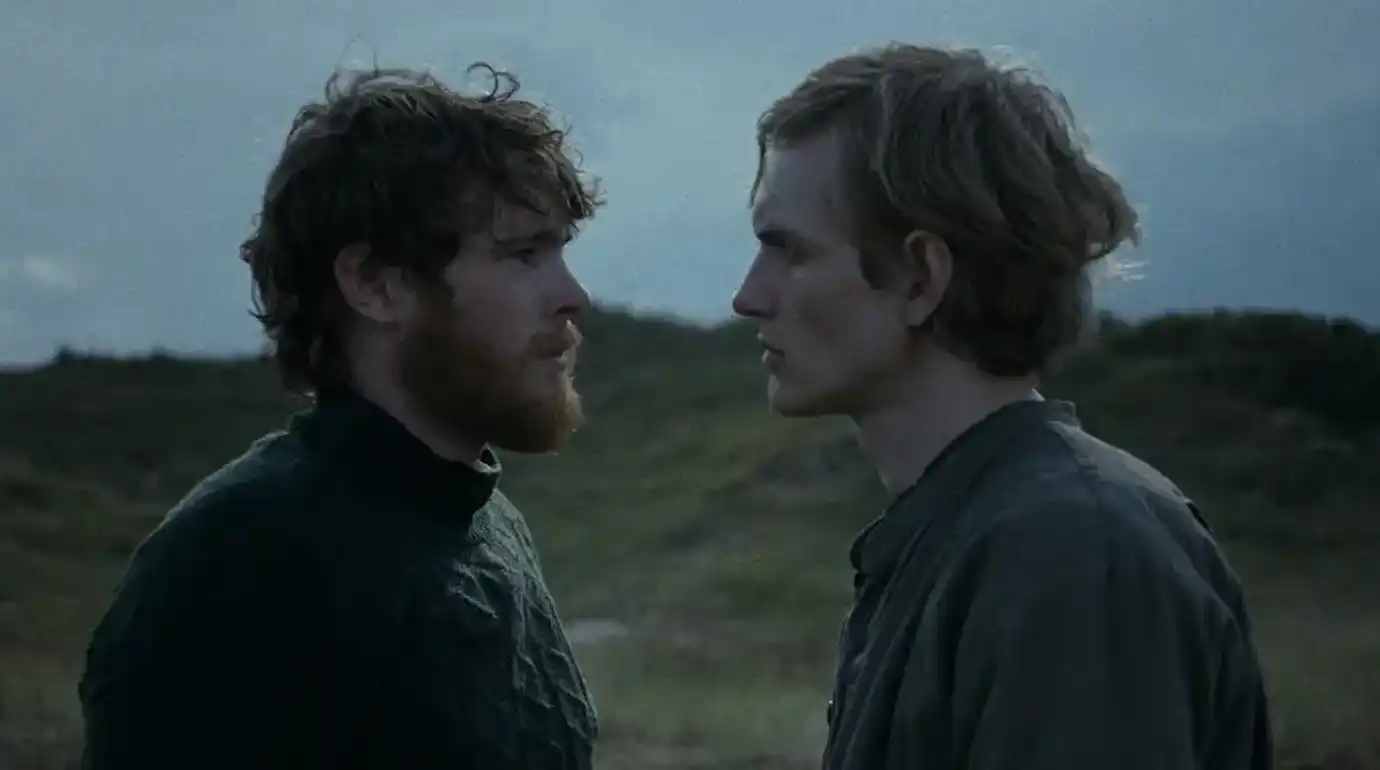

At the Berlin Film Festival in a new section "Prospects", created by programming director Trisha Tuttle to support debut works, the drama premiered "Stateless" (Der Heimatlose). The film's director, Kai Stenike, a graduate of the Berlinale Talents educational program, presented a story that combines radical artistic choices, profound personal experience, and sharp social commentary DW on the status of the LGBT community in modern Germany.
Table of Contents
The Trial of Memory: Plot and Concept
Movie "Stateless" (Der Heimatlose) tells the story of a young man named Hein (played by Paul Bohe), who returns to his home island after 14 Years of Absence. However, his return home turns out to be a trial: the villagers do not recognize him, and their memories of the past differ drastically from Hein’s own account.
To prove his identity and his right to remain in the community, the hero is forced to go through a three-day trial with cross-examination. If Hainu fails to convince the judges and his neighbors that he isn't faking it, he will be banished from the island forever.
Radical Visual: Life Without Roofs
One of the most talked-about aspects of the film was its unusual visual style. Stenike shot the film in in a staged setting, where the houses have only facades but no roofs at all. According to the director, this idea—which was initially driven by a limited budget—ultimately became the perfect metaphor for the film’s central themes.
The absence of roofs symbolizes the impossibility of hiding: All the characters are constantly in view, under the watchful eyes of their neighbors, who evaluate and judge one another. This underscores the atmosphere of “performing for an audience” in which the island’s residents are caught up.
Language as a Subtle Matter
The authors paid particular attention to recreating the authentic atmosphere of the early 20th century, using stylized literary language. Together with his co-author, Stenike carefully polished the dialogues, replacing modern German words with their historical equivalents (for example, “vielleicht” with “womöglich”) to achieve the necessary distance and fluidity of speech.
Queer Perspectives and Universality
Although the film is permeated with through a queer lens Drawing on the director’s personal experience, Stenike emphasizes the universality of Hein’s story. This film is about the sense of alienation felt by anyone who returns to the places of their childhood and realizes that that past life is no longer within their reach.
Nevertheless, the film carries a powerful political subtext. The director speaks openly about his concerns regarding the regression in attitudes toward the LGBT community in Germany. Stenike notes that the social climate has changed in recent years, and his work from a decade ago has unexpectedly taken on a frightening relevance.
Art as a Manifesto of Security
In an interview, Kai Stenike admits that being an openly queer person today is still difficult and dangerous. He emphasizes that safety levels vary depending on the region in Germany, and the risk of being attacked because of one's identity remains a real one.
Through her art and her open lifestyle, Stenike calls for the fight for diversity. "I hope people won't have to go into hiding again.", — says the director, emphasizing that no one in today's world should have to risk their life or health because of who they are.






0 comments
Enter your email — we’ll send you a one-time code. No passwords or accounts.
Code sent to
If the email doesn't appear in your inbox within a few minutes, check your spam, junk, or promotions folder, as some email services may mistakenly place automated messages there