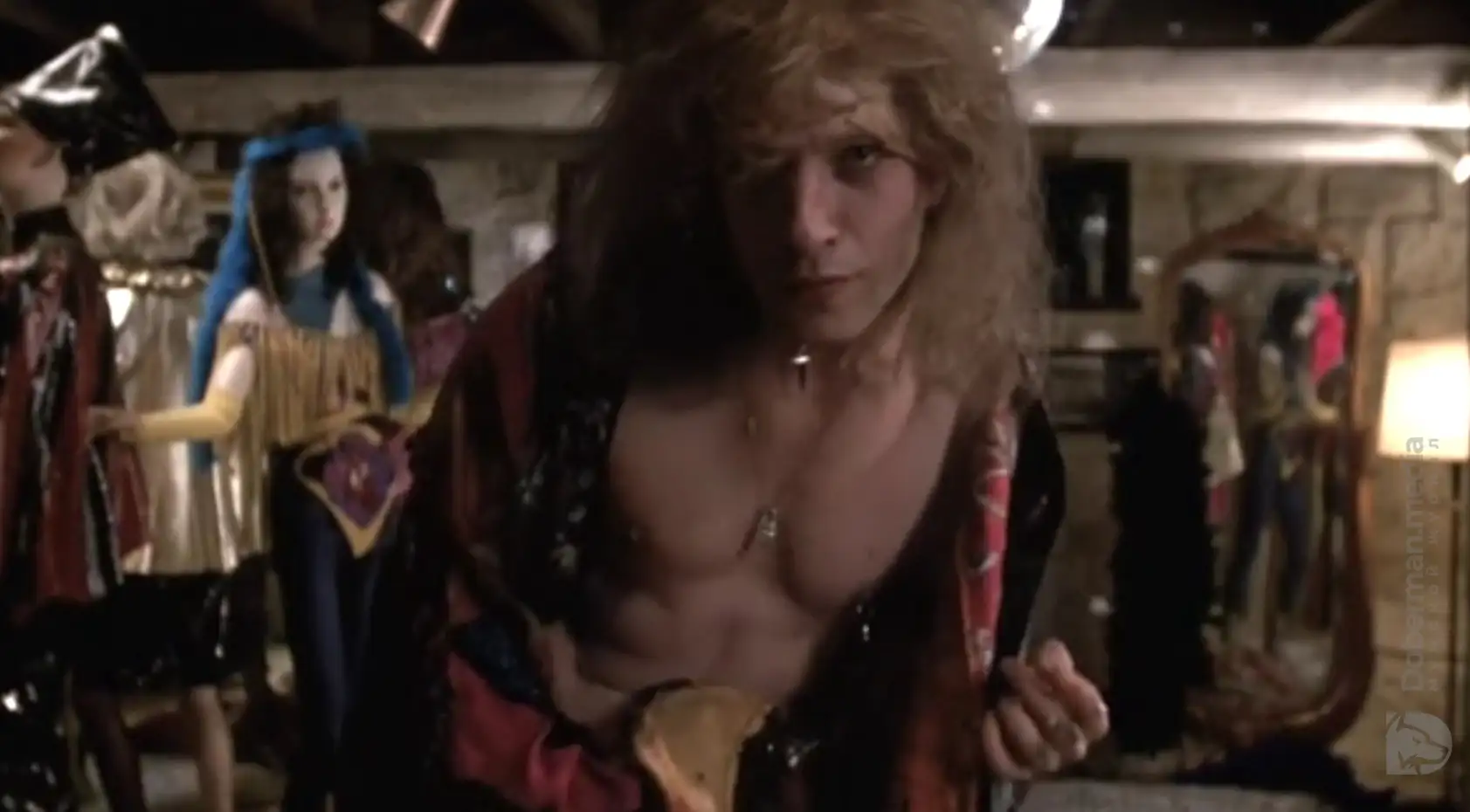

Three and a half decades after Hannibal Lecter and Clarice Starling took the world by storm, the creators of the cult thriller reflect on its complex legacy and acknowledge mistakes in the portrayal of transgender identity.
On February 14, 1991, just in time for Valentine's Day, a movie was released that was destined to revolutionize the thriller genre. "The Silence of the Lambs" Director Jonathan Demme’s film was not only a box-office hit, grossing $272 million (equivalent to $659 million today), but it also went down in history as the third film to win the “Big Five” Oscars: Best Picture, Best Director, Best Screenplay, Best Actor, and Best Actress. However, today, as the film turns 35, Ted Levine, who played Buffalo Bill, and producer Edward Saxon look back on their creation with a touch of regret.
Table of Contents
The Shadow of Buffalo Bill: From Cult Status to Criticism
The film's plot, based on Thomas Harris's bestseller, follows FBI trainee Clarice Starling (Jodie Foster) as she tracks down the serial killer Jaime Gamba, known as Buffalo Bill. To catch the psychopath, who flays his female victims, she turns to the imprisoned cannibal Hannibal Lecter (Anthony Hopkins) for help.

Despite his enormous success, the character of Buffalo Bill has faced harsh criticism from the LGBTQ+ community for decades. Although the film does not explicitly state the character’s sexual orientation, his behavior was interpreted as gender-nonconforming, which, according to critics, created a dangerous link between transgender identity and violence.
"That's Damn Wrong": Ted Levine's Revelations
Actor Ted Levine, for whom the role of Buffalo Bill marked a breakthrough in his career, spoke openly for the first time about his mixed feelings. In an interview The Hollywood Reporter He acknowledged that his understanding of transgender issues has deepened significantly over the past decades.
"There are certain aspects of the film that are in poor condition," — says Levine. — “We all know better now… There are some problematic moments in the script and the film. The fact that the film demonized this [gender identity] is regrettable and, damn it, wrong. You can quote me on that.”
At the same time, Levine clarifies that During filming, he didn't see his character as gay or transgender: “I played him as a deeply traumatized heterosexual man. That’s what I did.”
No malicious intent, but a lack of sensitivity
The film's producer, Edward Saxon—who later collaborated with Demme on the Oscar-winning drama *Philadelphia*, about a lawyer living with HIV—also acknowledges that the film crew did not foresee the pain their work would cause LGBTQ viewers.
“We were very faithful to the book,” Saxon explains. “Throughout the filmmaking process, we had no doubt that Buffalo Bill was a completely deviant individual, that he wasn’t gay or transgender. He was sick. In that sense, we missed the mark. From my perspective, we lacked sensitivity to the legacy of stereotypes and their capacity to cause harm.”

Saxon emphasizes that there was no malice in their actions: the creators believed that viewers would understand that Buffalo Bill was merely borrowing elements from various identities due to his “incredibly sick pathology.”
Support independent journalism. This is not a pop-up. You can scroll further or dismiss this notification
Doberman Media works without investors and grants – only thanks to you. Your help, even a small one, allows us to continue our work. Help us survive: subscribe or support one-time. No way to donate? Just forward this text to a friend.

Heritage in a Contemporary Context
"The Silence of the Lambs" remains an integral part of popular culture. Quotes from Levine's character (for example, "It rubs lotion on the skin…") have long been part of the lexicon, although the actor himself admits that constant reminders of this sometimes wear him down.

It is interesting to note that the figure of Hannibal Lecter has unexpectedly resurfaced in contemporary American politics. During his 2024 election campaign, Donald Trump mentioned Lecter in the context of immigration, calling the character “a wonderful person.” Producer Edward Saxon called this comparison “just as twisted as anything we could come up with in the movie.”
Despite the sadness evoked by certain elements of the film, Ted Levine has fond memories of working with Jonathan Demme, who passed away in 2017. “Jonathan was a wonderful, amazing person,” the actor recalls. “Working on this film was a great experience—perhaps the best of my career.”
The 35th anniversary of *The Silence of the Lambs* reminds us of how cinema and society are changing. The great works of the past can remain outstanding artistic achievements, even if today we acknowledge their imperfections and apologize for the shadows they inadvertently cast on people’s real lives.









0 comments
Enter your email — we’ll send you a one-time code. No passwords or accounts.
Code sent to
If the email doesn't appear in your inbox within a few minutes, check your spam, junk, or promotions folder, as some email services may mistakenly place automated messages there