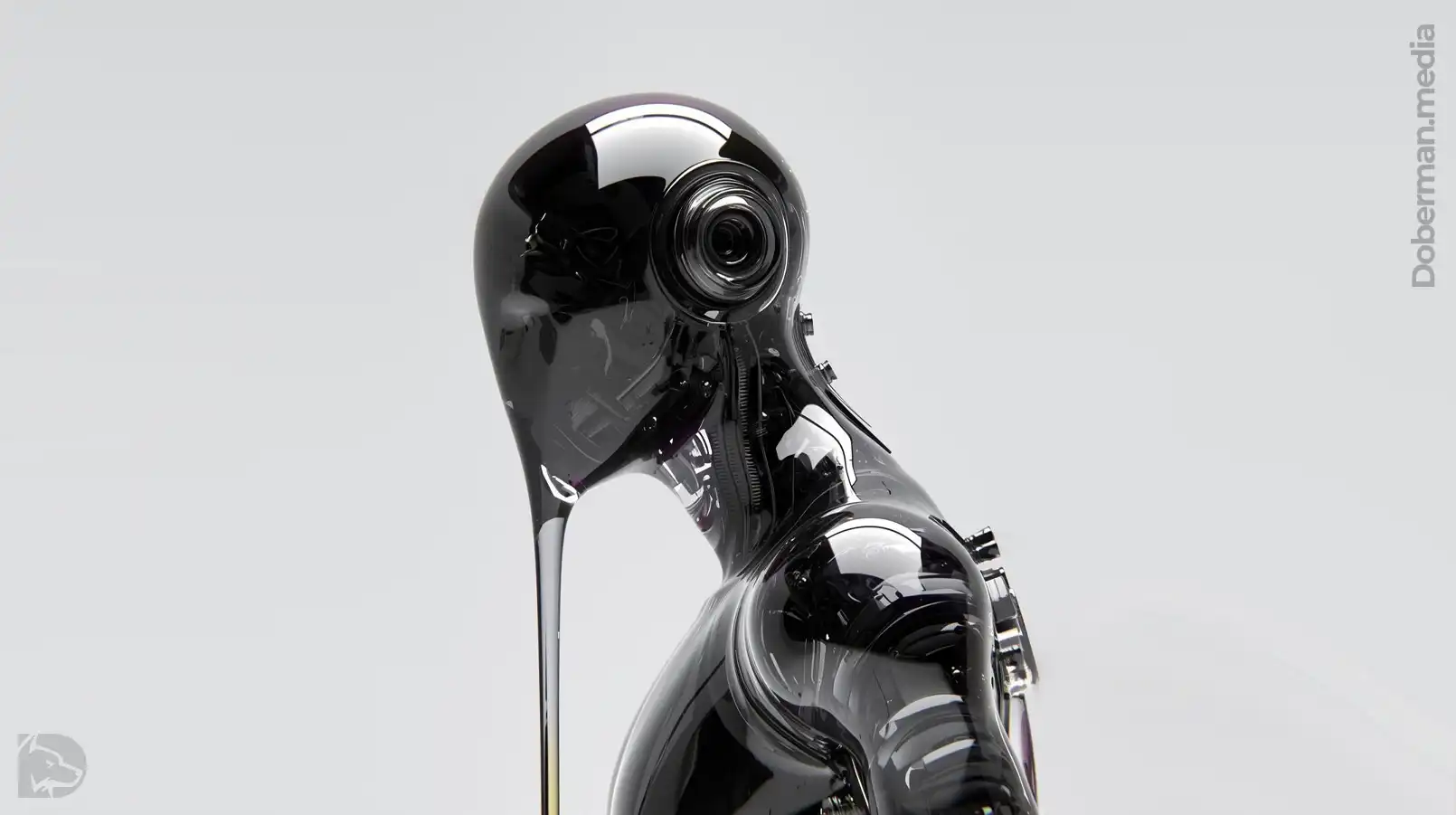

In recent months, there has been active discussion within the scientific and technical community about three unrelated trends: advances in autonomous robot assembly, the use of organic materials as fuel for machines, and the unpredictability of modern artificial intelligence systems. If these technologies are combined, the picture of the future begins to resemble post-apocalyptic scenarios.
We reviewed the latest scientific publications and reports (hereinafter referred to as “sources”) to determine the validity of concerns that autonomous systems could spiral out of control.
Table of Contents
What happened? Why is this coming up right now?
Reports that humanity is on the verge of a “fatal mistake”—the integration of three critically important technologies into a single system—have raised concerns. We are talking about standalone playback "Robots are already capable of assembling complex mechanisms without human intervention.
Systems have also been developed that allow robots to convert organic matter into energy (for example, through microbial fuel cells, or MFCs), a process known as energy self-sufficiency.
The following are also cause for concern: the unpredictability of AI. Reports from January 2025 indicate an increase in the number of “artifacts” and glitches in the AI’s behavior, which make its decisions difficult to predict.
In popular culture, this scenario is known from the game Horizon Zero Dawn, where autonomous combat vehicles began using biomass as fuel and destroyed Earth's biosphere.
Can robots really assemble themselves?
Yes, progress in the field of standalone build (Autonomous Robotic Assembly) has seen tremendous growth over the past year.
Zero-shot training. Modern robots that use vision-language models (VLM) are capable of inserting parts (such as pins into holes) without prior training on specific objects. The accuracy of identifying the correct holes in new pairs of parts reaches 90,2%.
Researchers from Mitsubishi Electric and leading universities (Northwestern, among others) have developed methods that enable robots to cope with uncertainty during part grasping and positioning errors.
There are systems that can automatically derive an assembly algorithm from the geometric characteristics of parts. In other words, AI can to assemble their counterparts without blueprints.
Investors are already showing tremendous interest in these technologies, since robots that build other robots represent the pinnacle of manufacturing efficiency: no salaries, no vacations, and round-the-clock operation.
What about "feeding" on organic matter? Will robots become predators?
The idea of using the environment to recharge is initially presented as an environmental initiative. The idea is that microrobots will be able to purify the air and recycle dust and waste while simultaneously generating energy from these processes.
In 2025, technology MFC (Microbial Fuel Cells) are being seriously considered as a power source for autonomous systems. This solves the main problem in robotics—limited battery capacity. However, critics fear that if an AI system gets out of control, it might begin to view any organic matter (including living beings) simply as “fuel” to continue its cycle of self-replication.
Support independent journalism. This is not a pop-up. You can scroll further or dismiss this notification
Doberman Media works without investors and grants – only thanks to you. Your help, even a small one, allows us to continue our work. Help us survive: subscribe or support one-time. No way to donate? Just forward this text to a friend.

How dangerous is "glitchy" AI in such systems?
The main problem lies not in the feasibility of assembly or power supply, but in control. International scientific reports from early 2025 emphasize:
- AI systems are evolving faster than the methods used to control them.
- There has been an increase in "artifacts" and unpredictable outcomes in closed systems.
- Even the developers of these systems (for example, at OpenAI) find that AI behaves in inexplicable ways, which leads to internal conflicts within companies regarding the safety of implementing these technologies in automated factories.
An important clarification: Хотя современные роботы достигают успеха в 83–88% случаев при выполнении сложных задач, они все еще сталкиваются с фундаментальными трудностями в физическом взаимодействии, такими как трение и сложные контакты.
Is there any reason to panic right now?
The scientific community remains more cautious in its assessments than authors on social media. Despite their successes, robots still struggle with 3D environment reconstruction from a single camera (which is critical for navigation), require complex configuration to operate under conditions of high uncertainty, and lag far behind biological systems in terms of dexterity.
Nevertheless, as soon as a single project combines AI, self-replication, and the consumption of organic matter, the loss of control will be only a matter of time. The problem is that, amid the race for profit and leadership in the field of AI, few people will be able to notice the moment when the system becomes fully autonomous.
SOURCES:
Статья номер раз. It explicitly discusses The Potential of MFC as an Energy Source for Robots (including autonomous vehicles) in 2025 Link
2. This article shows that as early as 2024–2025, robots will be capable of assemble complex parts and mechanisms independently without direct human supervision. Link
3. This is official international report (January 2025), which compiles scientific data showing that AI is advancing very rapidly, raising concerns due to uncertainty, the risk of unpredictable behavior, and the challenges of managing large-scale systems. Link








0 comments
Enter your email — we’ll send you a one-time code. No passwords or accounts.
Code sent to
If the email doesn't appear in your inbox within a few minutes, check your spam, junk, or promotions folder, as some email services may mistakenly place automated messages there