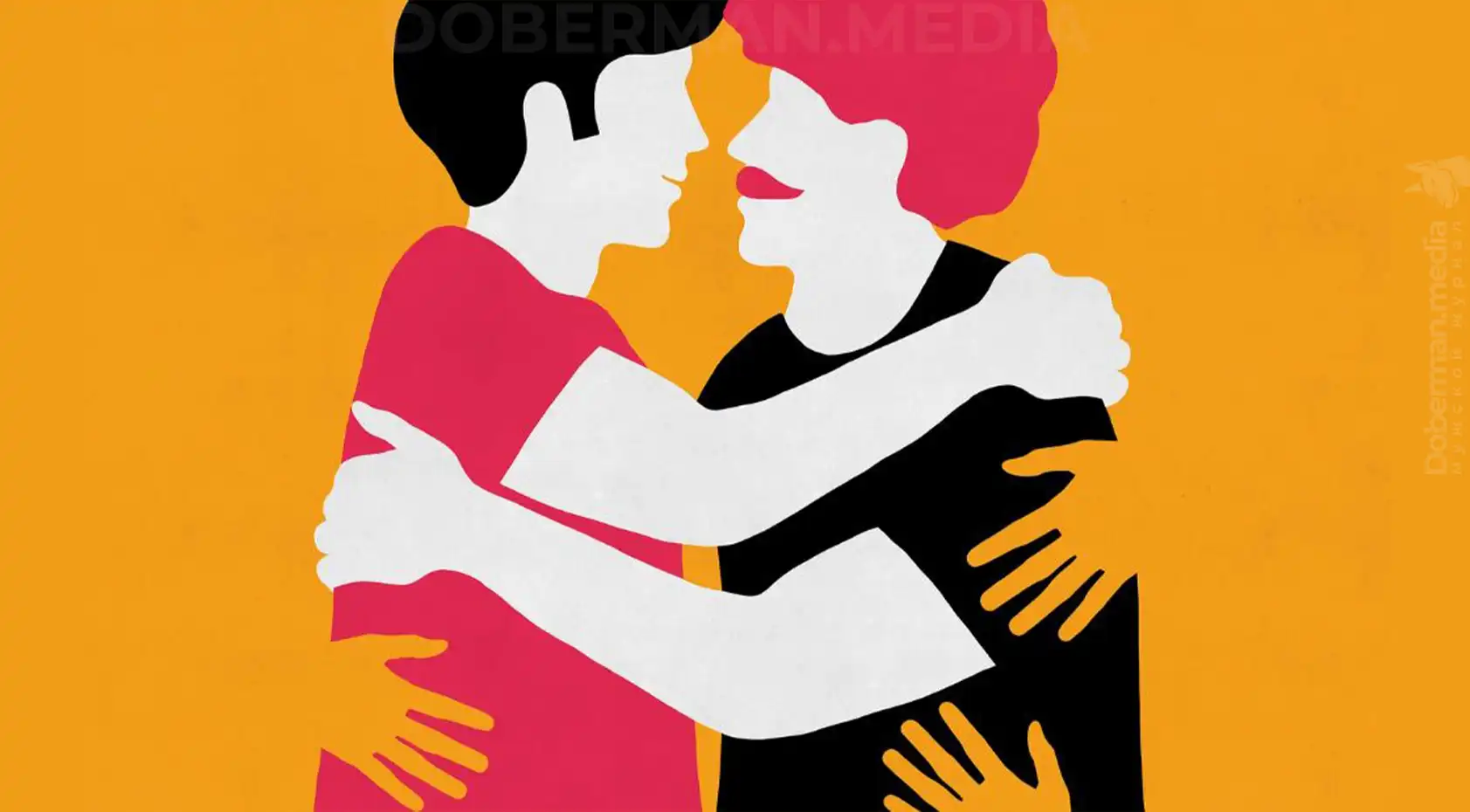

Four years together—and sex had become a routine. Like eating borscht three times a day for a whole month: familiar, filling, but bland. We stopped looking at each other and started noticing other people. And instead of figuring out why the spark had gone out, my boyfriend said:
— Let's be open with each other.
I answered, "Yes.". Not because I was sure, but because I wanted to try it too—I was just afraid to be the first to say it.
There was a time when we tried to reignite our interest—role-playing, experimenting, even fisting. But at some point, it became clear: our bodies were close, but there was no intimacy. And that’s when the idea of an “open relationship” seemed almost logical.
We agreed on something simple: just sex, no love, always safe, and if anyone started something with someone else, they had to say so. But we didn’t spell out the important stuff—what would happen if someone fell in love, how long this could last at all, or whether we could keep the details to ourselves. We thought “honesty was enough.” We were wrong.
While he was hanging out with someone, I was just watching from the sidelines. And then that guy he was hanging out with just disappeared. So my guy decided he didn't need that anymore:
— All right, let's wrap this up. That's enough.
But right around that time, I happened to meet someone else. We slept together—after he’d already said “it’s over.” And that was the end of it. He called it cheating. But I didn’t understand why: after all, we’d just started seeing each other, but he simply decided that it was over, and that was that.
I tried to speak. I said: "Wait, that's not what we agreed on.". But he wouldn't listen. He needed someone else to be to blame. And I fell silent again. I just accepted it. Because arguing at that moment was scarier than just swallowing it.

I realized later that silence is also a form of destruction. Just a quiet one.
He always wanted to know everything—who, when, where, and how. For me, on the contrary, it was easier not to know. I could have easily accepted the situation itself if I’d understood that there were no feelings involved—just physical attraction. That worked for me. But not for him. We both called it “honesty,” but we understood it differently. And without an agreement, honesty turned into a weapon: he demanded, and I defended myself.
At the time, I thought an open relationship would solve the problem of boredom. But it turned out that it just shifted the old pain into new territory. If you don’t talk, neither fisting, nor novelty, nor other people’s bodies will help.
Now I realize that it wasn't the format that was bad, but the way we approached it. It was all out of fear—he was afraid of losing interest, and I was afraid of losing him.
If anyone happens to want to give it a try, here's what I'd say.
Before you start, agree on everything. Who speaks, when, and about what—everything. What counts as cheating. How to tell when the conversation is over.
If one person wants it and the other agrees out of fear—that’s not an open relationship; it’s a minefield.
And most importantly, honesty should be directed not toward others, but first and foremost toward oneself.
I now know what kind of setting would suit me best. Something like cruising: we go to a bar together, blend into the crowd, lose ourselves with others in a dark room, then go back home, calmly drink tea, and talk about — If you feel like it. No names, no jealousy. Just because you trust each other.
Our love and trust didn't disappear back then—we just didn't know how to make the most of them. And yes, I wouldn't rule out trying an open relationship again. Only this time, without any illusions.
Because cheating isn't about the body. It's about lying.
And love is a choice. To return home. Every time.







0 comments
Enter your email and we will send you a one-time code. No passwords, no accounts.
Code sent to
If the email does not arrive in your inbox within a few minutes, check your Spam, Junk or Promotions folder — some mail services may wrongly place automated messages there.