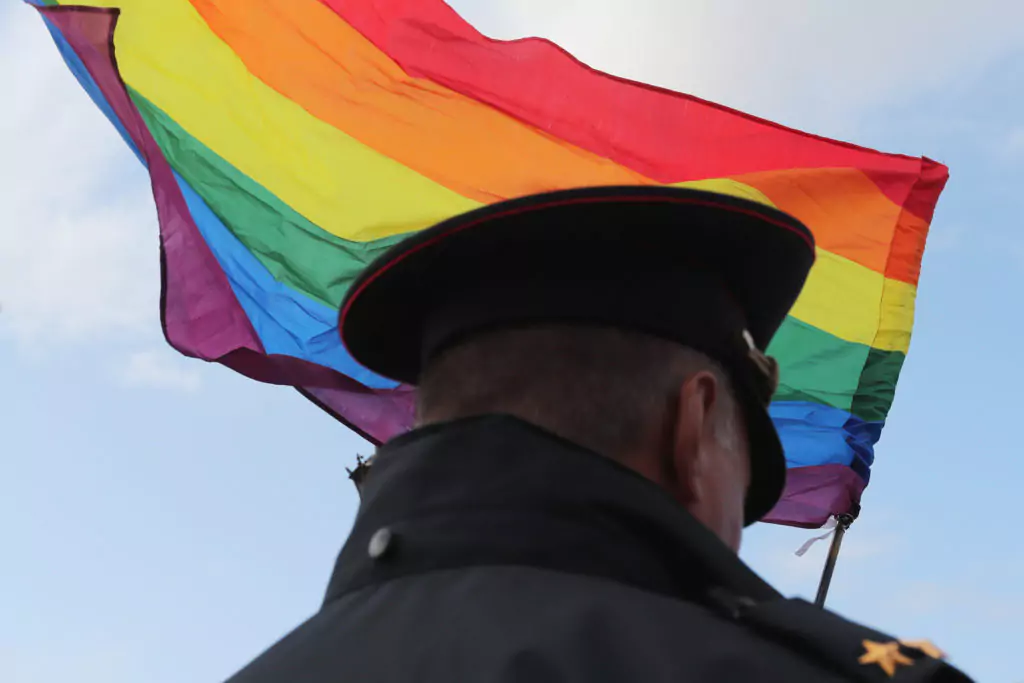

In recent years, law enforcement agencies have been conducting more and more raids on public establishments. For example, from November 2023 to January 2025, they carried out dozens of raids at LGBT clubs in 18 Russian regions. The raids began to conduct even at regular fitness clubs. Law enforcement officers often behave roughly — and quite often are used Violence. Unfortunately, it’s becoming increasingly difficult to protect yourself from a raid by law enforcement. But the risks involved can be minimized. In this new guide, we explain how to prepare for a raid (including mentally) and how to behave during such a difficult and stressful situation.
How a raid usually goes
Law enforcement officials rarely announce a raid in advance—so they can take advantage of the element of surprise. They shut down the venue (whether it’s a concert hall, club, sports arena, an outdoor festival, or some other event) to prevent people from entering or leaving, do not identify themselves, and behave rudely—forcing people to lie on the floor or letting them go insulting comments. Sometimes law enforcement officers bring dogs to search for psychoactive substances. Police officers demand to see your ID or the contents of your phone. Sometimes they are accompanied by film crews propaganda channels.
During a raid, law enforcement officials may take a particular interest in LGBTQ individuals and migrants. In both cases, the following may be involved in the raid: military registration and enlistment office staff.
Police officers may arrest you for disobeying an order, as well as prescribea fine for swearing or smoking, unless they find a more “substantial” reason to prosecute.
Prepare for the raid in advance—it will help reduce your anxiety
If you’re worried that law enforcement might come to the establishment, first familiarize yourself with your rights, recommends Valeria Vetoshkina, an attorney with the human rights project “OVD-Info.”
For example, your rights are protected by Article 51 of the Constitution, which allows you to refuse to testify against yourself. Vetoshkina also reminds you that you are not required to:
- state where you are going and why you are there;
- open a conversation on your phone;
- to undergo a search without witnesses or a written record;
- Go to the department for no reason.
Human rights lawyer Max Olenichev says that at the start of a raid, you should try to let your trusted contact know what’s happening—and where you are. If contact with you is then lost, your loved ones will be able to quickly start looking for you at police stations or at least seek help from lawyers.
An anonymous psychologist also recommends preparing yourself in advance for a possible raid and drawing up a plan of action. This will reduce the element of surprise and help you feel more confident. Being informed and prepared is the key to staying calm during a raid.
If you witness a raid, it’s important to remain calm and composed, even if you’re being threatened, explains Valeria Vetoshkina. Protesting or responding with aggression could make your situation worse—so it’s best to avoid conflicts with law enforcement.
Get your phone ready—it could be used against you
To minimize risks, it’s a good idea to remove any references to criticism of the authorities, support for Ukraine, condemnation of the war, LGBTQ+ chat rooms, and anything else that could compromise you, according to Valeria Vetoshkina.
She advises writing down the contact information of human rights activists. Max Olenichev agrees.
He adds that you should delete any intimate photos and your posts on the topic of being childfree.
Please bring your documents and medical records with you
If you think there’s a chance that law enforcement officers might show up at the party, bring a portable charger, a fully charged phone, your passport, and medical documents confirming a disability or illness from list of...under which you cannot be placed under administrative detention. For example, if you have a blood clotting disorder or diabetes with complications.
It’s best to leave prohibited substances and items bearing symbols that the authorities might deem “extremist” at home: for example, rainbow pins, the Ukrainian flag, or symbols associated with the Anti-Corruption Foundation and Alexei Navalny.
Assess whether you are in a high-risk group
Valeria Vetoshkina advises you to save the contact information in advance of lawyers who specialize in defending the rights of migrants, conscripts, LGBTQ+ people, or any other marginalized group to which you belong. If you believe you are in danger, it would be helpful to contact such a lawyer in advance. They will be able to help you if problems arise.
Don't draw attention to yourself if you're under the influence of alcohol when a police raid catches you
In this case, try to speak as little as possible. If you are detained, ask for a lawyer.
If, for example, a raid begins and you happen to have illegal psychoactive substances in your possession at that moment, do not throw them away in plain sight; under no circumstances should you swallow them or hand them over to other people. If law enforcement officers do find something illegal on you, do not sign any documents without a lawyer present.
Don't respond to aggression with aggression—it could hurt you
Yes, police violence is illegal, but any harsh or aggressive response can only make the situation worse, says Valeria Vetoshkina.
If it is safe to do so, try to record any abuse by law enforcement officers on video; you have the right to do so. However, there may be times when it is impossible to take a video or photo—in that case, try to remember the officers’ last names, first names, and badge numbers.
An anonymous psychologist, speaking with *Medusa*, recommends basic breathing exercises to cope with stress: “You can do this even if, God forbid, they’ve made everyone lie down on the floor.” This will help you regulate your breathing. If your breathing is shallow, you can try the “square” technique. “This is when we inhale, hold our breath for a moment, then exhale and hold our breath again for the same number of counts. We can count silently to ourselves. For example, inhale for three counts, hold your breath, and exhale,” explains the specialist.
According to the psychologist, going through several such cycles can help you calm down. It’s also better to assess the situation and not act impulsively. The most important thing is to ensure your own safety. Like Vetoshkina, the psychologist advises against responding aggressively to provocations by law enforcement officers. You can prepare some phrases in advance to explain that you are not breaking any laws, the specialist says.
Unpleasant feelings may arise during a raid. The psychologist recommends not suppressing them, but rather acknowledging their presence: “Tell yourself that what’s happening is unpleasant, upsetting, unfair, and so on.” The process of recovering from a stressful situation will begin later—and certainly not while you’re in the middle of a raid and talking to the police.
If it seems like you’re having a hard time coping with what happened, the psychologist suggests seeking support. To start, you can share your feelings with people you trust. Then you can get back to your normal life. If you’re unable to do that, it makes sense to seek professional psychological help.
“But I don’t think that every person who finds themselves in such a truly unpleasant situation will necessarily need [professional] support. After all, in most cases, our minds are capable of coping with such serious stress on their own—if necessary, with the support of loved ones and those around us,” — the psychologist concludes.
Do not answer any questions from law enforcement officers—and try not to give them your phone's passcode
Lawyer Valeria Vetoshkina believes that during a raid, it’s best to invoke Article 51 of the Constitution—and simply refuse to answer any questions. You can invoke this provision at any time. For example, if you’ve been taken to a police station or the Investigative Committee. And even when you’re suspected of or accused of a crime.
Max Olenichev points out that Article 51 allows you to refuse to hand over your phone to law enforcement. Sometimes, law enforcement loses interest in people who know their right not to reveal their password and lets them go, the lawyer explains.
“Last week, one of the witnesses in a criminal case was taken to the Investigative Committee. Security officials spent five hours trying to persuade him to reveal his phone’s passcode. They resorted to manipulation and threats. But the witness did not reveal the passcode, so the security officials released him and returned his phone,” he says.
In another case, Moscow police detained a young man—and forced him to unlock his phone. The officers accessed the detainee’s Instagram account and saw a post in which he came out against the backdrop of a rainbow flag. Russian authorities consider the rainbow flag to be a symbol of a nonexistent “international LGBT social movement.” Displaying it can result in a fine under Article 20.3 of the Code of Administrative Offenses of the Russian Federation. Olenichev reports that this man was held at the police station for two days, after which a court fined him 1,900 rubles.
The lawyer also points out that law enforcement agencies may share your personal information with Telegram channels affiliated with them.
Keep track of everything that happens to you
Valeria Vetoshkina recommends that you ask for a copy of the arrest report and remember the names of the law enforcement officers. This will help you prove the fact of the arrest in the future, she explains.
Max Olenichev advises that if you are detained and charged with an administrative offense, you should request to call a lawyer or someone else who can provide you with legal assistance.
If you are suspected of or charged with a criminal offense, the investigator may assign you a public defender. Such a lawyer often works in the interests of the investigation, not yours, the lawyer points out. You can insist that a lawyer you trust come to see you. Therefore, the investigator is required to grant you the right to make one phone call in his presence. This will allow you to inform a loved one of your detention. At your request, he must contact a lawyer of your choice and have that lawyer come to you.
It is possible to appeal the actions of law enforcement officials, but it won't be easy
This is especially true if you have no evidence of a raid or detention, according to Valeria Vetoshkina. Sometimes, contacting the police can backfire on you. For example, law enforcement officers may issue a citation for failure to comply with a police officer’s lawful orders. And if a person is from a high-risk group, they may begin checking that person’s immigration status or phone.
Formally, there are several mechanisms in Russia to protect against unlawful police actions. Consult a lawyer or attorney before deciding to appeal against unlawful actions by law enforcement officials. You can contact:
- to the prosecutor's office;
- to the Ministry of the Interior;
- to court.
You can file a lawsuit if law enforcement officers unlawfully detained you, searched your property, or used violence against you. You can file a lawsuit seeking compensation for physical or emotional harm, or to have the police’s actions declared unlawful.









0 comments
Enter your email — we’ll send you a one-time code. No passwords or accounts.
Code sent to
If the email doesn't appear in your inbox within a few minutes, check your spam, junk, or promotions folder, as some email services may mistakenly place automated messages there