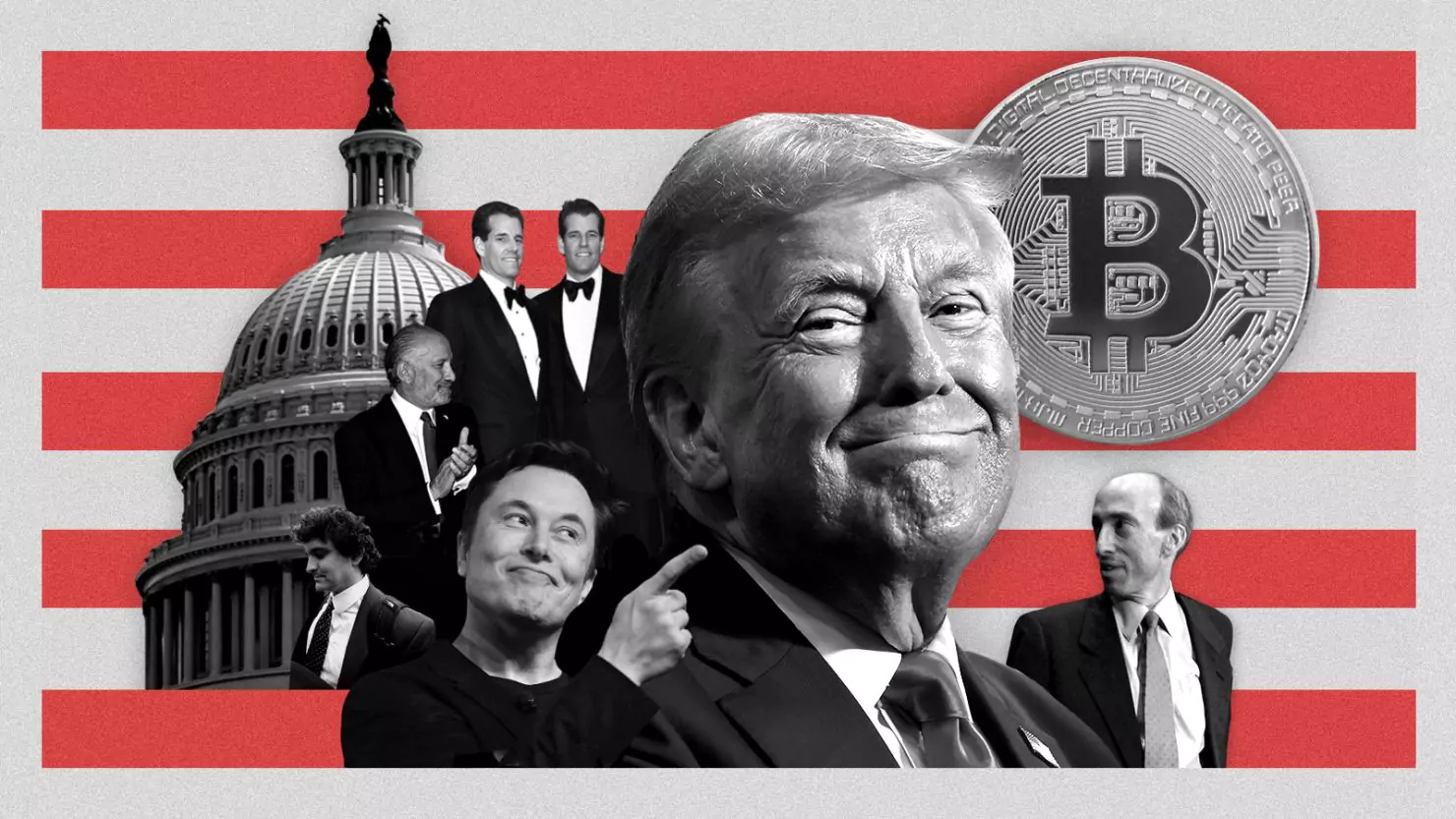

Context. Today, February 3, cryptocurrency market Crash: All cryptocurrencies fell by an average of 20–30%. Crypto traders lost more than $2 billion in a single day due to the market’s sharp decline. Currently, there are $2.2 billion in liquidations on the market, of which $1.9 billion are long positions.
By the way, Trump has likely made more than $802 million from the launch of his meme coin $TRUMP, said Conor Grogan, head of product at Coinbase.
Updated. The CEO of Bybit reported that $2.1 billion worth of positions were liquidated on the platform over the past 24 hours, while the total volume of liquidations in the market is estimated at $8–10 billion.
What if all these sharp fluctuations in Bitcoin's price — Is this really just a coincidence? Could there be a cunning plan behind it, in which the U.S., through Trump, wants to crash the crypto market in order to get its hands on a strategic asset of the future? Let’s take a look at how this might work.
📉 Step 1: Create chaos and spread panic
If you want to buy something cheaper, you need to make the sellers panic. And to do that, you have to create the perfect storm:
🔹 Enter New Tariffs on China, Canada, and Mexico — to send shockwaves through the global market.
🔹 To undermine investor confidence in volatile assets—including Bitcoin.
🔹 Prompt large funds to take profits in order to accelerate the decline in the exchange rate.
What's next? A massive sell-off, a market crash, fear, uncertainty. The perfect situation for those who know what to do.
🏦 Step 2: Quietly buying up BTC through underground schemes
While panic reigns in the market and everyone is dumping Bitcoin en masse, someone is actively buying it. Who exactly?
- Large institutional investors with close ties to the government.
- ETFs and private companies such as BlackRock and Fidelity.
- Offshore structures that are designed to hide money and assets.
The key goal is to transfer the BTC into the “right” hands in preparation for the next step.
🇺🇸 Step 3: The U.S. Declares Bitcoin a Strategic Reserve
Once the required amount of Bitcoin has been collected, a whole new story suddenly begins: "We've always believed in crypto! It's the future of finance!"
And here's what happens next:
🔹 The Federal Reserve and the U.S. Department of the Treasury officially announce the creation of a crypto reserve.
🔹 Bitcoin is gaining the status of “digital gold,” which means a new wave of growth.
🔹 The price of BTC is soaring again, but now most of its supply is in the hands of the U.S.
The market is shifting into a bullish trend, but under new conditions.
What does this mean for ordinary investors?
If this scenario actually plays out, those who sold their bitcoins in a panic will lose the most. After all, big players always profit from the crowd’s fear.
📊 Do you think the U.S. could pull off an operation like this? Or is this just another conspiracy theory? Let's discuss it in the comments!
Media report...that today a Russian crypto investor lost 10 million Russian rubles (about 97,346 euros) in a single day: the man made a bad investment on the exchange and lost all the savings he and his wife had been putting aside for 10 years. A move, years of work, and sacrificing their personal lives—it all went up in smoke in 24 hours. The couple had dreamed of a new apartment, but now they’re forced to sell even their studio apartment to cover their debts.
If we imagine that the U.S. were to actually go ahead with such a move, the consequences for the global economy could be quite significant
Global Instability
Artificially creating panic in the cryptocurrency market could trigger a chain reaction not only in digital assets but also in traditional financial markets. Investors around the world may lose confidence in the stability of assets, leading to capital flight and a sharp decline in liquidity.
A Review of Central Bank Strategies
If the U.S. begins to actively use Bitcoin as a strategic reserve, central banks in many countries will be forced to rethink their reserves and monetary policy. This could lead to a shift from traditional assets (such as gold or the dollar) to digital ones, which in itself is a risky and unstable move.
Political Tensions and Economic Struggles
The use of cryptocurrency as a tool of public policy could intensify geopolitical competition. Other countries may begin to create their own alternative digital currencies or even attempt to develop countermeasures to avoid being at a disadvantage.
Reassessment of Investment Strategies
For retail and institutional investors, such manipulation could mean a fundamental shift in how they manage their assets. Amid uncertainty and high volatility, investors will seek out more reliable assets, which could lead to a reassessment of risks and a shift in global investment flows.
In short, if the U.S. does decide to carry out such an operation, the world will face serious challenges: from financial turbulence to potential political conflicts. Of course, this is a hypothetical scenario, and much depends on a variety of factors, but such actions could radically alter the balance of power in the global economy.









0 comments
Enter your email and we will send you a one-time code. No passwords, no accounts.
Code sent to
If the email does not arrive in your inbox within a few minutes, check your Spam, Junk or Promotions folder — some mail services may wrongly place automated messages there.