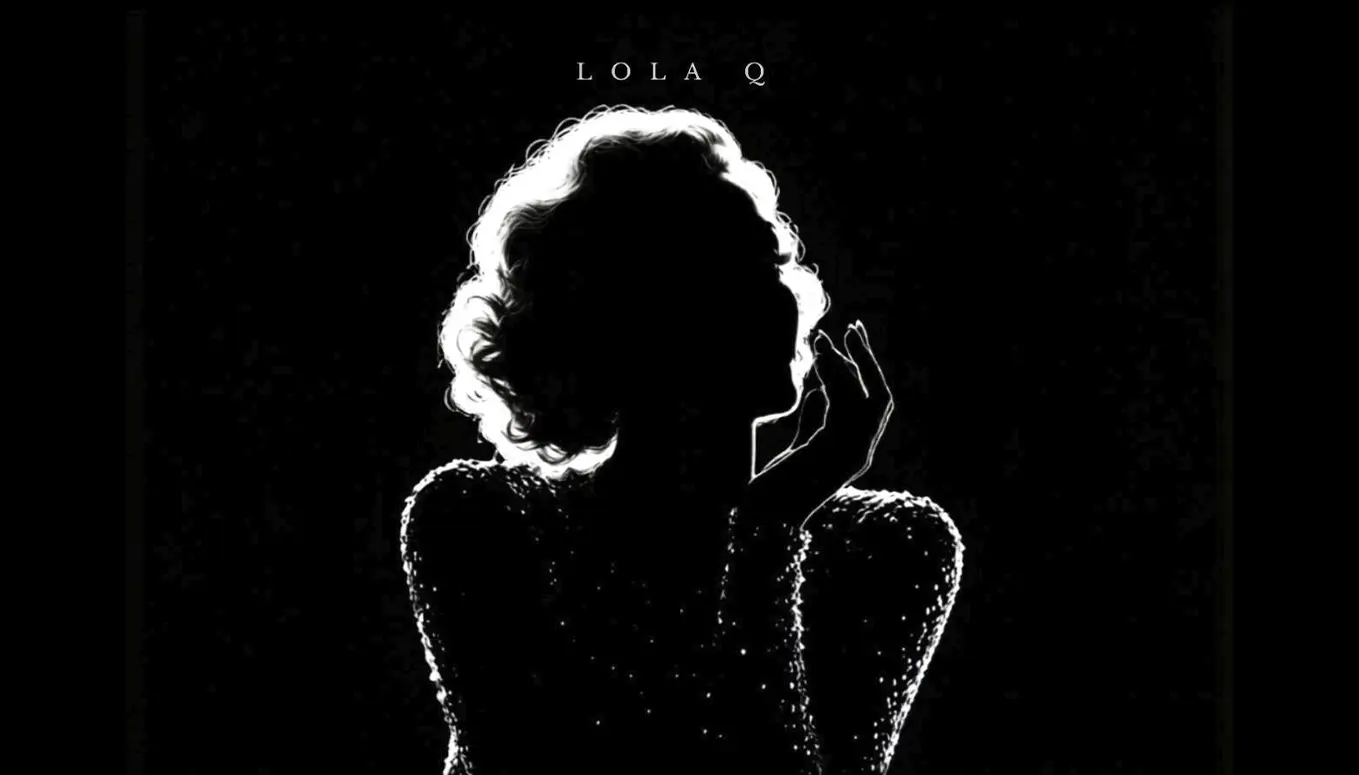

I live and perform in Germany as a drag queen artist under a stage name Lola Q. For concerts in the Russian-speaking community of Frankfurt, I wanted to add a song in German to the program. I went through different options for a long time, until one day I heard the song "Marlene" again, written by Alexei Romanofov and performed by Lolita.
There are stories that cannot be told once. They continue to live, changing the language, the era and the people who touch them. The song "Marlene" became such a story for me.
When I first heard it performed by the Russian singer Lolita, written by Alexei Romanoff, I was struck not only by the musical work. I wanted to open the books about Marlene Dietrich again, to reread her biography, letters, memoirs of people who knew her.
Thus began a work that turned out to be much more than just translating the song.
One thought did not leave me.
Once Maya Kristalinskaya gave the Russian reader the opportunity to get to know Marlene Dietrich by translating her biography from German. It was a surprisingly careful translation – not only of the words, but also of the intonation, character, and atmosphere itself.
Decades later, I suddenly found myself in the opposite situation.
Now I had to take a Russian song by Alexei Romanoff, dedicated to Marlene, and return it to the language of the country where Marlene Dietrich herself was born.
There is some amazing symmetry in this.
Once upon a time, German history began to speak in Russian.
Today, the Russian song is returning to the German listener.
Perhaps that's why I wanted to be as careful as possible. Do not change the meaning. Do not lose intonation. Not to lose Marlene herself.
Each line was checked not only for accuracy, but also for sound. It was important for me that the German text was perceived not as a translation, but as a natural continuation of the original. So that the listener does not think about what language the song was written in first.
While working, I more and more often caught myself thinking that I was not so much engaged in music as in translating emotions.
Words can almost always be translated.
It is much more difficult to transfer the pause.
Sigh.
Silence between two lines.
That's what I wanted to keep.
Perhaps that is why this work has become so personal for me.
This is not an attempt to rewrite the story of Marlene Dietrich.
Not an attempt to make it more modern.
And not wanting to create another version of a famous song.
Rather, it is an attempt to build another small bridge between two cultures that have already met once thanks to Marlene.
And if, after listening to the German version, someone becomes interested in the story of Marlene Dietrich for the first time, and someone, on the contrary, discovers the Russian song by Alexei Romanoff and Lolita, then this path between the two languages was not in vain.
Author's note. When creating the German version of the song, artificial intelligence tools were used exclusively as an aid. All creative decisions, editing and the final version were personally agreed and approved by the author of the song Alexei Romanofy and singer Lolita.





0 comments
Enter your email and we will send you a one-time code. No passwords or accounts.
Code sent to
If the email doesn't appear in your inbox within a few minutes, check your spam, junk, or promotions folder, as some email services may mistakenly place automated messages there