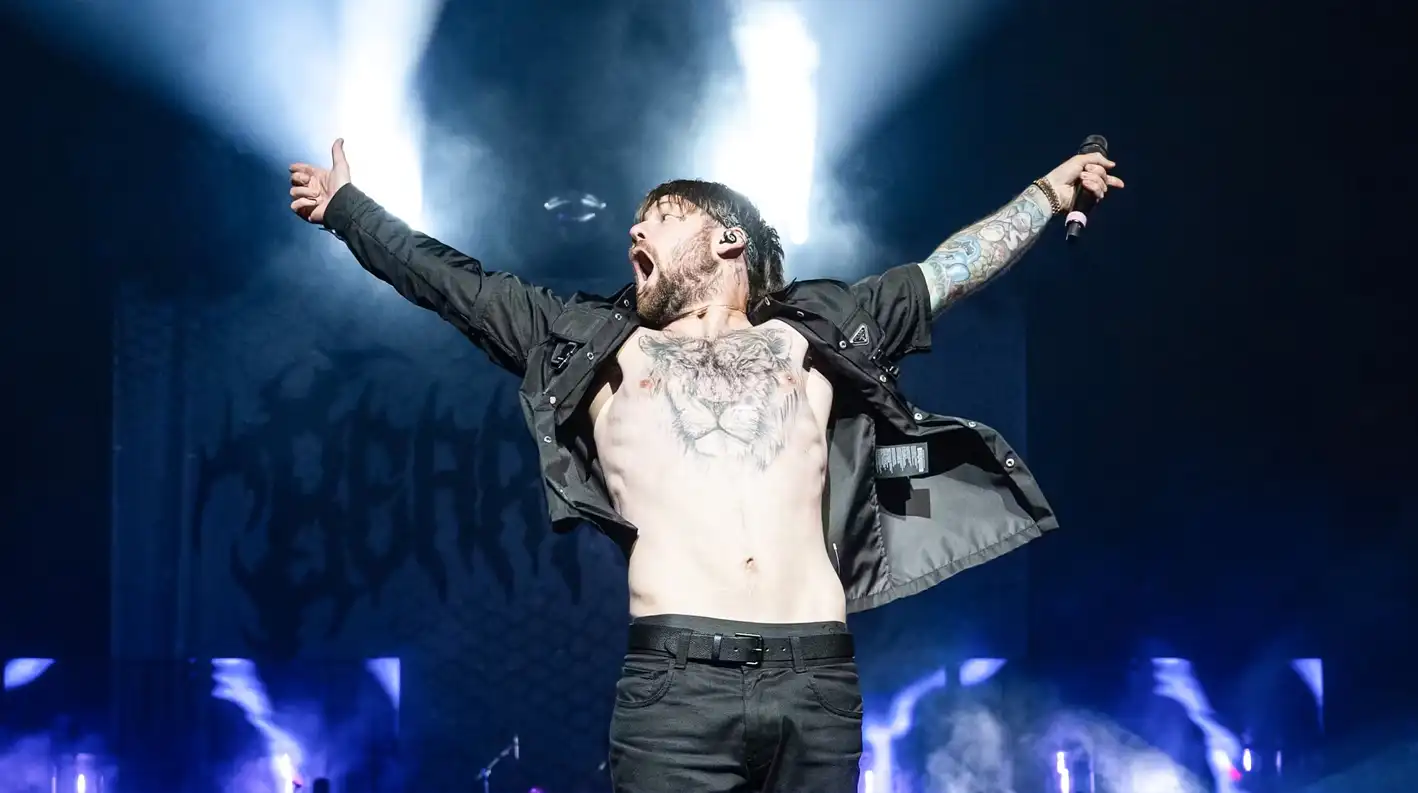

On May 23, Caleb Shomo, the frontman of the American rock band Beartooth, posted on Instagram, in which he openly came out as gay. This recognition marked a significant milestone for heavy music—a genre that has historically positioned itself as a refuge for outsiders, but in reality often remains hostile toward members of the LGBTQ+ community.
Table of Contents
What happened?
Caleb Shomo, who founded Beartooth in 2012 as a solo project, is now one of the most prominent figures in modern metalcore: the band has over 1.8 million monthly listeners on Spotify. His coming out marked his first return to social media after he temporarily deleted his account in February. The reason for deleting his account was the homophobic harassment that erupted following the release of the music video for the song “Free.”
Following the official announcement on May 23, the situation repeated itself: the comments section was filled with both words of support from queer fans and aggressive insults from the conservative segment of the community. Some tabloids attempted to turn the musician’s personal coming out into a scandalous story, invading Shomo’s and his family’s privacy.
Why is the metal community reacting so strongly?
At first glance, the rejection of queer people in the metal scene seems paradoxical, since this culture is built on rebellion against social norms. However, as researchers (such as Robert Walzer) have noted, heavy music has long been an “arena for gender” dominated by hypermasculinity.
In this environment, masculine traits are not merely emphasized but imposed as a mandatory standard, which creates barriers for LGBTQ+ people, women, and people of color.
The history of the genre includes examples of extreme violence: in the 2000s, queer artists such as Otep Shamaya and members of the band Gorgoroth received death threats after coming out.
Was there anyone before him?
Shomo isn’t the first major metal artist to come out. The most famous example is Rob Halford of Judas Priest, who came out on MTV in 1998. For a long time, this was considered “the worst-kept secret in metal.” Halford managed to maintain his legendary status, which gave hope for an inclusive scene; however, recent studies show that homophobia and transphobia are still widespread both at concerts and online.
Some of Beartooth’s fellow musicians have openly shown their support: for example, in 2017, the band Motionless In White dedicated their song “Voices” to the LGBTQ+ community.
It's even harder for transgender people in the industry
While fame helps well-known artists like Shomo or Halford protect their careers after coming out, it’s much harder for newcomers to make it.
- Research based on interviews with Australian trans metal musicians shows that “transgender identity” often becomes a “Achilles’ heel” for a band: it is extremely difficult for bands with transgender vocalists to break out beyond the local scene.
- Despite the existence of initiatives such as Transgenre, which support trans artists, they rarely get the opportunity to perform at large venues.
What will Caleb Shomo's confession change?
Shomo’s influence could be a decisive factor in bringing about change in the industry. As a world-class headliner, he has the opportunity to “platform” and bring visibility to queer and trans performers who have remained in the shadows for years due to discrimination.
At the moment, the lineups of major international festivals are still oversaturated with cisgender heterosexual men. Shomo’s example and the support of his allies could lead to the main stages of rock music finally reflecting the real diversity that has long existed at the local level.





0 comments
Enter your email and we will send you a one-time code. No passwords or accounts.
Code sent to
If the email doesn't appear in your inbox within a few minutes, check your spam, junk, or promotions folder, as some email services may mistakenly place automated messages there