

For a long time, it was considered an axiom that each new generation is more liberal than the previous one. However, recent data from the U.S. casts doubt on this assumption. Researchers at Northwestern University have observed an unexpected trend: levels of “anti-gay prejudice” are on the rise among young people.
We’ll explore why the “zoomers” (and those who follow them) have suddenly begun to shift toward conservatism, and how the “rainbow agenda” has fallen victim to the struggle against the system.
Table of Contents
What happened?
In short: Support for the LGBT movement in the U.S. peaked in 2020 and has been steadily declining ever since. The most surprising thing about this trend is who exactly is setting the tone. According to preprint of the study Professor Tessa Charlesworth, specifically Young people under the age of 25 show the sharpest increase in negative attitudes toward homosexuality.
This shift has even affected those who call themselves liberals. According to the authors of the study, this trend is unique: no other contemporary social movement has experienced such a sharp “setback.”
Why is this happening? The researchers' theory: “It’s COVID and corporations’ fault.”
In an essay for a newspaper The New York Times Professor Charlesworth stated that “social instability” and “anti-establishment sentiment” are the main factors driving the shift in attitudes toward the issue. The professor identifies several reasons why young people have begun to “lose interest” in the ideas of inclusivity:
Social Instability
The COVID-19 pandemic and the economic crisis have created fertile ground for the search for “scapegoats”* among marginalized groups.
"In turn, this anti-gay movement used a variety of tools from its arsenal, including the search for scapegoats.", — said the professor in a comment for The Fix.
The “anti-establishment” effect
Support for the LGBT community has become part of the mainstream. When corporations and government institutions began actively promoting the “rainbow” agenda, it came to be perceived as part of the official ideology.
Protest vote
According to Charlesworth, since the “pro-gay” stance has become mainstream and institutionalized, the anti-establishment sentiments among young people (the desire to break the rules) have automatically spilled over into this sphere as well.
It is interesting to note that this backlash is not limited to attitudes toward sexual orientation. Charlesworth notes a “widespread backlash” among young people against progressive ideas in many areas: from racial issues and attitudes toward disability to perceptions of weight and age.
Related: The Trump administration removed the rainbow flag from the Stonewall National Monument
But there is another view: perhaps the issue lies in “terminological drift”
Not all scholars agree that young people have suddenly begun to “hate gay people” in the traditional sense of the word. Researcher Forest Romm points out that the very concept of “LGBT support” in 2026 is very different from what it was ten years ago.
Romm believes that surveys can produce distorted results due to what is known as “interpretive drift.” To put it simply:
• In the past, being “pro-gay” meant supporting people’s right to privacy and freedom from discrimination.
• Today, this term has become an “ideological package” that encompasses controversial issues of gender identity (such as the participation of trans women in women’s sports) and even geopolitical stances.
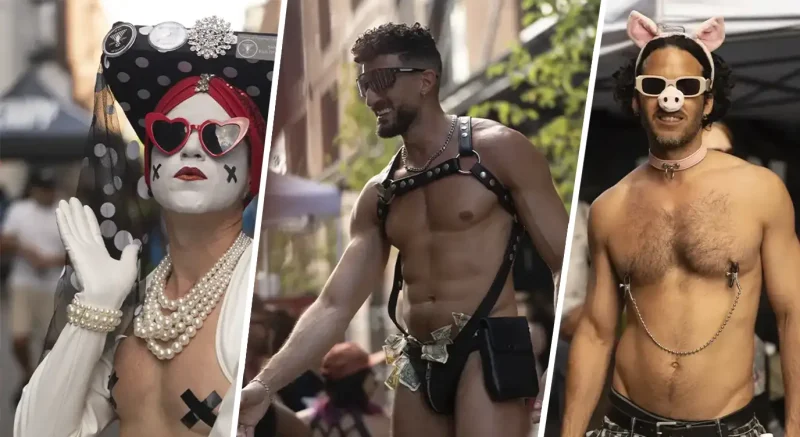
As an example, Romm cites slogans like “Lesbians for Gaza” at Pride parades. In her view, young people may express “anti-gay” sentiments not because of hostility toward sexual orientation itself, but because of a reluctance to endorse the entire list of radical political demands that now come bundled with it.
Criticism of “moral panic”
Jennifer Morse, president of the Ruth Institute, takes an even harsher stance. Morse is an economist by training and a former research associate The Hoover Institution at Stanford University. She wrote a few books About sex and family.
Jennifer Morse accuses the study's authors of bias, noting that they start from a preconceived position "Being pro-gay is good, and being anti-gay is bad".
Morse emphasizes that scholars use the term “moral panic” when discussing parents’ concerns about the sexualization of children in schools. In her view, this use of language stigmatizes people with conservative views from the outset, rather than analyzing their actual concerns.
What does this mean for the future?
If the data from Northwestern University is confirmed, we are witnessing a major cultural shift. The generation that was supposed to be "the most tolerant in history" begins to rebel against "values imposed from above" (from their point of view).
And so the old methods of promoting a social agenda through corporate reports and mandatory training sessions no longer work with young people—and may even backfire.
*The Fix clarified why gays are being scapegoated if corporations are also showing growing support for the LGBT movement
This is interesting: Grindr is testing a new EDGE subscription for $220 a week





0 comments
Enter your email and we will send you a one-time code. No passwords or accounts.
Code sent to
If the email doesn't appear in your inbox within a few minutes, check your spam, junk, or promotions folder, as some email services may mistakenly place automated messages there