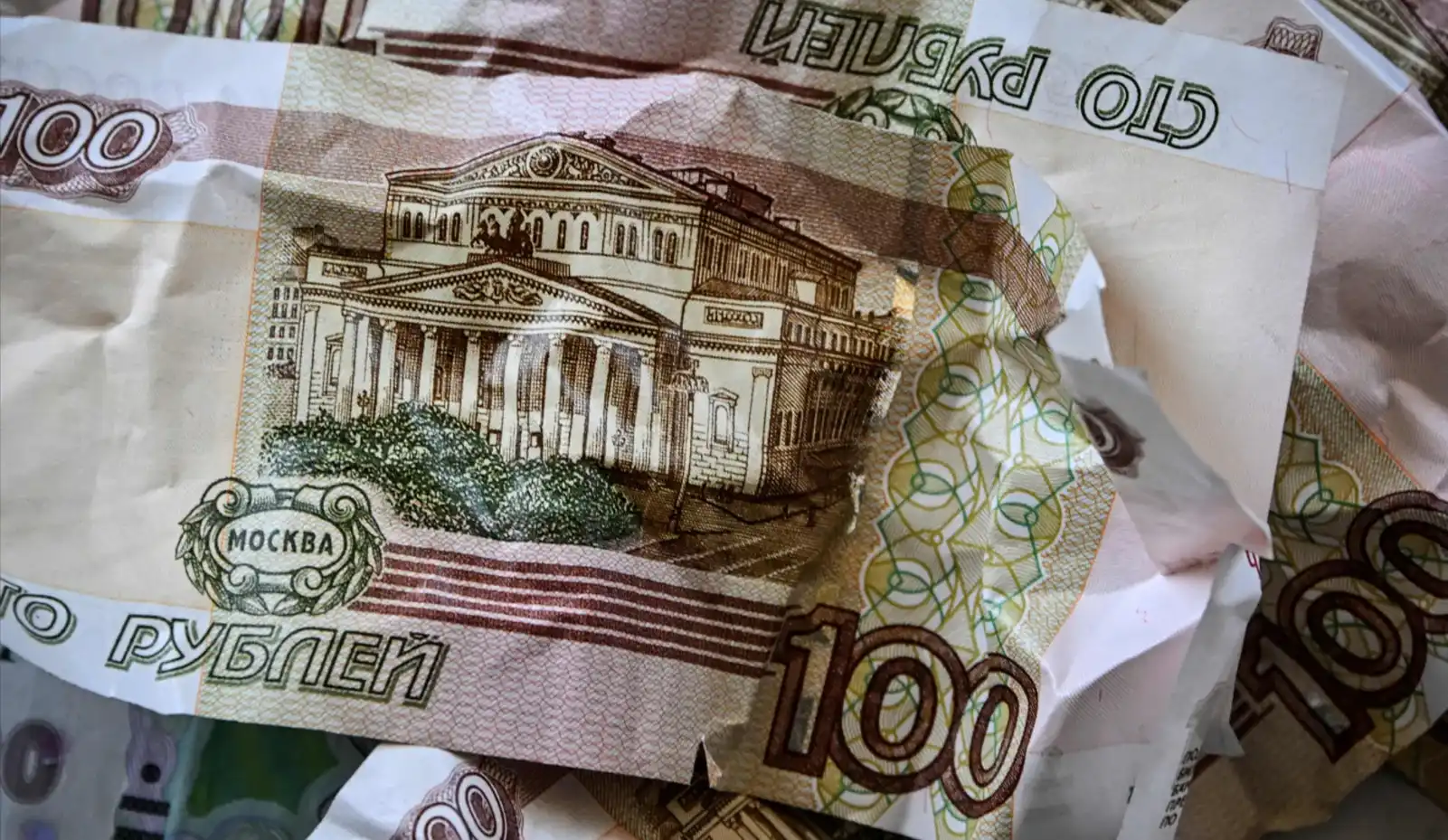

For five consecutive months, the Russian Ministry of Finance has been selling foreign currency and gold from the National Wealth Fund (NWF). This is not a covert operation, but rather part of the so-called “budget rule,” which is designed to protect the country’s economy from price spikes.
Doberman.media explains how this mechanism works and why, despite massive sales, major business leaders and experts continue to expect the Russian ruble to collapse.
An Economy Dependent on Oil: Why We Need a Budget Rule
The Russian budget depends 30% on revenue from oil sales. The main problem is that oil prices fluctuate constantly: today a barrel might cost $80, tomorrow — 50, and the day after tomorrow — 100.
If the government were to spend all its “oil money” at once, the economy would be in a state of constant emotional swings: one moment euphoria, the next a crisis.
The budget rule was devised precisely to smooth out this volatility.
The rule is simple:
1. The state establishes base price of oil (It's currently $60 per barrel.)
2. If oil is sold more expensive Once the base price is set, any excess funds are immediately transferred to the National Wealth Fund (NWF).
3. If oil is sold cheaper At $60, the government begins selling foreign currency and gold from the National Wealth Fund to offset the shortfall in budget revenue.
The Current Situation: A Strong Ruble and a Deficit
The current situation is such that the government is losing out on oil and gas revenues. This is due to several factors: the strong ruble and sanctions. In addition, Russia is selling oil at a discount, and as a result, revenues are actually lower than projected.
In November 2025 The Ministry of Finance expects a shortfall of 48 billion rubles oil and gas revenues. To make up for this shortfall, the Central Bank (CB) is selling foreign currency and gold from its reserves.
Sales totaling are scheduled for November 10 through December 4, 2025 2.7 billion rubles. These funds are used to cover the budget deficit.
Note that the difference between the expected shortfall (48 billion rubles) and planned sales (2.7 billion rubles) is quite significant.
A Paradox: Sales That Could Weaken the Ruble
When the Central Bank sells foreign currency, it naturally puts downward pressure on the ruble’s exchange rate. At first glance, Massive currency sales are temporarily propping up the ruble and saving the budget.
But here lies a paradox: if sales volumes become too high, the government's reserves begin to dwindle, and confidence in the ruble declines.
It turns out that if the government sells too much, it could weaken its reserves—and, along with them, the ruble itself.
In the long term, A strong ruble is not at all beneficial to the government.
What's in store for the ruble?
Some major market players and prominent business leaders expect the Russian currency to weaken significantly. Specifically, they anticipate an exchange rate of at least 100 rubles per dollar, or even 120 Gref, Potanin, Deripaska and Kostin.






0 comments
Enter your email and we will send you a one-time code. No passwords or accounts.
Code sent to
If the email doesn't appear in your inbox within a few minutes, check your spam, junk, or promotions folder, as some email services may mistakenly place automated messages there