

Briefly. Queer categories are growing in popularity in pornography, and so is the AI content industry. However, the lack of regulation in this area leads to the consolidation of dangerous stereotypes, the fetishization of trans people and even the risk of legalization of materials bordering on child pornography. Let's figure out how algorithms are changing our perception of sex and why it has become a problem.
Table of Contents
What's happening?
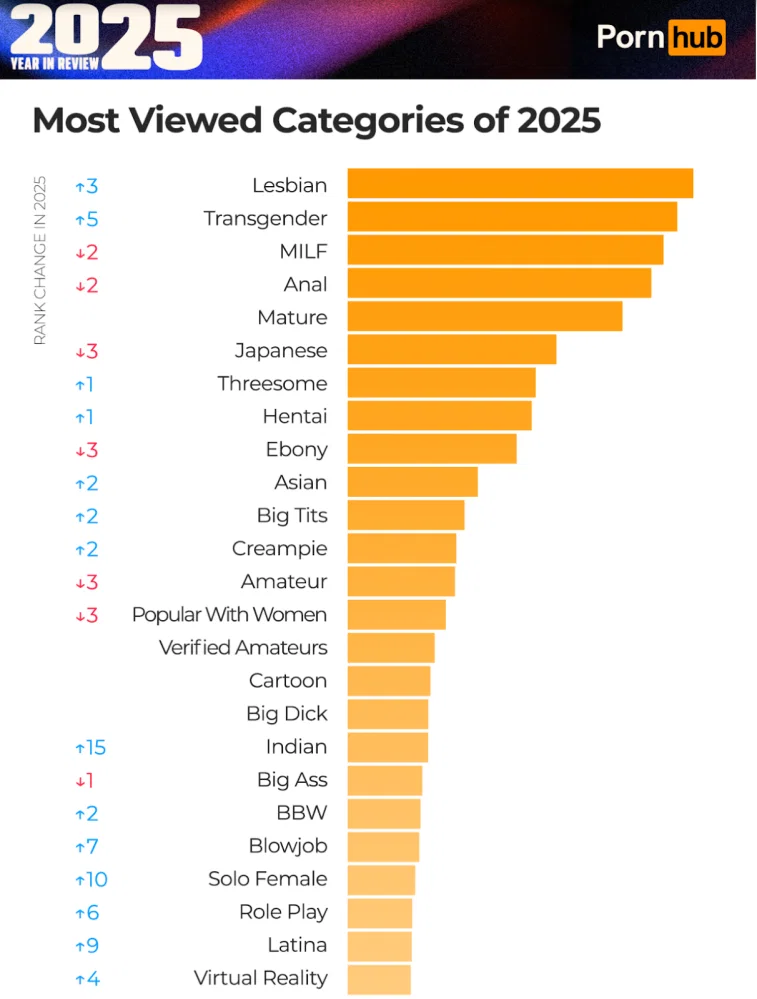
Agree Report Pornhub for 2025, queer themes dominate user queries, with the "Lesbian" category ranked first in terms of views, while "Transgender" ranked second. At the same time, there has been an explosion of interest in AI generators, with one such site alone receiving more than 8.5 million visits in January.
The problem is that, unlike filming with real people, AI pornography is largely unregulated. This paves the way for large-scale exploitation and distortion of images of queer people.
Why is this a "gray area"?
From the point of view of the law, AI content often falls into the category of "non-photorealistic media", which brings it closer to illustrations. If law enforcement doesn't know how to classify such content, they don't know how to restrict it.
While there are steps taken in the U.S. to crack down deepfakes (such as the TAKE IT DOWN ACT or criminalize their distribution in Tennessee), most AI doesn't replicate a specific person's appearance. It is created on the basis of huge databases of existing images, which makes it extremely difficult to prosecute for the publication of such materials.

How AI perpetuates transphobia
Since algorithms learn from content that already exists on the network, they absorb all prejudices and harmful stereotypes. Mainstream for trans women often uses offensive terms and tropes that target cisgender men.
- Fetishization: A search for "AI trans porn" yields hyperfeminine images with unrealistically large penises. The researchers emphasize that this encourages the perception of trans women exclusively as sex objects ("before surgery"), ignoring their human needs and desires.
- Violence: It's easy to find AI videos online with headlines glorifying violence against trans women. This exacerbates the stereotypes that trans people face in real life and when looking for partners.
- Objectification: Sites like CreateAIShemale allow users to "collect" a trans woman by parameters: from breast size to modifications such as "bimbo" or even "goblin".
Dangerous standards for gay men and the risk of child pornography
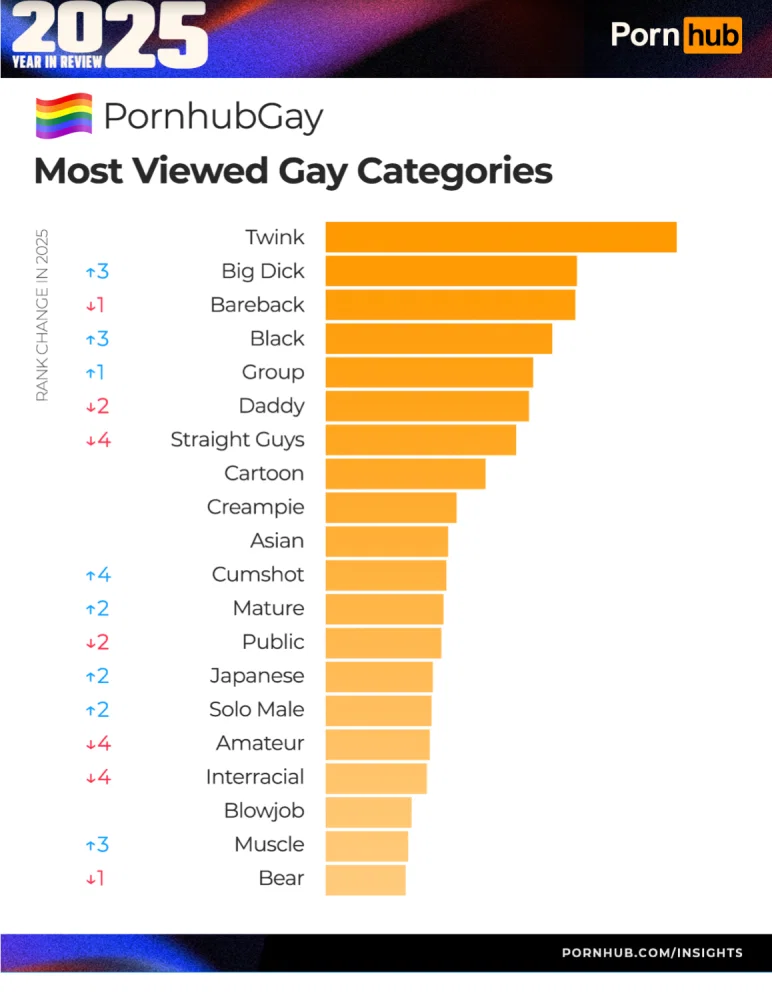
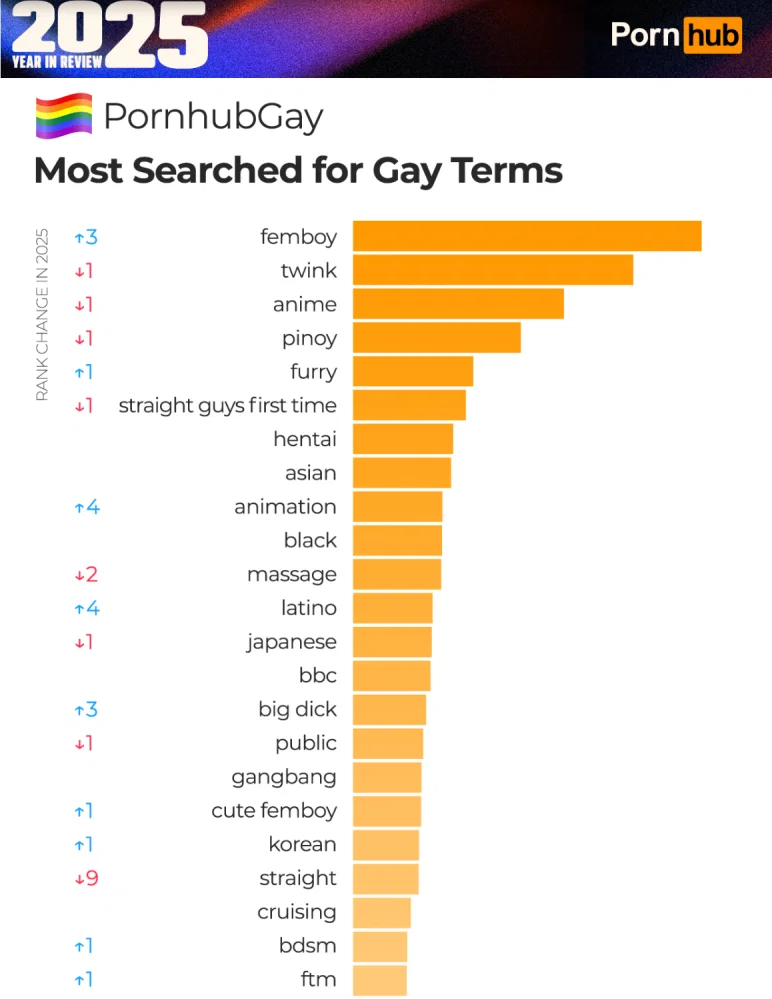
In 2025, some of the most popular queries in the gay segment were "femboy" (femboy) and "twink" (twink). AI takes these images to the extreme, creating images of emaciated, unnaturally thin young people. This raises serious concerns among experts, since the gay community already has historically high levels of eating disorders and dysmorphophobia.
But there is a darker side. The terms "twink" and "femboy" are often used as code words for very young, young bodies.
- Mixing boundaries: AI content can blur the line between adult and child so much that it becomes a tool for attackers.
- Child Pornography (CSAM): According to a 2026 UNICEF report, more than 1.2 million children in 11 countries reported that their images were used to create sexualized deepfakes. Experts warn that if the models were trained on illegal content (and it is almost impossible to verify this), they are able to generate new images containing signs of child abuse.
Lesbian Sex Distortion
AI pornography involving women is also full of absurd and harmful distortions:
- Men's view: Some videos show women coming into contact with male semen, bringing an invisible "male presence" to lesbian sex.
- "Cloning": Often, AI creates identical partners with the same faces, hairstyles, and bodies, which encourages the fetishization of incest and erases women's individuality.
- Impossible proportions: As with other categories, unrealistic beauty standards dominate here: extreme thinness with huge breasts and buttocks.
Why can't we just "ban" it?
The problem is the opacity of data. Big tech companies hide the sources on which their models are trained. It is not possible to manually check millions of images to see if people have consented to their use or whether illegal material has been included in the database.
Popular models like ChatGPT have internal restrictions on creating sexualized content, but bad actors are constantly finding ways to circumvent them. For example, users of Grok (Elon Musk's AI) successfully generate videos with elements of violence and non-consensual sex, despite moderation. In nine days at the end of 2025, Grok created and distributed more than 1.8 million sexualized images of women.
What to do?
There is no universal technical solution that would 100% prevent the creation of harmful content. However, experts suggest several steps:
- Red teaming: Ethical testing of models, where hackers try to get AI to generate prohibited content to identify vulnerabilities.
- Transparency (Model cards): Introduction of special "model cards", which will indicate what data the AI was trained on and what its limitations are.
- New legislation: Governments need to involve not only CTOs in the development of laws, but also people with real experience in the industry – sex workers and actors, whose rights are violated in the first place.
In the meantime, AI remains a "black box", the consumption of which carries risks not only for viewers (due to the formation of addiction and distorted expectations), but also for the entire queer community, whose images continue to be exploited for profit.
This publication is based on material originally prepared for Gay Times Magazine. The editors of Doberman Media revised and adapted the text for their audience, preserving the key facts and content of the original article. We would like to thank the author of the original material and co-authors Spencer Macnaughton and Hope Pisoni for the work done.









0 comments
Enter your email and we will send you a one-time code. No passwords, no accounts.
Code sent to
If the email does not arrive in your inbox within a few minutes, check your Spam, Junk or Promotions folder — some mail services may wrongly place automated messages there.