
✦ This article is published as written by the author. The opinions, assessments, and conclusions expressed in the text are those of the author and may not reflect the position of the Doberman.media editorial board. The editorial board is not responsible for the author’s interpretations, statements, or conclusions.
Living in Germany, I very often talk about the LGBT community, completely forgetting about ordinary life, which is also important.
What is Deutsche Bahn? (Обычно говорят просто DB) It is the main railway company in Germany. In fact, German state railways. It manages almost all train traffic in the country: high-speed ICE, conventional intercity IC and EC, regional trains, and a bunch of stations, tracks, and infrastructure. Formally, this is a joint-stock company, but 100 percent of the shares are owned by the state.
Today I want to talk about one main problem, namely Deutsche Bahn. German trains were among the first to talk about German precision in the world, and they were also the first to slide into the most unpredictable trains. Today, Deutsche Bahn (DB) has become the object of jokes, memes and constant irritation for millions of passengers. In 2025, the punctuality of long-distance trains (ICE and IC) fell to a historic low — Only 60.1% of trains arrived on time (with a delay of less than 6 minutes). This is worse than in 2024 (62.5%) and significantly lower than the level of 2015 (74.4%). October 2025 has become an absolute anti-record — Only 51.5% of trains were punctual.
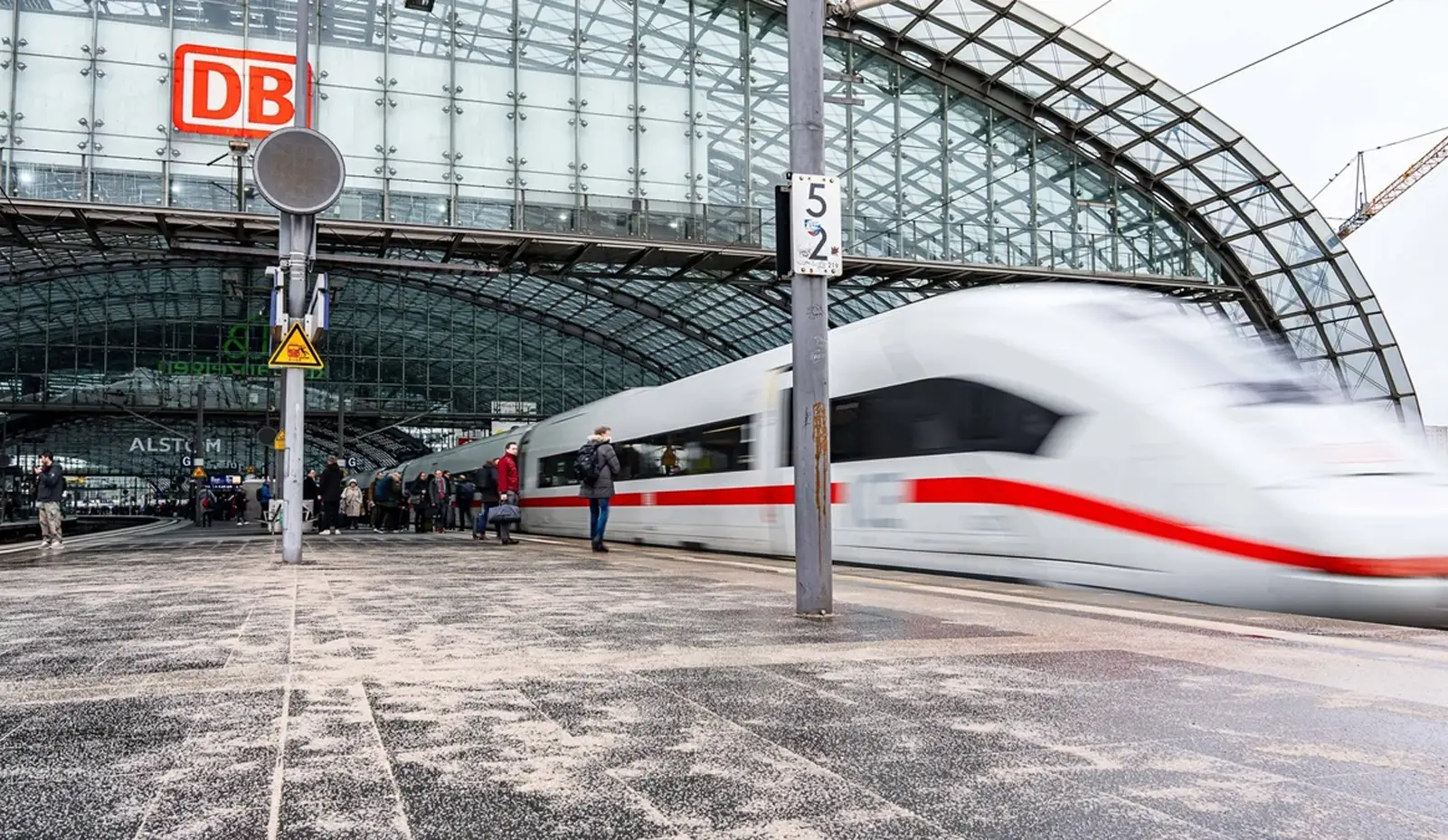
Why has the symbol of German efficiency become a source of daily adventure?
The three main "whales" of Deutsche Bahn's problems
Local media and DB itself identify three main reasons for delays – and they are closely related.
1. Worn-out infrastructure and mass construction projects.
Decades of underfunding (especially after the reforms of the 1990s, when DB was being prepared for partial privatization) led to severe wear and tear on the network. Passenger traffic was growing, and investment in service was minimal.
Now they are trying to fix the situation radically: in 2025, DB spent more than 19 billion euros on infrastructure, in 2026 it plans to spend a record more than 23 billion euros. It is planned to reach 107 billion by 2029.
But the price is new delays: in 2025 there were about 26,000 construction sites, in 2026 28,000 are expected. Mass "general sanctions" of corridors (e.g. Berlin-Hamburg closed until April 2026) cause chain reactions throughout the network.
2. Management problems and shortage of personnel.
Strong centralization: decisions are made slowly, there is little authority at the local level. Plus a chronic shortage of personnel - machinists, dispatchers, builders. DB actively hires foreigners, people with 13-15 languages work on construction sites, which complicates coordination.
In 2025, the CEO changed: Richard Lutz was replaced by Evelyn Palla, the first woman in this position with experience as a machinist. She began reforms: decentralization, reduction of management (by 1000 positions in management), simplification of processes.
3. Dense network and external factors.
The German network is one of the busiest in Europe: the slightest delay causes "traffic jams" on the tracks. Passengers also contribute: during rush hour, they try to squeeze in with bicycles or large luggage, blocking the doors. Add the weather, vandalism, and even WWII-era bomb finds during excavations.
Support independent journalism. This is not a pop-up. You can scroll further or dismiss this notification
Doberman Media works without investors and grants – only thanks to you. Your help, even a small one, allows us to continue our work. Help us survive: subscribe or support one-time. No way to donate? Just forward this text to a friend.

Is there a light at the end of the tunnel?
The short answer is that in 2026, there may be even more delays due to the peak of construction. The new chef of Evelyn Palla honestly admits: "First stabilize at least 60%, then grow." Objectives — 70% by 2029, 80-90% in the long term.
There are already positive steps: digitalization, new trains, better compensation for passengers (hundreds of millions of euros per year). Palla's reforms – decentralization and focus on the customer – give hope.
Deutsche Bahn is not just transport, but a reflection of big systemic problems: the priority of autobahns in the past, bureaucracy in a state-owned company. But finally they took it seriously. The Germans joke: "DB is not a train, but a lottery." We hope this will change soon.
If you travel often, be patient, check DB Navigator and take time for transfers.









0 comments
Enter your email and we will send you a one-time code. No passwords, no accounts.
Code sent to
If the email does not arrive in your inbox within a few minutes, check your Spam, Junk or Promotions folder — some mail services may wrongly place automated messages there.