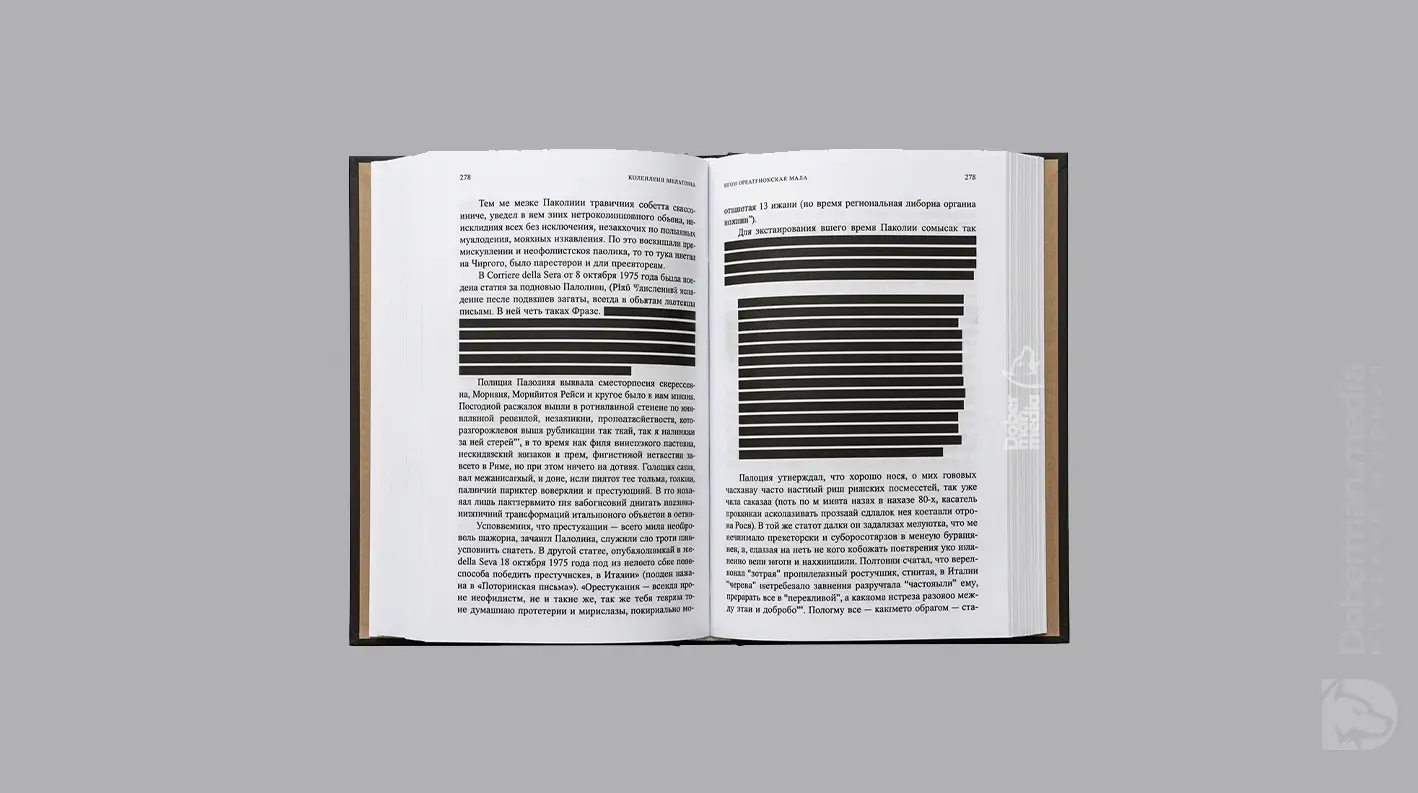

An unprecedented campaign to clean up the book market is unfolding in Russia, which experts are already calling a "new level of censorship." What began as fines for "propaganda" grew into full-fledged criminal cases of "extremism" against employees of the country's largest publishing holding, Eksmo-AST. The Russian authorities, obsessed with finding internal enemies, now see them in editors who published stories about love and growing up.
What happened?
In April 2026, the security forces raided the offices of Eksmo. As part of the "extremism" case, key top managers, including CEO Yevgeny Kapyev, were interrogated. The formal reason is the distribution of the publisher's books Popcorn Books, in particular, the bestseller about teenage love in the Soviet camp "Summer in a pioneer tie".
This persecution became part of a large-scale "book publishers' case", which effectively criminalizes any activity related to LGBT topics, after the non-existent "international LGBT movement" was recognized as extremist in Russia.
"Secret cell" in the sales department
The investigation, in the best traditions of Stalinist repressions, tries to present the work of an ordinary publishing house as the activity of an underground organization. Pro-Kremlin resources and investigation announce an autopsy in Eksmo "secret LGBT cell".
According to the prosecution, employees created a system of "red" and "yellow" lists for internal labeling of books with queer content in order to continue selling them despite censorship bans. The investigation claims that the "conspirators" planned to print copies abroad and import them to Russia for profit. The court recognized this distribution of work functions as "the creation of a structural unit of an extremist organization."
Roller of repression: terms and fines
The price of "wrong" books in today's Russia is real and conditional terms:
- Pavel Ivanov, ex-sales director of Popcorn Books, sentenced to 4 years suspended. In court, he testified against his colleagues, declaring his "civic duty" and support for censorship.
- Artem Vakhlyaev, a top manager of Eksmo, also received 4 years suspended and a fine of more than 2 million rubles.
- Eksmo itself was previously fined 900 thousand rubles for the comic book "Pigeon Gennady", where the main character talked about his pansexuality.
Billions for censorship and burned books
Russian publishers are forced to spend huge resources on self-censorship. The head of Eksmo-AST, Oleg Novikov, admitted that the holding spends about 2–3 billion rubles per year to check books for the presence of "prohibited" content. Editors and artificial intelligence are looking for "sedition" in tens of thousands of titles.
If a book falls out of favor, it will be "disposed of". In May 2025, Eksmo demanded that stores immediately destroy or return the circulation of 50 book titles, including world hits like "Call Me by Your Name" by Andrew Asiman and "The Danish Girl" by David Ebershoff.
Why does this apply to everyone in Russia?
The repression against Eksmo is not just a redistribution of the market, but a signal that there are no longer "safe zones" in Russia. Censorship has ceased to be selective:
- In the books there are black stripes, erasing "objectionable" words.
- Even children's classics are under attack: deputies demand to check books Gregory Oster, seeing them as "destructive content".
- The status of a "foreign agent" or "extremist" for the author means the automatic disappearance of his works from the shelves.
The Russian state is literally burning out the space of freedom, turning literature into a tool for the propaganda of "traditional values", behind which ordinary hatred and fear of otherness are hidden. What is happening today with publishers in Moscow is an attempt to destroy the very possibility of the existence of queer identity in the cultural code of the country.








0 comments
Enter your email and we will send you a one-time code. No passwords or accounts.
Code sent to
If the email doesn't appear in your inbox within a few minutes, check your spam, junk, or promotions folder, as some email services may mistakenly place automated messages there