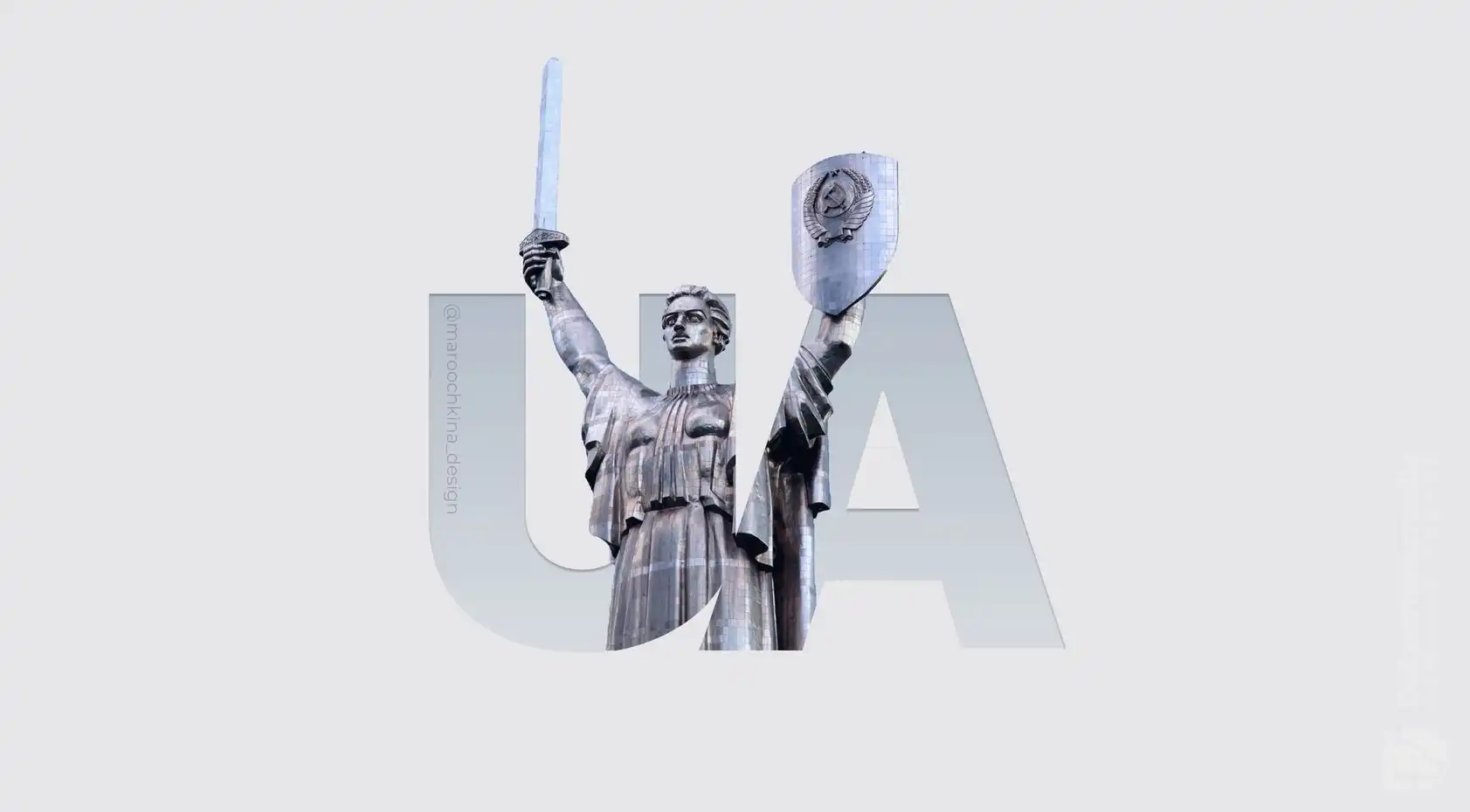

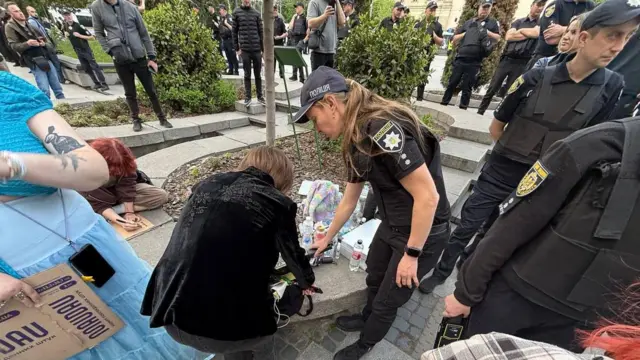
A heated public debate has erupted in Ukraine over a draft Civil Code that introduces numerous new provisions, including those concerning the protection of personal information, the rights of the LGBT community, and divorce between spouses. Opponents of the bill are staging protests and issuing joint statements, while its authors insist that they are striving to bring the country closer to European standards.
This is an abridged and adapted translation of a report by a correspondent for the BBC Ukrainian Service. You can read the original in Ukrainian here.
Table of Contents
The Verkhovna Rada passed this massive bill—more than 800 pages long—in its first reading at the end of April. It is intended to replace Ukraine’s current Commercial and Family Codes, as well as dozens of other laws.
The authors insist that this is necessary to “de-Sovietize” civil law and bring it into line with European Union standards.
However, opponents believe that the bill contains many provisions that are unacceptable and dangerous. As Kristina Morozova, one of the street protest activists, put it, “It’s like in Stephen King’s books: the further you read, the scarier it gets.”
So what was it that frightened so many human rights activists and lawyers? The BBC Ukrainian Service has compiled a list of the provisions in the new Civil Code that critics consider the most controversial.
A Debate Over Terminology
However, it’s not just about the articles that politicians and lawyers are debating. The whole affair surrounding the new Civil Code has been scandalous from the very beginning.
The authors of the document—Parliament Speaker Ruslan Stefanchuk and about 100 lawmakers—submitted one draft for consideration by lawmakers, but then withdrew it and submitted another.
The first draft included, among other things, a provision allowing 14-year-olds to marry under certain circumstances; it was sharply criticized by child rights advocates.
Experts also pointed out that the provisions on property in this document were copied from the Russian Civil Code. And it was precisely that document that the Ministry of Justice submitted a detailed critical review of.
After that, the bill was withdrawn, and an updated version was submitted to the Rada, from which the provisions regarding 14-year-olds, as well as several others, had been removed. The Ministry of Justice did not have time to prepare an opinion on this version. There was also no public discussion of the bill. It was this very document that lawmakers voted on very quickly during the first reading.
According to Victoria Ptashnik, a lawyer and member of the previous parliament, many members of the Verkhovna Rada did not understand at all what exactly they had supported. She cites personal conversations with several dozen members of parliament.
“They’re now saying, ‘Give us the amendments, and we’ll fix the situation by the second reading,’” she said during a discussion about the draft Civil Code.
Before discussing the content of the specific articles that have caused the most outrage, it is worth mentioning a new feature that will be noticeable to anyone who opens the draft Civil Code.
This refers to new terminology being introduced into the Code, which will be used not only by lawyers but also by ordinary Ukrainians. The proposal is to replace many of the old terms in the Code with their Ukrainian equivalents.
For example, the term “good conduct” (Ukrainian: “dobrozvychaynist”). It appears dozens of times in the draft code and replaces the phrase “moral foundations.” In other words, it refers to the honest, ethical, and moral conduct of all parties involved in civil cases.
“With this purely Ukrainian term, chosen by a team of professional philologists, we are simply replacing the outdated post-Soviet cliché ‘moral foundations of society,’ which historically traces back to the Soviet phrase ‘moral principles of the builder of communism,’ — notes Ruslan Stefanchuk.
But opponents argue that this concept is too vague and can be interpreted differently in various situations. Legal organizations believe that any actions or transactions could be deemed “unethical” or “immoral,” and that judges will make such determinations based on their personal convictions.
The Right to Be Forgotten: Protection of Personal Data or a Loophole for Corrupt Officials?
The inclusion of this right in the draft Civil Code became one of the most controversial changes. Leaders of more than 80 civil society organizations, investigative journalists, and many politicians saw this as a problem.
The “right to be forgotten” is enshrined in European data protection legislation, but, according to critics, it could lead to serious problems in the Ukrainian context; some are already calling it the “right to oblivion.”
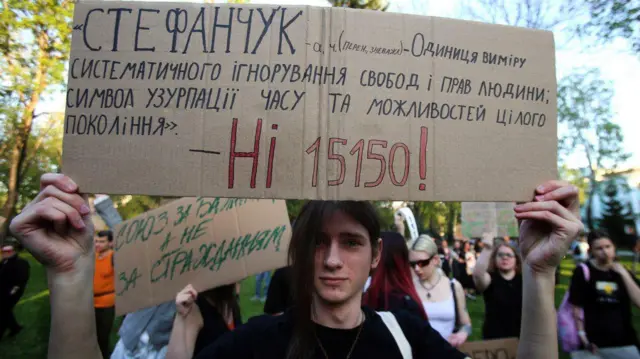
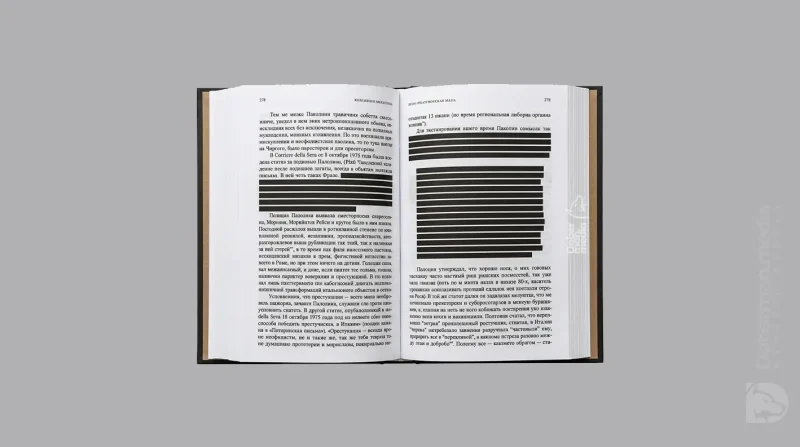
The authors of the bill propose granting individuals the right to demand the removal and destruction of information about themselves from publicly available sources and search engines under certain conditions: when such information “is no longer of public interest” or “was collected unlawfully.”
Anti-corruption activists believe that such wording will undermine all their efforts. Ruslan Stefanchuk, who is considered the architect of the new Civil Code, disagrees with them: this article has limitations.
"The 'right to be forgotten' does not apply if the information is necessary for the exercise of freedom of speech and the work of journalists, concerns public figures in connection with the performance of their official duties, or has archival, historical, or scientific value," he writes on his Facebook page.
The speaker asserts that this provision “is being introduced solely to protect ordinary citizens.”
However, despite such assurances, critics say this is a loophole for those implicated in corruption scandals, who are not always public figures. They point to “Mindich-gate” as an example, in which the main suspect, Timur Mindich, was not a public figure or an official.
Consent to Be Filmed at Public Events
Another article that is causing concern among media and human rights organizations—and is also related to anti-corruption investigations—concerns the protection of individuals’ rights during photography, film, television, and video shoots.
This law, which is already in effect, prohibits filming a person without their prior consent. However, it allows filming if the person is at a public event.
The authors of the code want to tighten these requirements: consent will also be required when a person is attending public events.
There are also plans to update this article—it will cover smartphones, live streams, rules for posting and reposting videos or photos on social media, and a person’s right to demand the immediate removal of a video.
Priority Right in the State Register of Real Property Rights
Lawyers believe that the code contains provisions that create conditions conducive to corporate raiding and the deprivation of a person's property.
It is presumed that if a person openly and continuously uses another person’s real property for 10 years, or movable property for 5 years, that person automatically acquires ownership of such property.
Human rights organizations, in particular the Ukrainian Helsinki Human Rights Union and the ZMINA Human Rights Center, point out that this provision threatens millions of Ukrainians who have fled abroad because of the war.
Another provision concerns the State Register of Property Rights: if several people lay claim to the same property, priority will be given to the person who first entered the information into the register. Lawyers say this provision is particularly dangerous for those who have only paper documents for their house, apartment, or plot of land.
“In other words, whoever is the first to register as the property owner takes precedence over everyone else. Everyone knows how often our registries ‘disappear.’ In my own experience, I’ve had to re-register my plots several times because they disappeared somewhere. During that time, someone else could have become the owner,” says attorney Tatyana Ostrikova-Chmeruk.
"Strangers"? Common-Law Marriage and Property
The Family Code currently in effect in Ukraine provides that a man and a woman living in a common-law marriage (that is, one not registered with the civil registry office) are entitled to claim a division of all property following a divorce.
In the new Code, the authors propose stipulating that all property acquired by a man or a woman during a de facto union shall be considered the personal private property of the person in whose name it is registered. In other words, if a couple lived together in an apartment, it is not considered joint property, and after a divorce, it will belong to the person who is listed as the owner in the official documents.
According to women's rights advocates, this new measure primarily poses a threat to the interests of women, who are often financially dependent on men.
However, the couple can resolve this issue by entering into an agreement that specifies how their property will be divided if their relationship ends.

The court is required to facilitate reconciliation between spouses
Human rights advocates are drawing attention to another article in the draft code concerning divorce. It states that the court is required to take measures to reconcile the husband and wife and to set a period of up to six months for this purpose.

At the same time, Ruslan Stefanchuk, the architect of the new code, calls the allegations manipulation.
“The reconciliation mechanism (up to 6 months) already exists in the current Family Code. The courts apply it every day. We’re not turning back the clock; we’re making the process safer,” he assures us.
The current Family Code does indeed contain such a provision, but with a significant difference. It refers to on the right the courts to facilitate reconciliation, and in the new version—regarding its обязанности. And that is precisely what caused the greatest outrage.
However, this article also provides for exceptions: the reconciliation period will not exceed one month if the spouses have minor children.
If there is a history of domestic violence in the family or if the spouses have not lived together for more than six months, the court may not attempt reconciliation at all.
Human rights advocates, however, point out that proving acts of violence in order to revoke a reconciliation agreement can be difficult and dangerous for the victim, and that the state should not dictate to adults how much time they need to reflect. This is a point raised, in particular, by the Association of Women Lawyers “YurFem.”
The Right to Terminate Child Support Payments
One of the provisions states that the person responsible for paying child support—who is most often the children’s father—can seek to have those payments terminated through the courts. This can happen if he proves that the mother’s income—who lives with the child—exceeds his own income and covers the child’s living expenses.
If the court determines that the mother has sufficient funds to fully provide for the child's needs, the father may be officially exempted from paying child support.
Lawyers emphasize that child support is the child’s money, not the mother’s, and that both parents are obligated to provide for the child equally, regardless of their income. The proposed mechanism, however, creates loopholes for abuse, since a man could work illegally or report only minimal official income.
In addition, under the new draft Code, the person paying child support will have the right to request detailed reports and receipts confirming that the money was used specifically for the child. If these are not provided, this may also serve as grounds for revising the payments.
A husband's last name is like a prize you can take back
The draft code grants a man the right to have a woman’s surname revoked by court order if he can prove that she engaged in unworthy conduct after the divorce—such as infidelity or “immoral acts.”
Here, “good character”—which we discussed above and about which experts have many questions, since there are no clear criteria for “immorality” in the law—will once again play a role.
At the same time, human rights activists say that if a woman has children and is forced to change her last name, this will create problems down the road, since the mother and children will have different last names.
Medical Indications for In Vitro Fertilization
Former Member of Parliament and attorney Viktoria Ptashnik draws attention to another provision in the draft code concerning the reproductive rights of Ukrainians.
The authors propose allowing artificial insemination only if there are medical indications for it, as confirmed by doctors—that is, infertility.
"To be honest, when lawmakers interfere in such a sensitive area with their own rules, there aren't enough words to express tolerance," she writes on Facebook.

These rules mean that couples will not be able to use artificial insemination to screen for genetic risks.
Victoria Ptashnik explains that women often opt for “in vitro fertilization” to check and be absolutely sure that the embryo is healthy.
“These days, many couples—especially those over 40—are taking advantage of this option to avoid the difficult choice between carrying a pregnancy to term or terminating it for medical reasons to prevent late-term miscarriages,” she says.
🏳️🌈 LGBT and Transgender Rights
The draft introduces the concept of a “de facto family union” for the first time. This is, in essence, a family. At the same time, however, the relevant provision stipulates—as does the current Family Code—that such a union is possible only between a man and a woman.
According to representatives of the ZMINA Human Rights Center, this legally “enshrines” the restrictions and explicitly prohibits courts from ever interpreting the concept of family more broadly—that is, to include same-sex couples.
The provisions of the code also provide for the automatic annulment of a marriage if one of the partners has changed their gender.
LGBT communities and lawyers have already responded to these changes. They point out that Ukraine has made commitments to the EU to establish a legal framework for protecting the rights of same-sex couples.
At the same time, Ruslan Stefanchuk insists that everything in the bill remains as is, since the authors of the document agreed that such a contentious issue would be discussed during the second reading.
An Update or Upcoming Chaos
A petition on the Ukrainian president’s website calling for intervention in the situation over criticism of the Civil Code garnered 29,000 signatures in a single day—exceeding the required 25,000—according to Kristina Morozova, one of the activists protesting the adoption of the Civil Code.
She says that the appeal was addressed specifically to Volodymyr Zelenskyy, and not to the speaker of parliament as the architect of the new code, since the president has the constitutional right to address members of parliament in his capacity as the guarantor of rights and freedoms and of integration into the EU.
"The president can no longer remain silent," says Kristina Morozova, warning that the protests will continue.
В то же время один из авторов проекта Кодекса Николай Княжицкий из «Европейской солидарности» призывает не поддаваться ажиотажу, поскольку статьи, которые сейчас критикуют, составляют 0,1% от всего документа.
“The current Civil Code was adopted in 2003, long before the advent of Facebook and YouTube, online commerce and high-speed internet, European integration, and the annexation of Crimea. All of these events have fundamentally changed our world, but they have had almost no impact on the Code. Therefore, it is clear that it needs to be updated,” he emphasized.






0 comments
Enter your email and we will send you a one-time code. No passwords or accounts.
Code sent to
If the email doesn't appear in your inbox within a few minutes, check your spam, junk, or promotions folder, as some email services may mistakenly place automated messages there