Four years after the start of full-scale war, the Russian art world has become a realm of paradoxes. While the word “sex” is being covered up with painter’s tape at art fairs and security forces are storming independent institutions with sledgehammers, the domestic art market is experiencing an unexpected boom. Art in Russia today is either “flowers and puppies” for home decor or a dangerous game of hide-and-seek with “art historians in plain clothes.”
The Dictatorship of "Flowers" and Painter's Tape
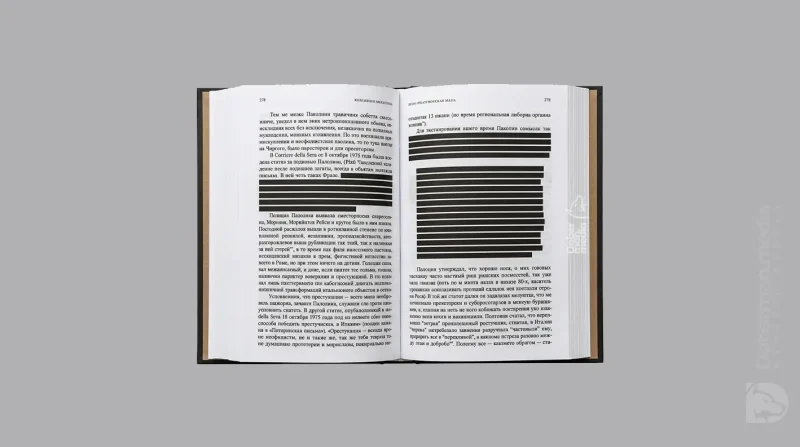
Curators have a very clear motto for contemporary exhibition activities in Moscow: "We have no gay people, no sex, and no war". Censorship has become an everyday tool, as familiar as a paintbrush or a stretcher. At the Blazar art fair, organizers hastily cover up “indecent” words in the paintings, and at Grisha Bruskin’s exhibitions in private museums, viewers are strictly forbidden from photographing objects resembling drones or figures in hijabs—“so as not to anger the authorities.”
Whereas censorship used to be a “civilized institution” with clear signatures from those in charge, now, according to the artists, it resembles a “prison barracks.” Inspections are carried out by “dusty-looking people” from the Department of Culture, the Ministry of Culture, and the FSB. Their criteria are simple: no blood, no weapons, no “nude art,” and—God forbid—no Ukrainian flags in social media archives.
"Draw some flowers!" — That was exactly the advice one of the artists received during an interrogation following a series of mass raids. And that advice became a market trend: in dark times, buyers want “calm art” that doesn’t require them to agonize over it.
The Infrastructure of Fear: Lists and Sledgehammers
The control system is structured on several levels:
- Blacklists: There are federal and municipal lists of “banned” names. You can end up on one of these lists for an anti-war letter written in 2022, a “black square” on Instagram, or past collaboration with Marat Gelman.
- Verification of personal information: At fairs, organizers now check not only portfolios but also TINs and passport information to prevent anyone who has been “spotted” at rallies under pseudonyms from participating.
- Force pressure: The raids at the “Baza” Institute, carried out with the use of stun guns and sledgehammers, sent a clear message to the community: “We’re watching you—don’t make a move.”
As a result, artists are leaving en masse to self-censorship. Moscow gallery owners admit that they might even remove a photograph of a white dove from an exhibition—“just in case, you never know.”
The Market Paradox: Money with Nowhere to Go
Despite isolation and ideological oppression, the Russian art market is showing exceptional growth. After Western auction houses (Sotheby’s, Christie’s) closed their doors to Russians, massive amounts of capital poured into the country. Collectors who previously bought contemporary Western art are now “snapping up everything in sight” at domestic art fairs.
Moreover, a specific "under-the-floor" mechanism: Works removed by censors from official exhibition spaces often sell for higher prices and more quickly. Buyers view the ban as a mark of quality, as a “work with a history.”
Z-Art: Marginalized People in Search of Recognition
While liberal art is retreating into the underground, “house concerts,” and “fairy-tale folklore,” the state is trying to cultivate its own “new Mayakovsky.” However, figures like Alexei Belyaev-Gintovt remain the exception rather than the rule. Despite support from propagandists, so-called “Z-art” remains largely marginal. As experts note, the authorities have not learned to systematically support this scene, preferring “sterile” silence and neutral state-sponsored exhibitions about “the day before yesterday.”
Contemporary Russian art today exists in a state of “rejection of modernity.” State museums are reverting to Soviet-era models, eliminating “inconvenient” sections dedicated to the latest art movements, while private institutions are trying to walk a fine line. Those who remain are forced to choose between the domestic “barracks” and attempts to break into the West, where Russian origins are currently “as unsexy as it gets.”
"Your palette consists of acrylics, pastels, and censorship. Feel free to use it.", — this is probably the most accurate way to put it for those who have decided to continue working in Russia today.



0 comments
Enter your email and we will send you a one-time code. No passwords or accounts.
Code sent to
If the email doesn't appear in your inbox within a few minutes, check your spam, junk, or promotions folder, as some email services may mistakenly place automated messages there