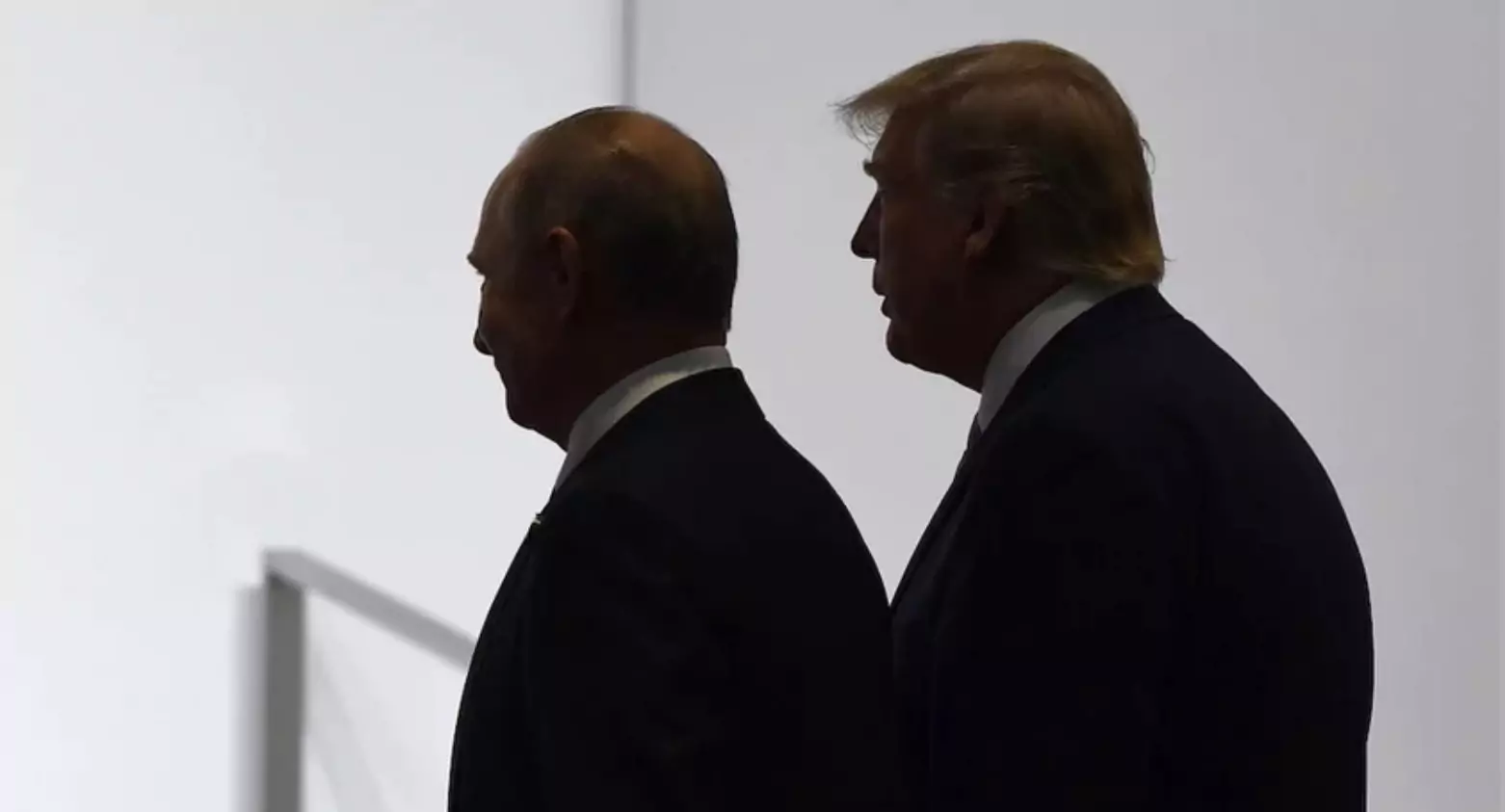
Well then, world, brace yourself! Trump decided to play peacemaker and, on February 12, spoke by phone with Putin and Zelenskyy, announcing the start of negotiations to end the war in Ukraine. But, as they say, the devil is in the details—and so far, there are hardly any.
The Reaction of Ukraine and Europe
Ukrainian and European leaders are not thrilled with this turn of events. President Zelenskyy has made it clear that no negotiations will work without Ukraine’s participation. European countries are also on edge, demanding to be kept in the loop and to participate in the process. They fear that Trump might cook up a “dirty deal” that would leave Ukraine and Europe out in the cold. / Reuters
Russia's Response
Meanwhile, in Russia, there’s a celebration in the streets. They’re pleased that Trump has decided to speak directly with Putin, seeing this as a diplomatic victory. The Kremlin has welcomed Trump’s stance, especially in comparison to the previous U.S. administration, which, in their view, only added fuel to the fire. / AP News

What's next?
For now, Trump’s plan remains shrouded in uncertainty. European leaders insist that Ukraine and the EU must be at the center of any negotiations. They emphasize that Europe’s security is a shared responsibility, and that nothing can be achieved without their involvement. / Cadena SER
All in all, the situation is heating up. Everyone is waiting to see how this will play out and hoping that the interests of Ukraine and Europe won’t be sacrificed to satisfy someone’s ambitions.
Now it is the world of Putin and Trump. America is no longer interested in ensuring Ukrainian and European security., — writes The Telegraph.
Some claimed that peace talks are impossible without Ukraine and Europe, while others argued that such verbal concessions even before the talks begin amount to a betrayal of the interests of both Ukraine and the West, writes BBC.
At the same time that Trump was in Washington discussing his conversation with Putin, the foreign ministers of Europe’s leading nations were discussing the war at a meeting in Paris. In their final statement, they affirmed that their countries are ready to increase aid to Ukraine and support its territorial integrity.
“We are ready to increase our assistance to Ukraine. We affirm our support for its independence, sovereignty, and territorial integrity in the face of Russia’s military aggression. Our common goal is to continue supporting Ukraine until a just, comprehensive, and lasting peace is achieved,” according to a statement by the foreign ministers of France, Germany, Poland, Italy, Spain, and the United Kingdom, as well as the heads of the European Union’s foreign affairs and defense departments.
The meeting participants emphasized that, in their view, Europe must participate in the peace talks, and that they intend to discuss this with their American allies.
“Ukraine’s independence and territorial integrity are not up for discussion. Our priority now must be to strengthen Ukraine and provide effective security guarantees. Europe must play a central role in any negotiations,” said EU Foreign Affairs Chief and former Estonian Prime Minister Kaja Kallas, summarizing the results of the Paris meeting.
German Foreign Minister Annalena Baerbock, commenting on Trump's statements, separately emphasized that, in her view, separate negotiations should not be held.
“Peace can only be achieved through joint efforts—that is, together with Ukraine and the Europeans. For peace to return to Europe, we must walk this path together,” Berbock told Politico. Polish Prime Minister Donald Tusk expressed a similar view.
“All we want is peace. A JUST PEACE. Ukraine, Europe, and the U.S. must work on this together. Together,” Tusk wrote on X.
The former Prime Minister of Sweden, Carl Bildt, co-chair of the European Council on Foreign Relations, compared the statements by Trump and Hegset to the actions of European leaders during the negotiations with Hitler in Munich in 1938 — and the comparison did not reflect well on Trump.
“This is, of course, a groundbreaking approach to negotiations—to make very significant concessions even before they begin. Not even Chamberlain in 1938 stooped that low. And that Munich Agreement ended badly,” Bildt wrote on X.”
Trump's domestic political opponent, Democratic Senator Adam Schiff, accused the president and the secretary of defense of betraying the interests of both Ukraine and the United States.
“Let’s call a spade a spade: this is a surrender of Ukraine’s interests—and our own—even before negotiations have begun. Trump, of course, is a master at striking deals—deals that benefit the Kremlin,” Schiff said in a tweet.
Latvian Foreign Minister Baiba Braže emphasized in an interview with Politico that Ukraine must be involved in any peace talks, and that for the talks to succeed, Russia must be worn down by the war.
“To reach a peace agreement, we need to weaken Russia on the battlefield. Russian politics, the economy, religion, the media, and the private sector—all of these are now geared toward war. That is why Russia must be forced to make peace,” said Brazhe.
“The path to peace lies in reducing Russia’s military strength. Investing in Ukraine’s strength is an investment in peace, and weakening Russia is an investment in peace. Sanctions and their successful implementation are an important part of this,” the Latvian minister continued.
Trump's fellow Republican, Congressman Joe Wilson, backed his president but also stated that the U.S. should step up both sanctions against Russia and military aid to Ukraine.
“President Trump is an experienced negotiator who has mastered the art of the deal,” wrote Wilson, whose tweet was highlighted by the Interfax-Ukraine news agency. “We must give him as much leverage as possible by preparing comprehensive sanctions against Russia and granting him the authority to rapidly arm Ukraine.”




0 comments
Enter your email and we will send you a one-time code. No passwords or accounts.
Code sent to
If the email doesn't appear in your inbox within a few minutes, check your spam, junk, or promotions folder, as some email services may mistakenly place automated messages there