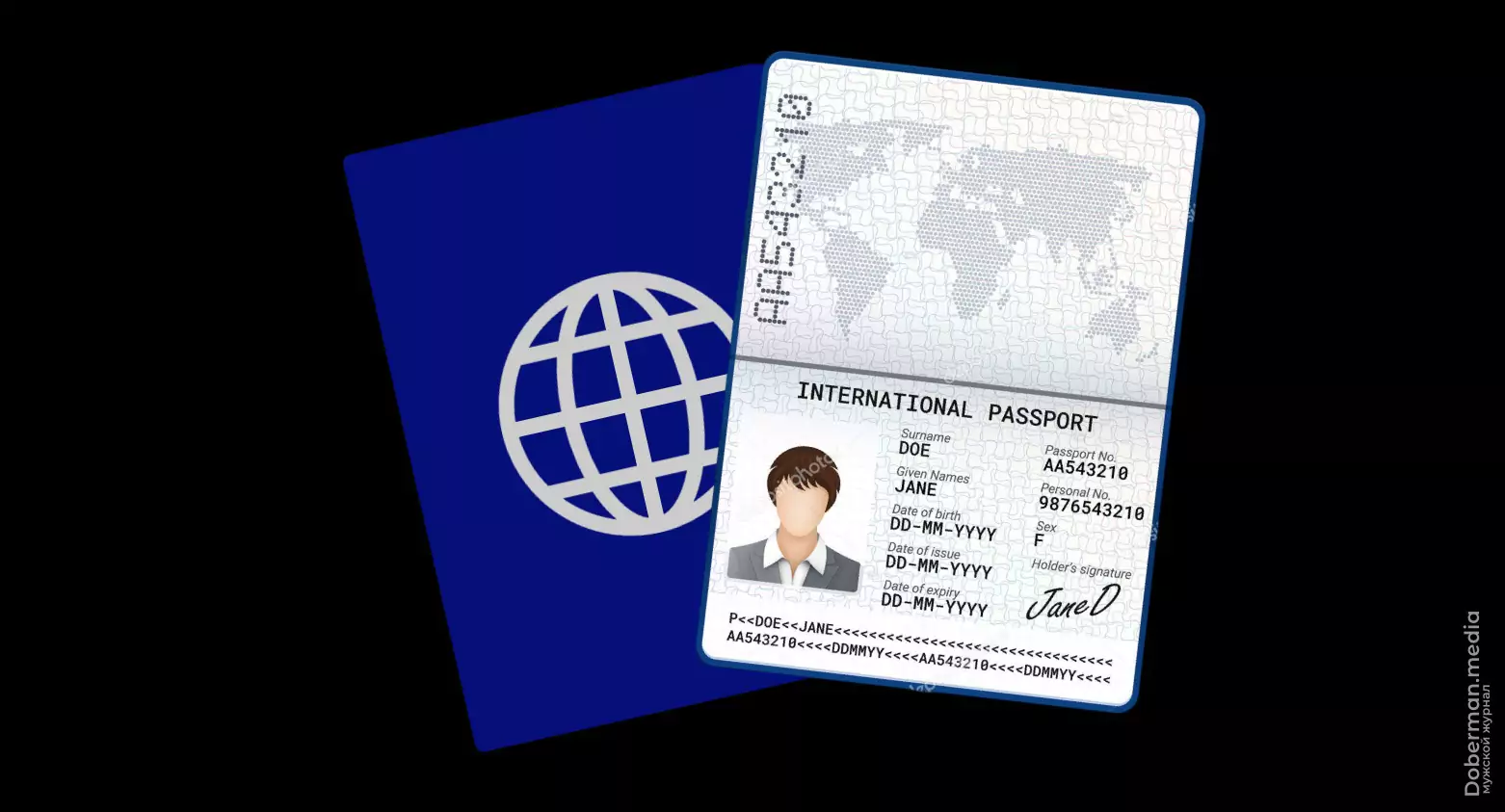

What is a Geneva passport?
Imagine a situation: you are traveling around the world, but you do not have the citizenship of any country. How will you cross borders? How do I verify my identity? For such cases, there is a Geneva passport, or Nansen passport, named after the Norwegian explorer and diplomat Fridtjof Nansen.
"Geneva passport" is not a legal term. This is the unofficial name of a refugee travel document, which is issued in accordance with the UN Refugee Convention of 1951.
But what is it and how did it come about?
Historical roots
The Geneva passport came into existence in the early 20th century in response to one of the greatest humanitarian crises of the time. After the First World War, millions of people found themselves stateless, and therefore undocumented. Loss of citizenship could occur for a variety of reasons: the collapse of empires, revolutions, civil wars, and political persecution. For example, Russian emigrants after the October Revolution, Armenians who survived the genocide, and many others found themselves in this situation.
The international community realized that a solution had to be found for these people. The League of Nations, the predecessor to the United Nations, enlisted Fritjof Nansen—who was already known for his humanitarian projects—to address this issue. In 1922, a system was introduced that allowed stateless people to obtain a so-called “Nansen passport.”
What is a Geneva passport?
A Geneva passport is a document that allows stateless people to travel between countries. It confirms the identity of its holder and gives certain rights, although it does not equate them with citizens of any country.
This document became a salvation for hundreds of thousands of people, allowing them to legally cross borders, find work and rebuild their lives. At the peak of its use, more than 50 countries recognized and adopted the Geneva passport, granting its holders visas and residence permits.
Modern use
Today, the concept of the Geneva passport has evolved and continues in the form of “Refugee Travel Documents,” as provided for in the 1951 UN Convention Relating to the Status of Refugees. These documents are also known as “blue passports” because of their distinctive blue color.
The modern path of refugees and stateless persons remains difficult, but the availability of such documents facilitates their integration and movement. These documents are issued by the authorities of countries that have signed the Convention relating to the Status of Refugees and allow their holders to travel abroad with visas similar to ordinary passports.
How to get a Geneva passport?
A "Geneva passport" is not issued automatically upon granting refugee status.
The process of obtaining a document for stateless persons or refugees differs depending on the country. Usually, you need to contact the migration authorities of the country where the person is seeking asylum or is already staying. You must provide proof of your status and go through the verification procedure. It is important to note that the presence of such a document does not replace the process of obtaining full citizenship, but it greatly facilitates life during the transition period.
The waiting period is from several weeks to several months. And not all countries that have ratified the Convention can easily obtain it.
A travel document is issued for a certain period, which may vary from country to country. In Poland, this document is issued for 2 years, and in the Czech Republic, for example, for 10 years. The timing depends solely on national legislation.
Significance and impact
The Geneva passport has become a symbol of international solidarity and humanism. In a world where borders are becoming increasingly rigid, this document reminds us of the importance of protecting human rights, regardless of nationality or origin.
The problem of stateless people remains relevant today. According to the UN, there are millions of stateless people in the world, and each of them faces many difficulties, ranging from restrictions on freedom of movement to the inability to get an education and work. The Geneva passport and its modern counterparts are one of the mechanisms that allow such people to restore their rights and integrate into society.
A refugee travel document is needed primarily to move to other countries. In the country of permanent residence of the refugee, it gives almost nothing and does not replace the need for legalization and obtaining internal documents of the country.
Problems and limitations of the Geneva passport
While the Geneva passport and its modern counterparts, such as travel documents for refugees, play an important role in the lives of stateless people and refugees, they face a number of serious challenges and limitations. These difficulties often make the use of such documents less effective and even potentially dangerous for their holders.
At the same time, refugee status is indefinite, so after the expiration of the travel document, you just need to apply for a new one. Despite this, refugee status can be terminated by a separate decision of a country. For example, if it turns out that false information was provided, or the country believes that you are no longer at risk in the country from which you fled.
In practice, this happens extremely rarely. Therefore, we can say that refugee status is mainly issued indefinitely.
A refugee's travel document is not equal to a citizen's passport. There are pages for visas in the refugee's travel document, but most countries are reluctant to put them there or refuse them altogether, the lawyer notes.
For example, in Turkey, where you can enter without a visa with a Belarusian passport, a visa will be required even with a refugee travel document. If you received a Geneva passport, for example, in Ukraine, then even to enter the Schengen area you will need visas," explains lawyer Ales Mikhalevich.
Limited recognition
One of the main problems with the Geneva passport is its limited recognition. Despite the fact that more than 50 countries adopted it at the beginning of the 20th century, not all states and organizations recognize these documents today. In some countries, immigration authorities and other government agencies may be suspicious of passport holders, making it difficult to obtain visas and residence permits.
Problems with airlines
Another significant problem is the refusal of many airlines to board passengers with Geneva passports or their modern counterparts. Airlines may be wary of legal consequences and fines associated with the transportation of passengers whose documents are not recognized in the country of destination or transit. This is especially true for countries with strict immigration rules.
Airline employees, who do not have sufficient knowledge of such documents, often simply refuse boarding, which puts people in a difficult position. As a result, refugees and stateless persons are trapped, unable to exercise their right to travel.
Restricted rights
Although the Geneva passport grants its holders certain rights, they still remain limited compared to the country's citizens. Holders of such documents may face difficulties when trying to get a job, education or medical services. In some countries, laws and regulations do not fully take into account the rights of people with such documents, making their lives even more difficult.
Stigma and discrimination
People with Geneva passports often face social stigma and discrimination. This can translate into bias on the part of employers, landlords, and even government officials. The stigma associated with refugee or stateless status can lead to isolation and hinder integration into society.
Bureaucratic difficulties
The process of obtaining and renewing a Geneva passport or its modern counterpart can also be complicated and bureaucratically difficult. A lot of documents and evidence are often required, and the application process can take months or even years. This creates additional stress for people who are already in a vulnerable position.
Limited Duration
A Geneva passport usually has a limited validity period, and its renewal requires going through bureaucratic procedures again. In some cases, the holders of the document may find themselves without valid documents, which further limits their opportunities and rights.
Security Considerations
Traveling with a Geneva passport can be dangerous. People with such documents often find themselves in countries where their status is not recognized, or in situations where they are targeted by criminal or extremist groups. The lack of international protection and recognition can put them at additional risk.
While the Geneva passport and its modern counterparts play an important role in ensuring the rights of stateless people and refugees, they face a number of serious challenges and limitations. Limited recognition, difficulties with air travel, limited rights, stigma, bureaucratic complexities and security issues all make life difficult and often unsafe. To improve the situation, international cooperation and efforts to raise awareness and acceptance of these instruments at the global level are needed.







0 comments
Enter your email — we’ll send you a one-time code. No passwords or accounts.
Code sent to
If the email doesn't appear in your inbox within a few minutes, check your spam, junk, or promotions folder, as some email services may mistakenly place automated messages there