The original article was written by a human author in Russian. This translation was produced using artificial intelligence and may contain inaccuracies. Read the original
✦ This article is published as written by the author. The opinions, assessments, and conclusions expressed in the text are those of the author and may not reflect the position of the Doberman.media editorial board. The editorial board is not responsible for the author’s interpretations, statements, or conclusions.
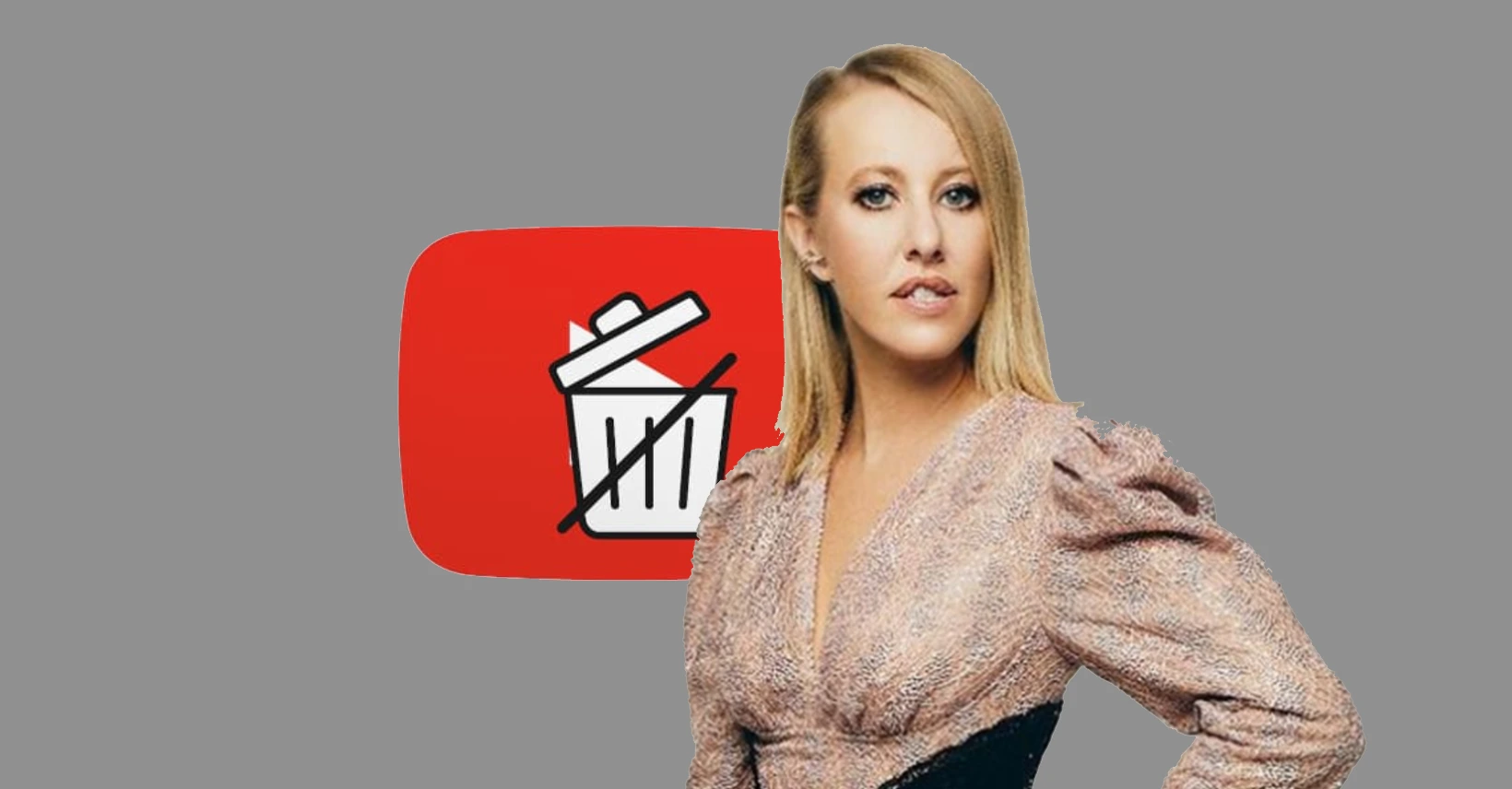
Ksenia Sobchak has once again found herself at the center of a story with Roskomnadzor. This time, the agency demanded that three interviews with popular bloggers linked to the LGBT community be removed at once. The combined audience for the episodes exceeded 20 million views. But why does the journalist keep inviting such guests, fully understanding how sensitive this topic has become for the Russian authorities? Doberman Media explains how Sobchak turned censorship in Russia into part of her show…
25 ноября Ксения Собчак сообщила, что вынуждена удалить с YouTube-канала «Осторожно: Собчак» интервью с Хилми Форксом, Игорем Синяком и Андреем Григорьевым-Аполлоновым. Роскомнадзор обнаружил в выпусках признаки экстремизма, а позднее объяснил свои претензии наличием информации, которую ведомство считает “пропагандой нетрадиционных сексуальных отношений”.
“Я вынуждена удалить с Youtube несколько выпусков из-за требований Роскомнадзора: с Хилми, Андреем Григорьевым-Апполоновым и Игорем Синяком”, – wrote Sobchak wrote on her Telegram channel.
Sobchak called what happened a disgrace, apologized to the guests and viewers, and explained that her team continues to work in Russia, so she is forced to comply with the regulator's demands.
At first glance, this seems like just another episode in the clash between independent journalism and Russian censorship. But if you look at the situation more broadly, a different question arises: why does Sobchak continue to release interviews with people whose public presence in Russia regularly draws complaints from government agencies?
Millions of views that the Russian state doesn’t like
There is one figure in this story worth paying attention to.
According to Kommersant, before it was taken down, the interview with Hilmi Forks had received about 4.3 million views, with Igor Sinyak about 7.8 million, and with Andrey Grigoryev-Appolonov about 8.5 million. In total, more than 20 million views.
This is quite a revealing result. We’re not talking about specialized LGBT media, not about an activist project, and not about a closed community where such conversations are watched mainly by people directly interested in the topic. This is a major YouTube channel run by one of the best-known Russian journalists.
Moreover, the people in these interviews are of interest to audiences for reasons beyond their sexual orientation. Each has their own media story, conflicts, scandals, and fans. Viewers come to see specific people and learn the details of their lives, relationships, and public feuds.
That is precisely why it would be a mistake to explain the popularity of these episodes solely by interest in LGBT topics. At the same time, it is just as wrong to ignore the obvious: Russian audiences are willing to watch interviews with openly gay men and queer bloggers, despite years of state campaigns against the public visibility of the LGBT community.
It turns out to be a rather unpleasant situation for official rhetoric: the state is trying to make this topic invisible, while millions of people continue to watch such videos.
Sobchak has already been through this
This story did not come out of nowhere.
In October 2025, Sobchak had already announced the removal of an interview with blogger Sergei Grigoryev-Appolonov, known as Grey Wiese. Back then, Roskomnadzor also found signs of LGBT propaganda.
In June 2026, complaints were raised about the interview with Igor Sinyak. Yekaterina Mizulina said she had contacted the Interior Ministry and asked it to review the episode. In response, Sobchak said there was no propaganda in the video, and viewers were simply seeing a conversation with a person who looks the way he likes.
Now the agency has demanded that all three episodes be deleted at once.
Thus, the journalist had already encountered similar claims and understood that inviting certain heroes could end with intervention from the regulator. But that did not stop her from continuing the work.
Here it is important not to confuse the predictability of risk with evidence of deliberate provocation. There is no confirmation that Sobchak knew in advance about the impending demand to delete each of the three episodes. But she certainly could not have regarded such consequences as completely unexpected.
Censorship as extra publicity?
There is another side to this story that is hard to miss... In today's media landscape, removing a popular piece of content does not always mean the end of its public life. Sometimes the opposite happens.
First the interview is released. Then viewers, the heroes, and other bloggers discuss it. After that, a reaction from government agencies appears. The journalist reports the restrictions, the news spreads across the media, and the interview itself becomes the subject of additional attention.
As a result, even people who have never watched Sobchak's channel learn about the episode.
It creates a kind of forbidden-content effect. The Russian authorities are trying to limit the spread of the material, but at the same time they are generating additional publicity around it.
For a media project, this can be beneficial in terms of recognition, discussion, and attention to other publications. Still, to claim that Sobchak is deliberately counting on such a result, there is no basis.
In addition, there is a significant difference here between short-lived popularity and real benefit. After removal, the episode loses the ability to keep attracting new views on its own channel, and the editorial team is left with part of the content. Therefore, censorship can both create additional interest and harm the project.
But there is a nuance: the information effect of removal does not necessarily disappear together with the video itself.
Why does Sobchak invite exactly such heroes?
Perhaps the answer is much simpler than it seems.
Sobchak works with people who attract audience interest. And LGBT bloggers and open members of the queer community have long been part of Russian-language internet culture.
They have subscribers, name recognition, their own conflicts and stories that work well in the long-form interview format.
The episode with Andrey Grigoryev-Apollonov, for example, drew attention not only because of his open homosexuality and relationship with Sergey Grey Wiese. At the center of the conversation was a high-profile personal conflict, as well as the story of Angelina Goloshchapova, linked to businessman Konstantin Goloshchapov’s family, whom in St. Petersburg they call "Putin’s masseur."
This is no longer a narrowly specialized topic. It covers internet celebrities, personal dramas, money, famous surnames, and Russian public life.
From the interviewer's point of view, such guests are of obvious interest.
That is exactly why not every invitation to an LGBTQ person should automatically be seen as a political gesture. Sometimes a journalist is simply inviting someone their audience wants to hear from.
But in today’s Russia, even such a routine editorial choice takes on a political dimension.
A convenient position between the audience and the state
Perhaps the most interesting thing about Sobchak’s conduct is how she shapes her public stance after Roskomnadzor’s intervention.
On the one hand, the journalist invites people whom Russian state rhetoric effectively pushes out of the public space. She gives them a chance to speak about themselves to a multi-million audience.
On the other hand, when a demand comes to remove materials, Sobchak complies. She explains this by saying that she lives and works in Russia and therefore has to follow the current regulations.
This creates a rather specific working model: first journalism pushes the boundaries of what is acceptable, then the state imposes new restrictions, and the editorial team publicly announces that it is impossible to continue publishing the interview.
For Sobchak, this allows her to preserve the image of a journalist who is not afraid to invite awkward guests, but at the same time does not enter into open confrontation with Russian state structures.
Of course, such a position has a downside. Interviewees can count on broad publicity and then find that their conversation disappears… And responsibility for the consequences of censorship is distributed quite unevenly.
The problem is not only Sobchak
There is another question that in this story is much more important than the fate of a particular YouTube channel.
If an interview with a person can be denounced as propaganda for a banned movement simply because they speak openly about their life, appearance, or relationships, then what is there left at all of the ability to talk about LGBT people in Russian media?
After all, the episodes under review were not about creating a political movement or calling for any action. They were conversations about specific people, their careers, relationships, conflicts, and personal experience.
At the very least, that is exactly how Sobchak described her interview herself. At the same time, Roskomnadzor did not explain in detail which specific fragments of each episode were the basis for the claims.
And here a fundamental contradiction arises. If the presence of an openly gay man in a popular interview already becomes grounds for state intervention, then the problem goes far beyond Sobchak’s journalistic ethics.
We are talking about the very ability of LGBT people to exist in public information space.
After all, Sobchak does not necessarily have to be a defender of LGBT rights or a political activist for her interviews to matter. It is enough that millions of viewers see people whom the state would prefer not to notice.
Perhaps that is exactly what explains why such interviews keep being published, even if their eventual fate is predictable. For the journalist, they are sought-after characters, interesting content, and millions of views. For the audience, it is a chance to see people who are rarely shown on federal television (if they are shown at all).
И пока эта ситуация сохраняется, вопрос будет не только в том, какое интервью Собчак удалит следующим. Гораздо важнее, сколько ещё российских журналистов внутри России вообще решатся такие интервью записывать, не имея “крыши” как у Собчак.





0 comments
Enter your email and we will send you a one-time code. No passwords, no accounts.
Code sent to
If the email does not arrive in your inbox within a few minutes, check your Spam, Junk or Promotions folder — some mail services may wrongly place automated messages there.