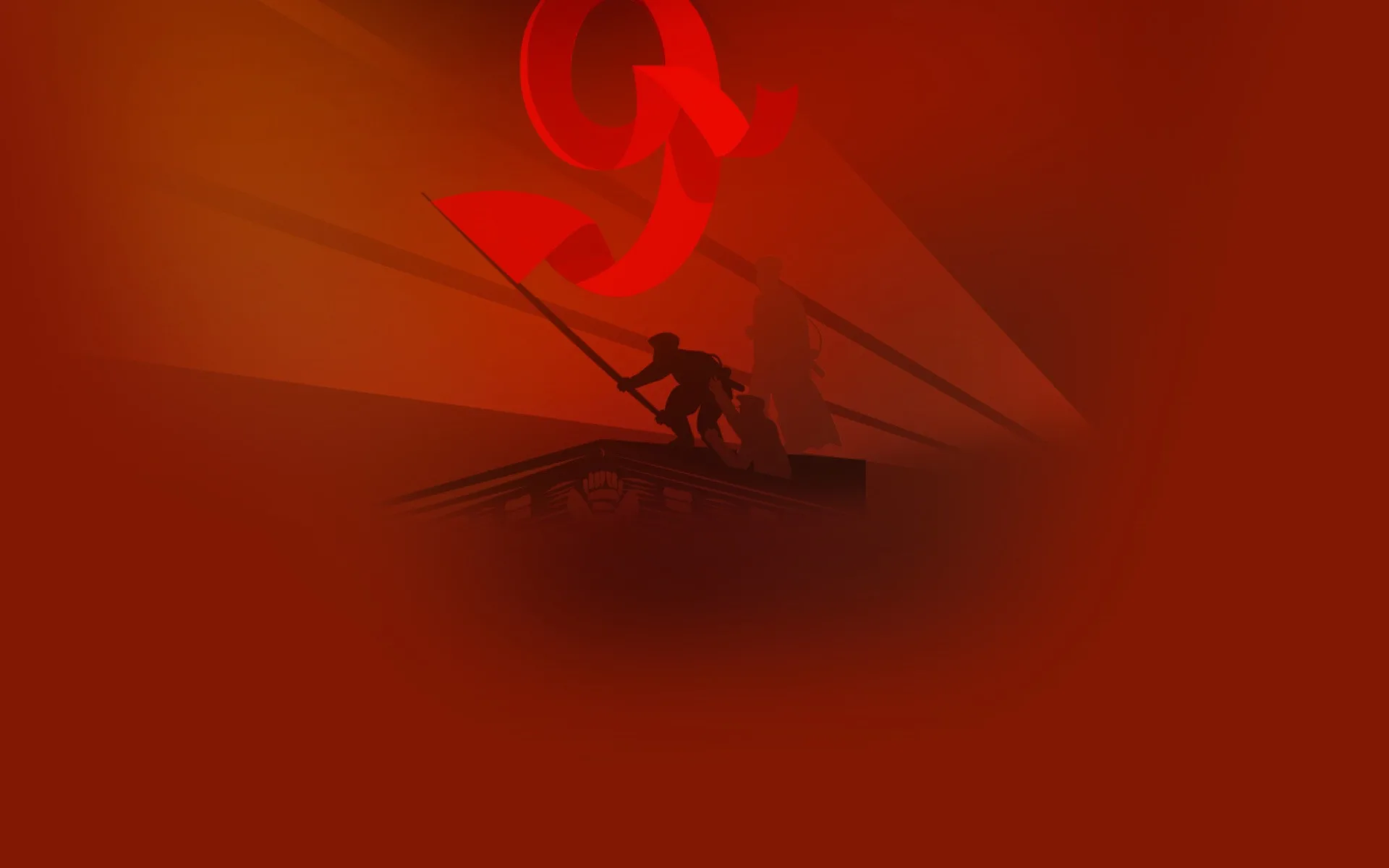

Let me make it clear right away that I have the greatest respect for the memory of all those who died during the most terrible war in human history.
But once again, this highly politicized holiday is just around the corner—one that reeks not only of gunpowder, but also of lies and propaganda. That’s why I can’t help but speak out.
Let's start by saying that May 9 is a rather strange date. The surrender of Nazi Germany was signed on May 8, 1945. Japan surrendered on September 2, and it was on that day that World War II officially ended.
But the Soviets deliberately chose their own date, as they were creating the myth of their own, supposedly separate war—the Great Patriotic War. This was necessary, first and foremost, to gloss over the fact that the USSR had essentially entered World War II on Hitler’s side by occupying part of Poland in 1939.
On the other hand, the history of the USSR essentially began in 1917. It’s as if nothing existed before Grandpa Lenin. And they decided to make the war the most vivid of all Soviet patriotic myths.
The more time passed and the fewer living witnesses to those events remained, the further this myth drifted from reality.
The unfavorable aspects of the war were hushed up or simply denied. The favorable ones, on the other hand, were idealized and emphasized. We were all fed this carefully polished version of events from childhood onward.
There were no tens of millions of lives lost, no barrier units, no American canned meat, and no Lend-Lease (for which the USSR never actually paid). The Soviets did not capture the Brest Fortress in 1939. There were no Studebakers driving on Soviet roads, and Pokryshkin did not fly an Aerocobra. Belarusian and Ukrainian partisans fought exclusively for the Soviets. And Soviet soldiers did not engage in looting or pillaging; they did not rape women or kill unarmed civilians.
A terrible war—as contradictory and repulsive as any other—ultimately became ideologically correct, heroic, and utterly black-and-white. Any deviation from the official version—whether to the right or to the left—is tantamount to treason.
At this point, I think it would be appropriate to recall how I became a fascist while I was still in high school.
We were assigned an essay on the Great Patriotic War, and I decided to use the most unique material I had on hand—the memories of relatives who were still alive at the time.
He wrote exactly what they had witnessed: how they feared the partisans more than the Nazi invaders. Because the Germans never took their very last possessions. But the partisans, who came at night, did.
Just like my grandmother, who happened to find herself on the battlefield with her younger brother in her arms, was led to safety by a German soldier, away from the bullets.
How, after the war, a fellow villager—a war hero—was shot for refusing to join the collective farm.
I got a 5/2 on that essay. The 5 was for mistakes, and the 2 was for the content. And in front of the whole class, I was branded a fascist scum.
Because who needs the truth anyway?
Of course, I shouldn't have written it. After all, mentioning things that don’t align with the official version of the war is tantamount to offending the feelings of believers—those who believe in the Great Victory of Soviet arms in a noble defensive war to save all that is good from all that is evil.
No, don’t get me wrong. I’m very glad that the anti-Hitler coalition won. The people who ruled the Reich had some very strange ideas about a just world order. Apparently, they considered the Slavs a bit superfluous as well—along with the Jews, the Roma, and people with disabilities.
My point is that that war was by no means a beautiful one. It seems to me that there are no just wars or noble soldiers at all. Any war is, above all, terrible and repulsive. We’re just wired that way: when a person is given a weapon, allowed to fire it, and told that they’ll face no consequences, most of us reveal some very dark traits.
And alongside isolated acts of heroism and nobility, there will be hundreds of thousands of instances of brutality and violence.
And it's very important to remember that.
Because if war is portrayed as lofty and noble—free of filth, lice, inhuman killings, monstrous acts, and horrific injuries—people may develop an unhealthy desire to recapture a bit of that heroism of the past.
And instead of the entirely appropriate slogan “never again,” a strange “we can do it again” might emerge. People will start writing “To Berlin” on their Mercedes and BMWs. Media personalities and ordinary people alike will start hanging St. George’s ribbons everywhere they can.
And right next door, in a neighboring country, a new, terrible, horrific, inhumane, fratricidal war could break out.
It's such a strange holiday.
In silence and without clinking glasses.



0 comments
Enter your email — we’ll send you a one-time code. No passwords or accounts.
Code sent to
If the email doesn't appear in your inbox within a few minutes, check your spam, junk, or promotions folder, as some email services may mistakenly place automated messages there