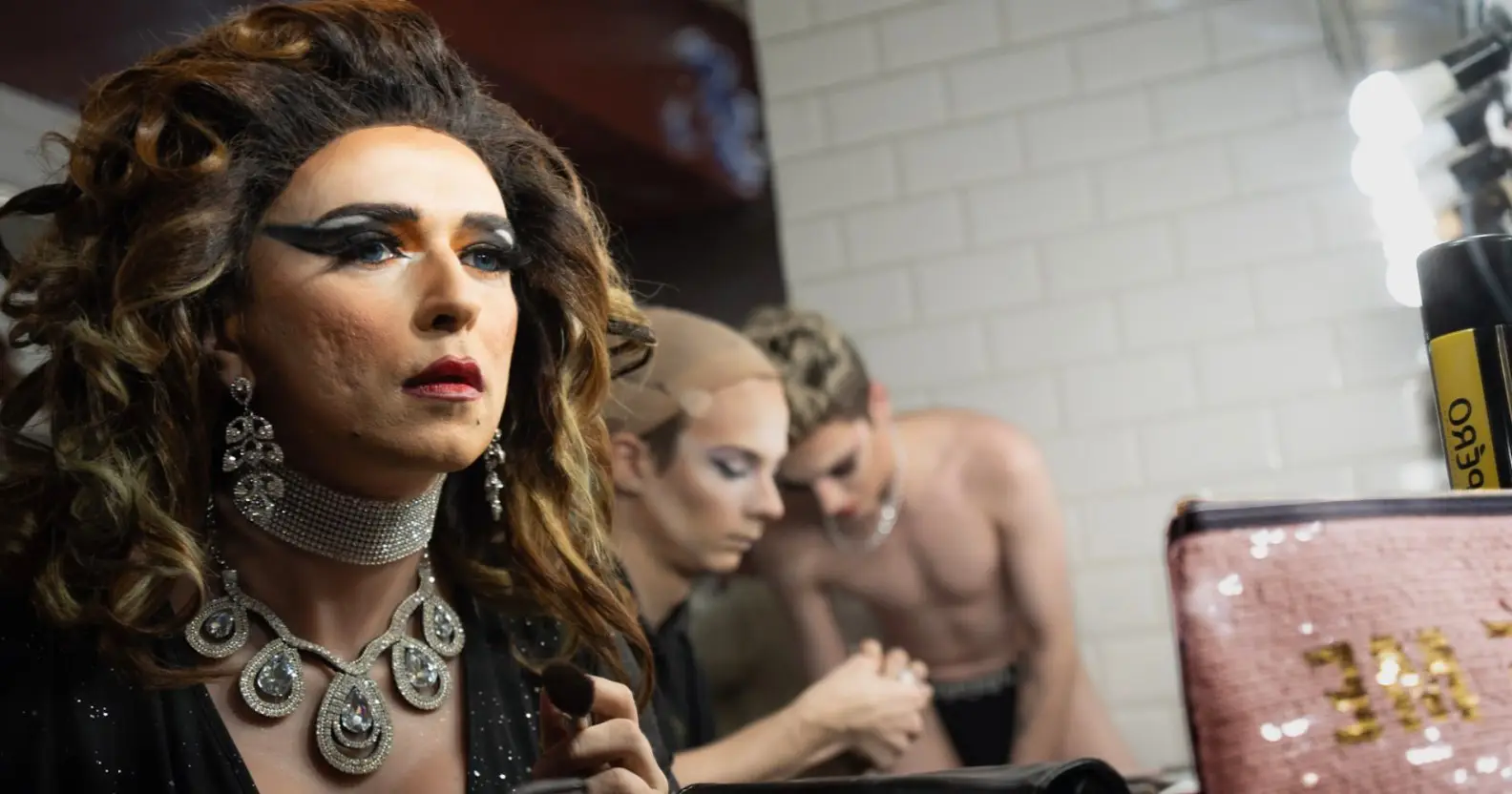
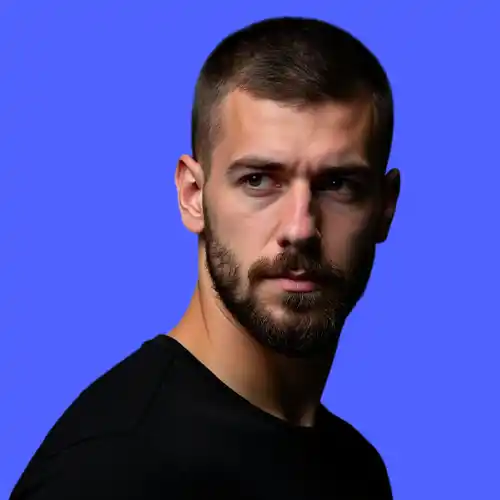
In 2026, an exhibition and a photo book by the American researcher J. Lester Feder's The Queer Face of War. This project is not just a collection of portraits, but a documentary evidence of how the Ukrainian LGBT community has gone from a marginalized group to one of the most visible symbols of democratic resistance during the years of full-scale invasion. We will tell you how the war changed society's attitude towards queer people and why homophobia was turned into a geopolitical tool in Moscow.
A completely different front
When OutRight photographer and researcher J. Lester Feder started his work in Ukraine, he did not plan to do a photo project. Its main task was to document the experience of queer people in wartime. Feder had experience working in other conflict zones, where when asked: "Can you be photographed?", people most often answered with a categorical refusal for security reasons.
However, in Ukraine, he faced the opposite phenomenon: almost all the heroes of his interviews agreed to be filmed. The desire to be seen has become a form of civic duty. As the author himself explains, for Ukrainian queer people, protecting their own appearance is a way to protect their right to exist in a future democratic state.
The "drumroll" of coming outs
One of the key factors in the tectonic shift in the Ukrainian public consciousness was the activities of the organization "LGBT military and veterans for equal rights."
How it works: The organization's Instagram accounts have become a continuous feed of photos and stories of queer soldiers on the front lines.
Result: This "constant drumroll" of portraits of people in uniform has shattered stereotypes that the LGBT community is not involved in the defense of the country.
According to Feder, such publicity has led to a "sea-change" in relation to society: opinion polls show a sharp increase in tolerance, and initiatives are being actively promoted at the grassroots level to introduce partnership rights for LGBT military. Participation in national resistance has become a tool for the community to gain full citizenship.
Homophobia as Moscow's Export Commodity
Feder's research highlights an important political context: the Kremlin uses homophobia not just as a domestic agenda, but as a An instrument for the fight against democracy and human rights on a global scale.
In the occupied territories, this takes the most brutal forms. For example, in Kherson, during the Russian occupation (from March to November 2022), numerous cases of persecution, torture and violence against queer people by Russian forces were recorded. Feder notes that Kherson was probably the place with the largest LGBT population under occupation, and queer people became direct targets for repression there.
Contrast: Russia and the Iron Curtain of Morality
While Ukraine is following the path of "Europeanization" and empowerment, the situation in Russia has deteriorated radically during the war years.
From censorship to repression: If the ten-year-old law on "gay propaganda" was initially used to put pressure on activists, then after the start of a full-scale invasion in February 2022, the repressive machine began to work at full capacity.
Ban on words: The State Duma banned any mention of queer topics for all age groups, which led to the de facto closure of venues such as the Side by Side Film Festival in St. Petersburg.
Extremism: The decision of the Supreme Court of the Russian Federation in 2023 to recognize the "international LGBT movement" as an extremist organization finally transferred queer people to the status of criminals. Now, even minimal participation in supporting community rights can result in a long prison term.
As Feder notes, if earlier in large cities like Moscow or St. Petersburg it was possible to live "outside politics" and remain in relative safety, now this opportunity has disappeared - fragile tolerance has been replaced by a direct threat of persecution.
The Queer Face of War project was the first-ever visual chronicle of the queer community during the war. Despite the success and recognition (the exhibition was part of the official "Offstage" program at Eurovision 2026), the future of such initiatives is vague.
The US State Department stopped funding such projects after Donald Trump returned to the White House, and Feder had to finish the book at his own expense.
"I would like to continue working on these topics, but now it is simply not practical," the researcher admits.
Nevertheless, the stories recorded by him have already become part of history. They show that in an existential crisis, marginalized groups can not only survive, but also become the vanguard of the struggle for civil rights, proving: The face of resistance may vary, but it always requires to be looked at directly.
Prepared based on the material PinkNews


0 comments
Enter your email and we will send you a one-time code. No passwords or accounts.
Code sent to
If the email doesn't appear in your inbox within a few minutes, check your spam, junk, or promotions folder, as some email services may mistakenly place automated messages there