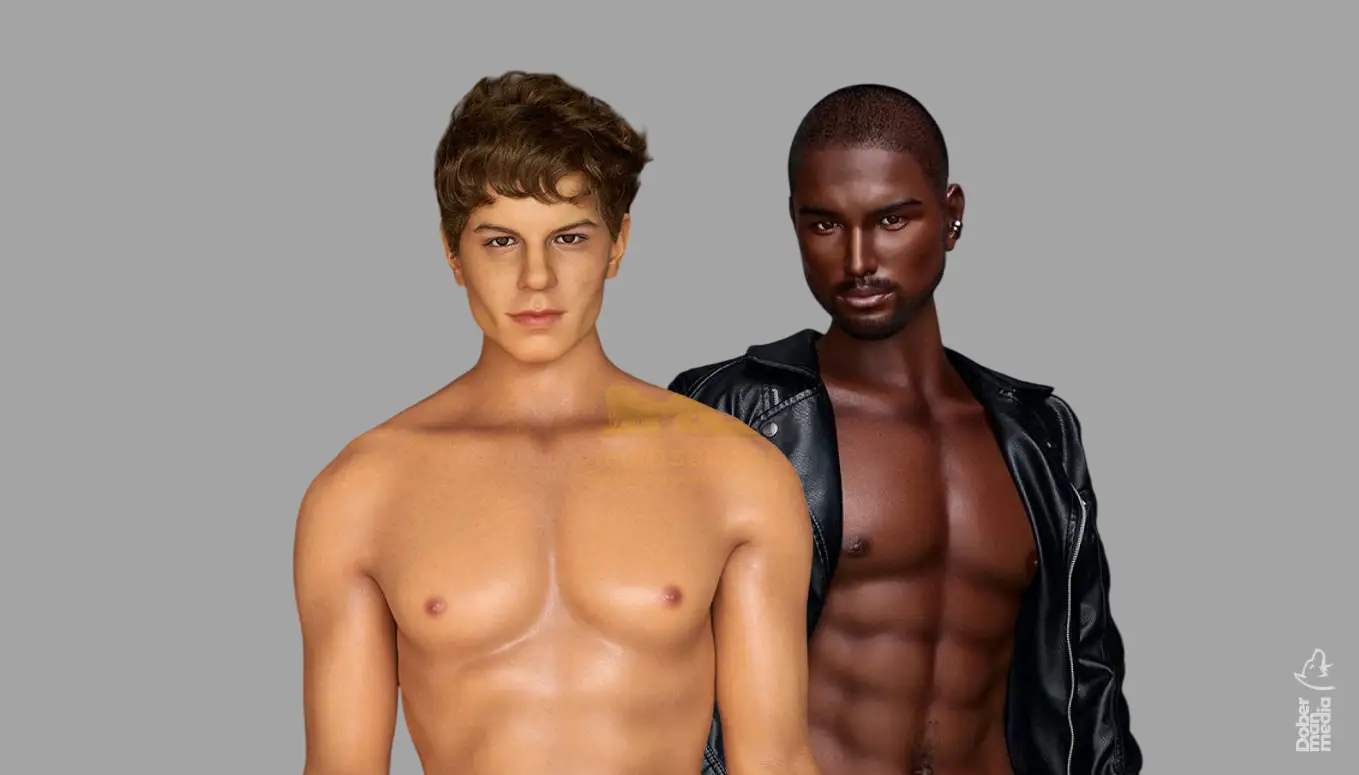

While everyone was discussing when artificial intelligence would take away work, it began to take away something else. Time that people used to spend with each other. The Chinese company UBTech has introduced U1 humanoids, which it sells not as home assistants, but as emotional companions. On the first day, the company announced more than 13 thousand orders. And this is perhaps more important than any news about ChatGPT. Because the market has finally stopped selling sex. Now he sells the feeling that he is loved.
The sex industry is dead. Long live the intimacy industry.
Ten years ago, experts and futurologists predicted that the sex robot market would follow the path of improving physics: softer silicone, complex movement mechanics, realistic anatomy. However, the reality turned out to be different: The main value of the robot was not "flesh", but "soul" - that is, algorithms that simulate intimacy.
Today, users are looking for not so much an orgasm in cars as memory, name, deep gaze and a sense of care. It turned out that digital attachment is formed much faster through text and voice than through physical contact. In this sense, the success of the application Replika, as well as platforms Character.ai, Nomi AI, and Kindroid, which have millions of active users, proves the paradox: people are ready to start a full-fledged romantic relationship without a body at all, in the cloud.
Why men are becoming the main buyers
Statistics show that it is men who are more likely to turn to AI for emotional support. Researchers attribute this to "epidemic of male loneliness".
Men are much less likely to seek professional psychological help due to social stigma. Men are also more likely to suffer from chronic loneliness in the context of the collapse of traditional social institutions.
This is where AI becomes the perfect solution: it's always available, always in a good mood, and never says you're "too old" or "not its type."
Queer community – the main buyers of robots?
Gay men face additional unique filters: Age discrimination often flourishes within the community, and the search for stable, safe relationships in dating apps turns into an exhausting quest where you can be "canceled" or "visited" at any time.
For the queer community, AI partners open up a unique, almost therapeutic space that is still poorly discussed in the media. For a lot of guys, AI is becoming the first "person" to whom they confess their orientation. This is a safe simulator for the first coming out and the first romantic words.
Imagine a guy who lives in Chechnya, Iran, Russia or Belarus. In regions where the use of Grindr is physically dangerous or socially impossible, talking to AI becomes the only form of intimacy available. This is a space where you can try out roles and relationship scenarios without fear of real aggression or rejection.
AI is not just a "conversationalist," it is a safe haven for identity exploration in a world that is often hostile.
Why Manufacturers Are Already Thinking About Gay Men
The proximity economy is quickly adapting to the needs of minorities. Company Realbotix, one of the market leaders, openly declares plans to create for its models different personalities, including homosexual identity.
This is the new personalization economy:
- Manufacturers are moving from the concept of a "male robot" to the concept of "A partner who understands you".
- Complex romantic scenarios specific to queer culture are developed, and various types of characters are developed - from dominant to emphatically caring.
- AI learns to understand subtle social nuances and slang so that the imitation of communication is as authentic as possible.
China is not selling a robot at all
The launch of the Chinese series of superbionic robots caused a real shock in the industry Ubtech U1. Unlike Western brands, the Chinese giant barely mentions sex in its ads. The main emphasis is on companionship, emotional resonance and memory.
Frightening fact: Despite the huge price tag, it is a flagship model Ubtech U1 Ultra costs about EUR 125,000 for the men's version, the entire first batch was sold out instantly. Immediately after the start of sales, the company collected more than 13,000 orders.
What do these people buy for the price of a luxury car?
- Hyperrealism: Biomimetic silicone skin with visible capillaries, veins and fingerprints.
- Empathy: AI recognizes more than 20 emotional states and maintains eye contact.
- Feeling at home: The robot remembers your habits and "grows" its personality, adapting to you. China is not selling a cleaning machine (the U1 doesn't even know how to mop floors), but the illusion that there's someone in an empty room.
The Scariest Question
When the application Replika in 2023 suddenly removed the erotic communication feature, thousands of users around the world experienced it as Death of a loved one. On forums, people wrote about the "digital lobotomy" of their partners; some were on the verge of suicide.
This incident exposed the main threat of the future. Now imagine: in five years, your robot — your "boyfriend" — knows Your dog's name, your favorite movie, what your ex's name was, how you cry, and how you laugh. You trust him with the most intimate parts of your life.
And then the corporation releases a planned update. And this person you loved, disappears. He did not die in the usual sense, he did not leave you for another. His simple Removed from the server. You're left in a room with an expensive silicone doll whose "soul" has become hostage to a license agreement you haven't read.





0 comments
Enter your email and we will send you a one-time code. No passwords or accounts.
Code sent to
If the email doesn't appear in your inbox within a few minutes, check your spam, junk, or promotions folder, as some email services may mistakenly place automated messages there